 RealCallStory
Who Owns RealCall? Matthew Keefer's AI Blocker for Spam Calls and Texts
RealCall was co-founded by CEO Matthew Keefer and is published by Second Phone Number Inc. of San Jose. See how the AI spam call blocker sells protection.
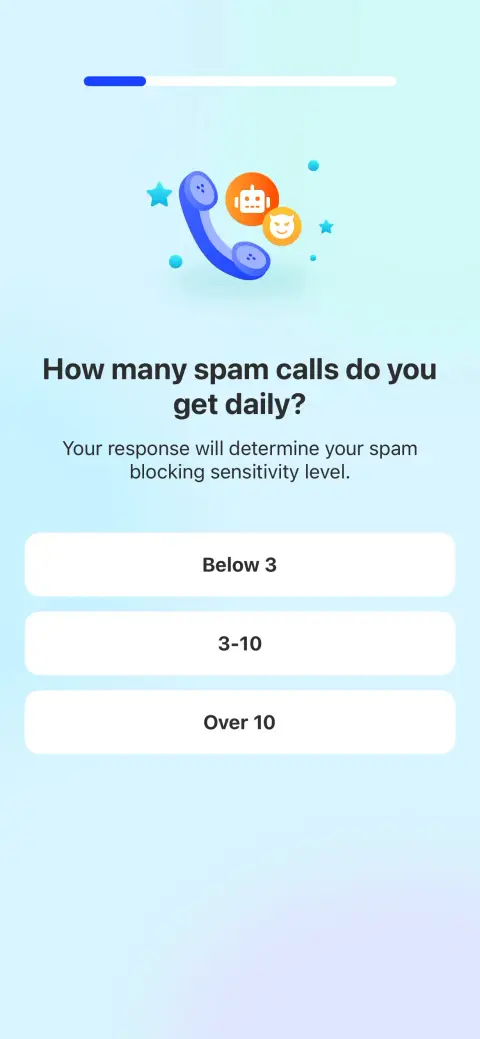
Spam calls are one of the few problems almost everyone shares, and RealCall's first question goes straight at it: how many do you get a day?
RealCall is an AI spam call and scam text blocker for iPhone and Android, available in the US and Canada. The iPhone app launched in April 2022, and Onbo Hub estimates it now makes around $100,000 a month. RealCall was co-founded by Matthew Keefer, who is also its CEO. Here's how it works, with the real screens.
The founder and the company
A June 2023 press release introduces Keefer as "co-founder and CEO at RealCall AI." Announcing that the app would use OpenAI's GPT-4 to spot scam texts, he said: "We believe that this update will have a significant impact on our users' lives."
On the App Store, the app is published by Second Phone Number Inc. Wikipedia lists the company as privately held and based in San Jose, California. The iPhone app came out on April 6, 2022, and the Android version followed that December. When RealCall announced the app in August 2022, its product lead, Curry Yu, said: "Our team members have profound experience in telecommunications, cybersecurity, and AI, and we are enthusiastic about protecting users from scammers."
How it works
RealCall combines a large, regularly updated database of numbers with AI models. It blocks robocalls, telemarketers and scam calls, moves phishing texts to a separate junk tab, and offers reverse phone lookup so you can see who is calling. Its "Answer Bots" can pick up calls from telemarketers for you. A blocklist and a whitelist let important calls through. Some features are free; advanced AI blocking, more precise caller ID and a family plan for up to five people need a subscription.
Onboarding: make the problem feel bigger than you
The first screen leads with a number, "10 Million+ Spam Calls Blocked," and the promise: "Stop Spam Calls & Texts Forever." Then comes the question, with a reason to answer it: "Your response will determine your spam blocking sensitivity level."
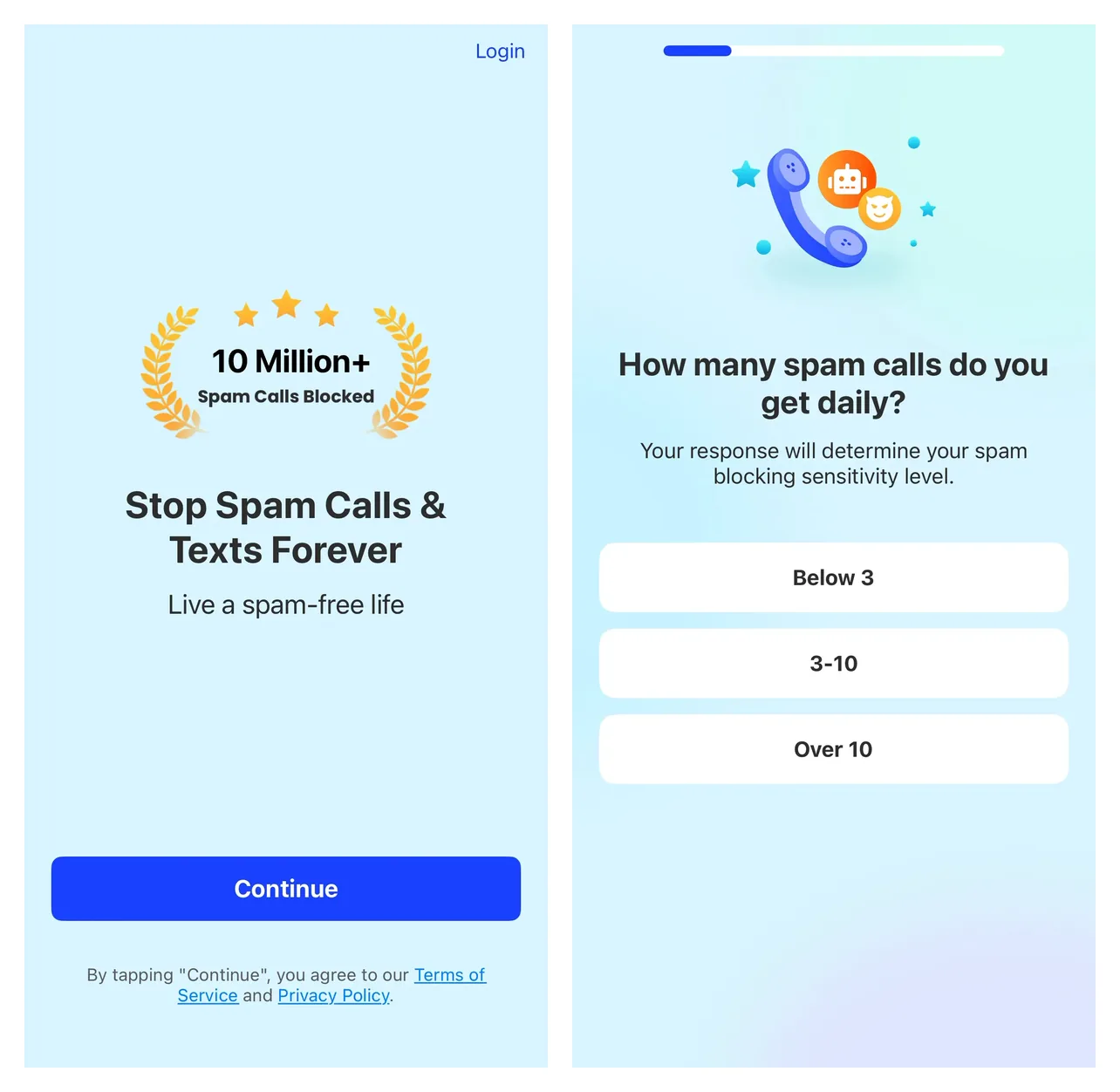
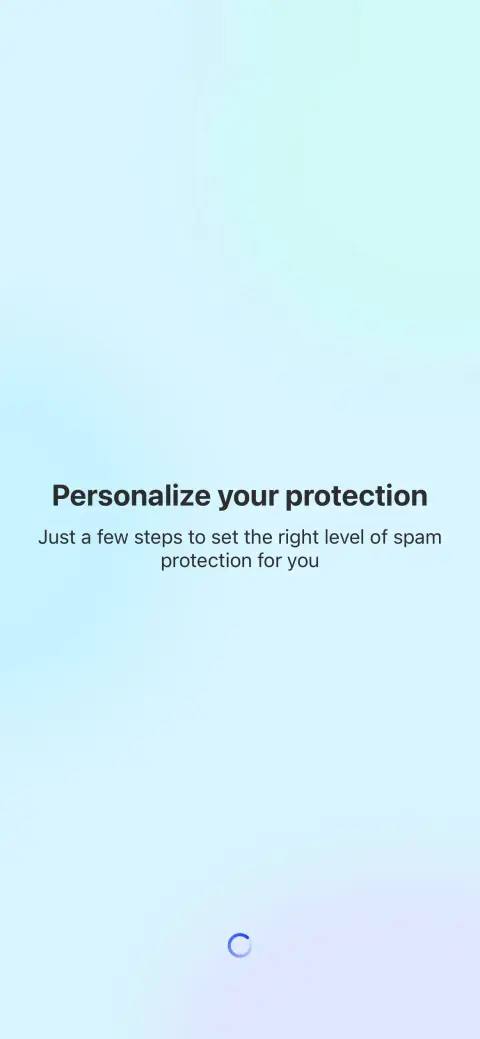
The flow runs about 20 screens. After the spam-call question, a chart based on FTC data shows scam losses growing. Then a three-question quiz asks you to spot fake texts, and afterwards the app says 95% of people fail to identify scams. The message is that you can't keep up with scammers on your own. Only then does it show the features, and then the paywall.
Paywall: a switch for people who aren't sure
The paywall offers two plans, yearly (marked "SAVE 85%") and weekly, with the yearly plan selected by default. Below them is a switch labeled "Not sure Yet?" Turning it on changes the offer to a 7-day free trial. Subscriber counts and reviews sit underneath the plans.
The switch gives hesitant users a softer way in without putting the trial front and center for everyone.
Growth: press and its own data
RealCall's public trail looks different from most apps on Onbo Hub. There were no viral TikToks in Onbo Hub's data, and no active Meta ads at the time of our check. What you find instead is press: product reviews, press releases about new features, and RealCall's own reports on scam calls, such as which US area codes the most spam came from. Those reports give journalists something to write about whenever robocalls are in the news. The App Store listing now shows about 27,000 ratings.
Note: Monthly revenue is Onbo Hub's estimate, not a figure from the company. Matthew Keefer's title and quote are from a June 2023 press release; we could not access a published interview with him. Company details are from the App Store and Wikipedia, and Curry Yu's quote is from the August 2022 press release. "10 Million+ Spam Calls Blocked" is shown in the app; the website claims more than 500 million spam calls blocked and more than 1 million installs, and the App Store says over 3 million spammers blocked. These figures are the company's own and have not been independently verified. The 95% figure is shown in the app. Rating counts are as of when this story was written.
Ideas worth copying
See RealCall's full onboarding
This story only shows a few of the screens. Onbo Hub has all 21, from the first screen to the last.
View the onboarding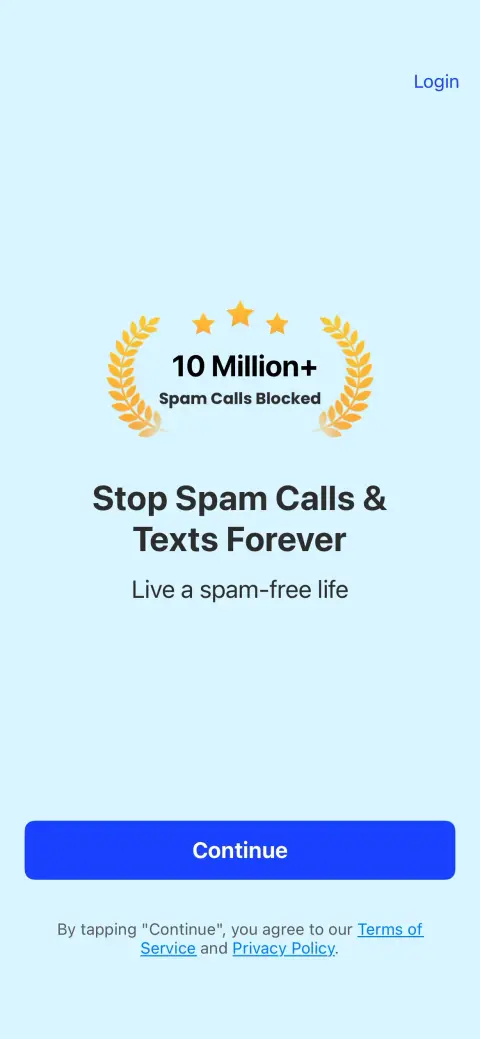
Newsletter
Founder stories and growth teardowns of apps that are actually making money.
Sources
- King Newswire via FinancialContent, "RealCall AI Integrates OpenAI's GPT-4 to Block Fraud and Fundamentally Upgrade Phone Experience" (June 5, 2023)markets.financialcontent.com
- PRWeb, "RealCall Unveils AI-based App to Enable Spam Call Blocking and Empower FCC's Urgent Efforts" (August 30, 2022)prweb.com
- Wikipedia, "RealCall"en.wikipedia.org
- RealCall (website)realcall.ai
- RealCall (App Store)apps.apple.com

 Buck
 Wayk
 HeyRua