 ATCStory
How Pilots Eric Button and Kristian Gaylord Turned ATC Radio Into a Hit App
Pilots Eric Button and Kristian Gaylord built Enhanced Radar to make air traffic safer. Its side project, the ATC app, turns live radio into viral clips.
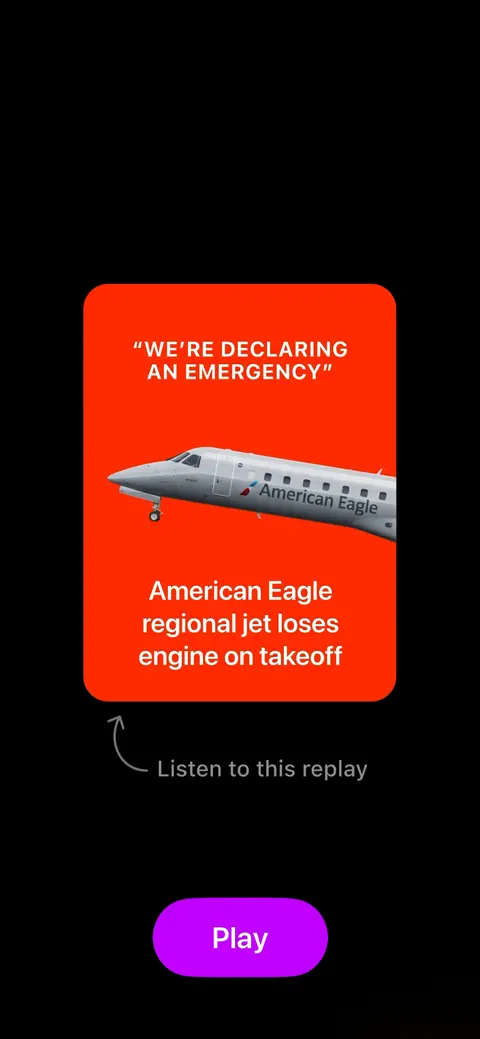
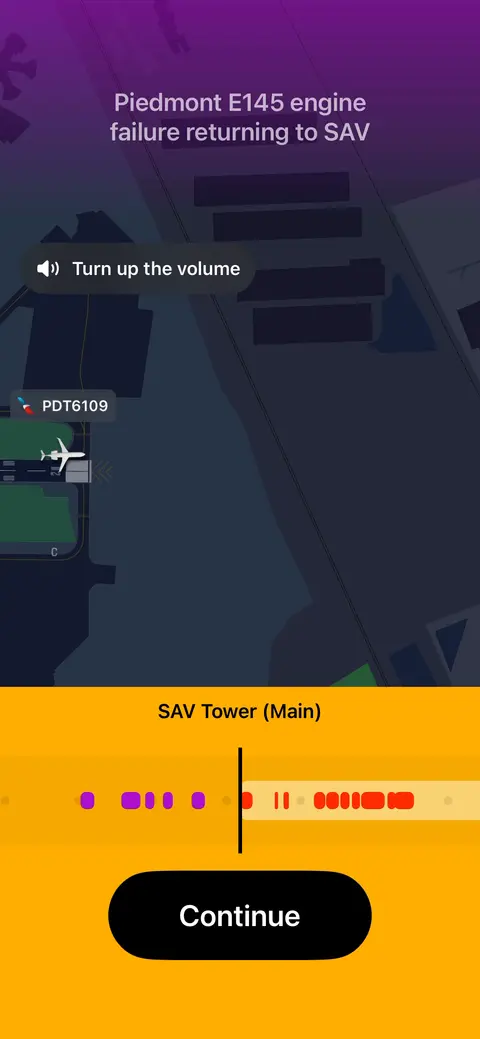
The first thing a new user hears in ATC is a crew declaring an emergency. A regional jet has lost an engine on takeoff, and the app plays the real radio call while the plane moves across the airport map.
ATC lets you listen to live air traffic control at US airports, with AI transcripts and the aircraft that's talking highlighted on a map. It launched on the App Store in January 2026, and Onbo Hub estimates it makes about $206,000 a month. For the company behind it, though, it's a side project. ATC was founded by Eric Button and Kristian Gaylord. It's made by their company, Enhanced Radar, which is building AI for air traffic control. Here's the story, with the real screens.
The founders: two pilots
Button became a professional pilot straight out of high school, flying Gulfstream 280s for a family office. He logged about 2,200 hours and holds a G280 type rating. Before Enhanced Radar, he was working on a neobank for American-made products.
Gaylord has been into flying since he was nine and flies recreationally as an FAA private pilot. He studied statistics and computer science at Columbia, built high-frequency trading systems, and worked on computer vision for satellites at Pilot AI.
"Both of us are pilots — we have 2,500 hours of flight time between us," they wrote when they introduced the company on Hacker News. They had known each other for three years and, as they put it, decided independently that they needed to work on air traffic.
A safety net for air traffic control
Enhanced Radar was founded in 2024 in San Francisco and went through Y Combinator's Winter 2025 batch. In their launch post in March 2025, the founders used a real close call as the example: in April 2024 at Washington's Reagan National Airport, a JetBlue jet was cleared to take off while another controller cleared a Southwest jet to cross the same runway. Controllers stopped both with about 8 seconds to spare, but the mistake had happened about 23 seconds earlier.
Their answer was to listen to the radio itself. Enhanced Radar puts its own antennas, radios and software at airports and runs the audio through Yeager, its speech model for ATC. The system is "completely parallel to existing infrastructure, requires zero permission, and zero integration," they wrote. "We feel like it's our mission for the next decade or two."
The side project
The ATC app is what that technology looks like for everyone else. FLYING Magazine reported in February 2026 that the company had recording hardware at more than 70 airports and was transcribing about a million transmissions a day. Button calls the app a "side project" that runs on a "lightweight" version of the company's model.
It quickly proved useful. On February 11, a user on Discord was already asking why El Paso suddenly had a 10-day flight restriction, hours before the media reported that the airspace around El Paso International Airport had been closed. FLYING wrote that the app alerted users within minutes.
In May 2026, Enhanced Radar raised a $7 million round led by Initialized Capital, with United Airlines Ventures and Y Combinator taking part. By then, its hardware was at about 80 airports in North America.
Onboarding: start with an emergency
The onboarding runs about 23 screens, and it starts with the core experience instead of an explanation. You tap play on a real emergency, turn up the volume, and pan around the map while the plane returns to the airport. Then the app shows what you'll get: alerts when something happens.
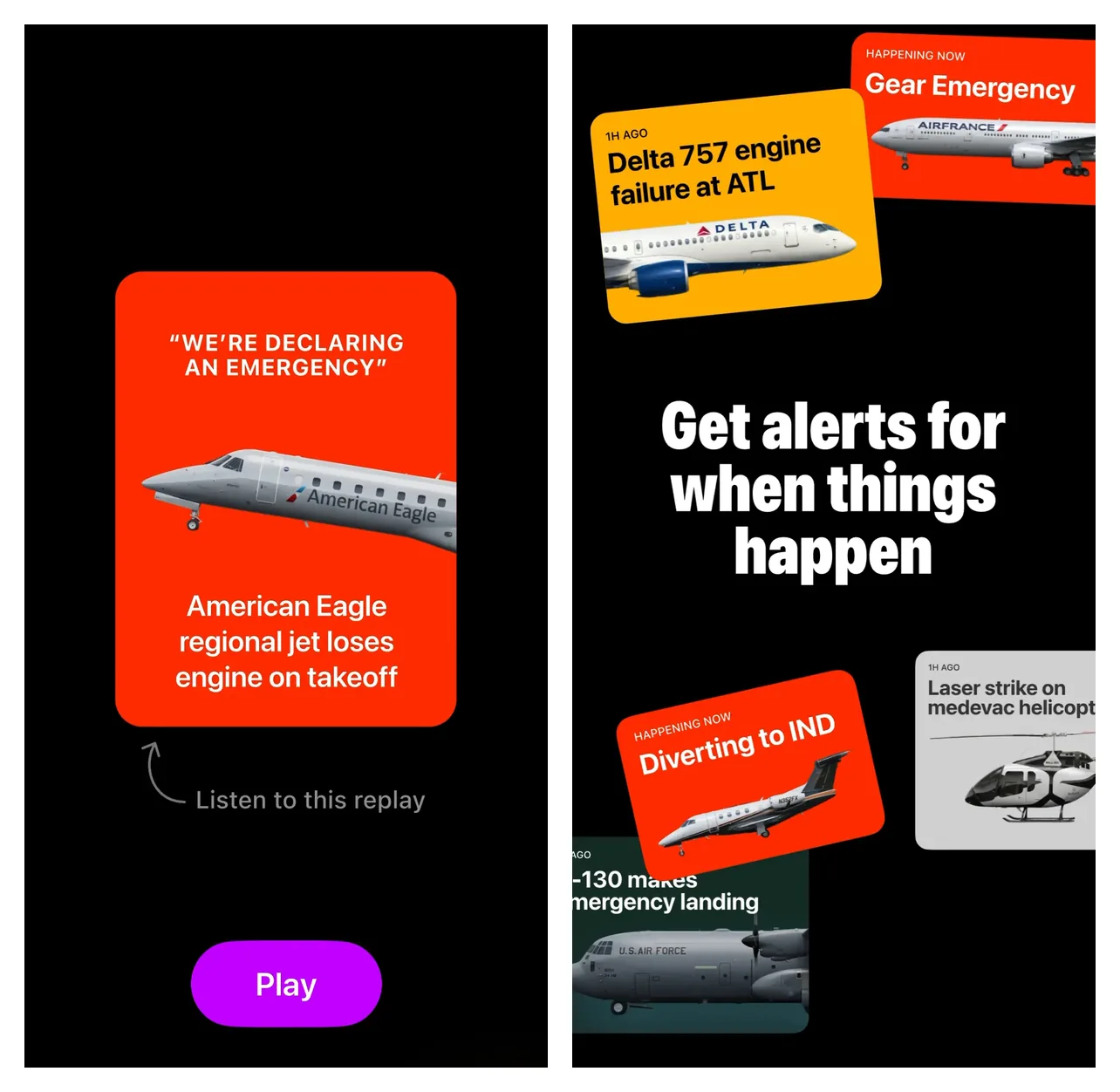
Before it asks for notification permission, the app has you choose how many alerts you want. It also includes a mini lesson that explains an ATC phrase word by word, which helps newcomers follow conversations that sound like code. Just before the paywall, a few screens explain the free trial: it's turned on, it lasts seven days, and you pay nothing unless you decide to stay.
Paywall: a yearly plan with a trial
The paywall offers two options, yearly and weekly, with the yearly plan selected by default. The yearly plan comes with a seven-day free trial and is labeled as 78% off. Newspaper and TV logos sit on the screen for credibility, and there's a link to a lifetime option.
The app is rated 4.7 out of 5 on the US App Store, though some reviewers say the subscription is hard to justify.
Growth: funny radio, clipped for TikTok
Real ATC conversations are often funny, and the app's map with live captions fits a short vertical video. FLYING counted hundreds of viral videos made with the app on TikTok and X. The most-viewed one in Onbo Hub's data comes from a fan account that tagged the app: a controller jokes about changing a pilot's squawk code to "67," the number that was trending at the time.
The app's own clip account posts the same kind of moment, like a regional jet pilot at Washington National who suddenly starts meowing on the radio. Since July 2026 the app has also run Meta ads, about 75 of them active in November 2026: mostly screen recordings of ATC conversations and maps of the airports it covers, plus some run under creators' accounts, such as pilots.
Note: Monthly revenue is Onbo Hub's estimate and has not been confirmed by the company. Flight hours, the founders' backgrounds and the Hacker News quotes come from the founders' own YC profile and launch post (March 2025). Airport counts and transmission numbers are the company's figures as reported by FLYING Magazine (February and May 2026). The rating is from the US App Store as of November 2026, and the Meta ad count is from Meta's Ad Library as of November 2026. View counts are as of when this story was written.
Ideas worth copying
See ATC's full onboarding
This story only shows a few of the screens. Onbo Hub has all 23, from the first screen to the last.
View the onboarding
Newsletter
Founder stories and growth teardowns of apps that are actually making money.
Sources
- Hacker News, "Launch HN: Enhanced Radar (YC W25) – A safety net for air traffic control" (March 4, 2025)news.ycombinator.com
- Y Combinator, "Enhanced Radar"ycombinator.com
- FLYING Magazine, "ATC App Alerted Users to El Paso TFR Within Minutes" (February 25, 2026)flyingmag.com
- FLYING Magazine, "United Airlines Ventures Backs Startup Enhanced Radar" (May 13, 2026)unitedairlinesventures.com
- Initialized, "Initialized Leads $7M Round for Enhanced Radar" (May 13, 2026)blog.initialized.com
- ATC - Live Air Traffic Radio (App Store)apps.apple.com
- A controller changes a squawk code to 67 (TikTok @iluvairplaness)tiktok.com
 Wayk

 RealCall
 HeyRua