 BefitStory
How Carlos Terceiro Sold Mobills, Then Built Befit to $900K in Its First Year
After selling Mobills to the Santander group, Carlos Terceiro built Befit, an AI workout planner that made about $900K and won 24,000 subscribers in year one.
An entrepreneur builds a budgeting app, grows it into a company and sells it to the group behind one of the world's biggest banks. Then, after he starts working out at 30, he builds his next app: one where AI plans your gym workouts.
That app is Befit. In its first year, it brought in 5 million Brazilian reais, roughly $900,000, and the company expects five times that in 2026. Befit was founded by Carlos Terceiro. He was joined by Claret Sabioni, now the company's co-founder and CEO. Here's the story behind it and why it grew so fast, with the real screens.
The founder: an app to replace a spreadsheet
Carlos Terceiro is from Ceará, in northeastern Brazil. He started working young and was always interested in money, so he tracked every expense in a spreadsheet. He wanted something easier to use on his phone, so he taught himself to code from online tutorials and built an app just for himself.
Then he put that app on Google Play, and it found an audience far beyond him.
From a hobby to an acquisition
That personal project became Mobills, a money management app, which he started in 2013 and grew into a company. In 2021, Mobills was sold to the Santander group.
He put his health aside
Around the time of the sale, after turning 30, he realized he had spent years focused only on work and had set his health aside. So he started lifting weights.
He also noticed a problem around him. Some of his colleagues couldn't afford a personal trainer, and when they went to the gym, they didn't know which exercises to do. That gave him the idea for an app that could take a trainer's place at a much lower price. Befit's website puts the belief behind it this way: "Most people don't need more motivation. They need structure."
Over twice the subscriber goal
Development started in 2024, paid for with the founders' own money, and took eight months. Working with physical education professionals, the team narrowed the exercise library down to about 500 exercises. Claret Sabioni brought experience from Wildlife Studios, a games company, and QuintoAndar, a real estate platform.
Befit launched in January 2025 with a goal of 10,000 paid subscribers by the end of the year. It ended the year with 24,000. By April 2026, more than 2.4 million people had used it, and more than half of its revenue came from outside Brazil.
To grow, the company runs ads on Google, Meta and TikTok. In late October, it had close to 40 Meta ads running in Portuguese, and it plans to work more with fitness influencers.
Onboarding: showing you your future self
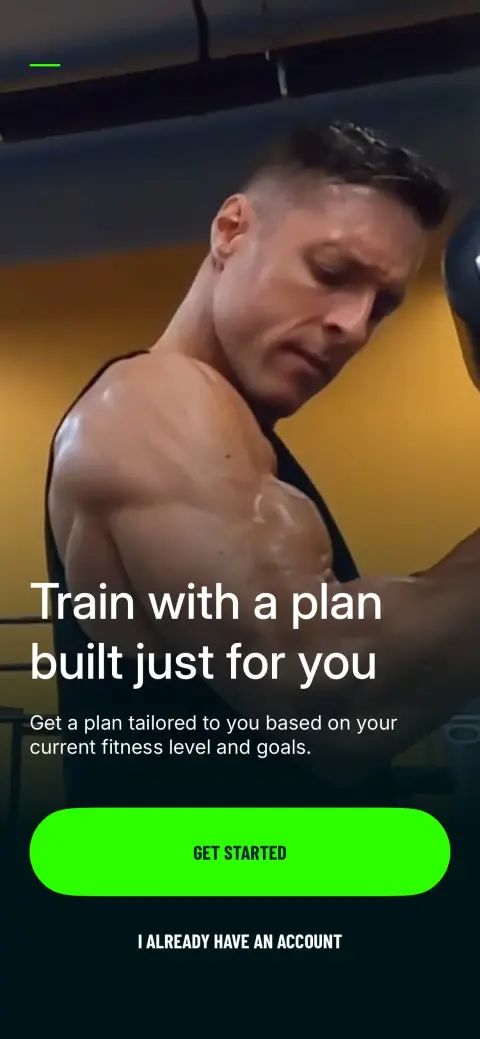
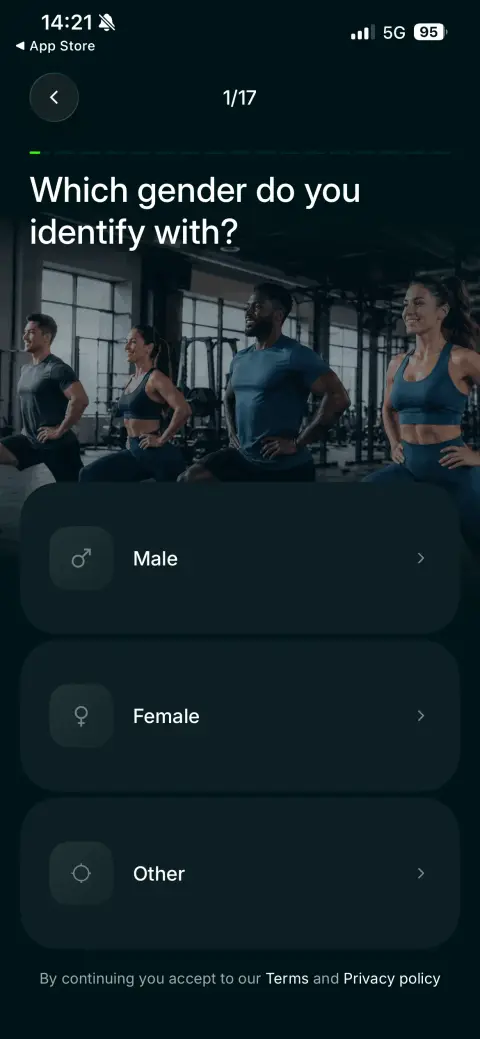
The onboarding opens by promising a plan built just for you, based on your current fitness level and goals. Then the questions start, beginning with your strength training experience.
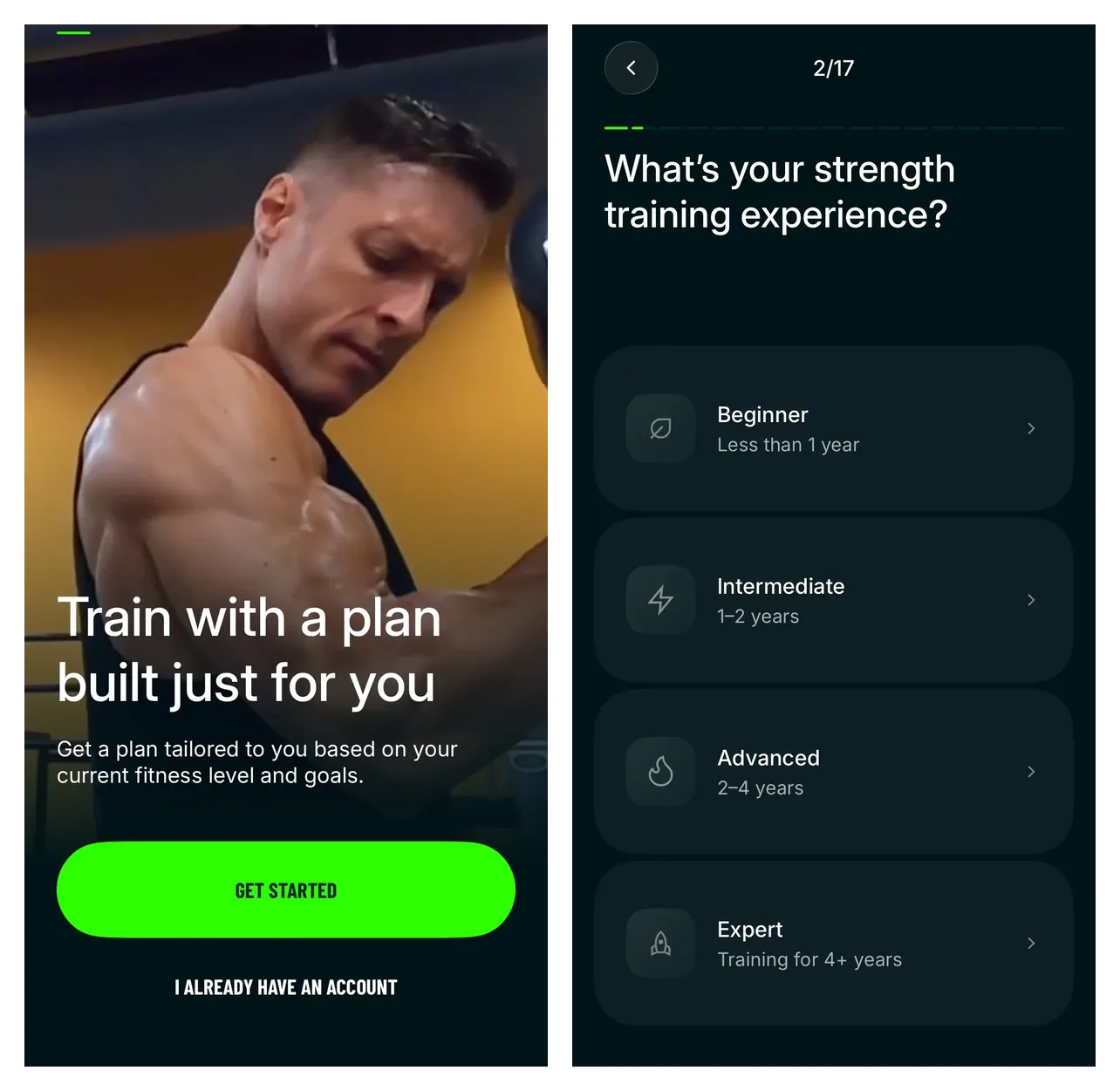
The questions are short and to the point, gathering only what's needed to personalize the plan, such as the areas you want to develop, any injuries and the equipment you have. After asking about equipment, the app shows a graph of how much stronger you get with Befit than without it.
Then it goes a step further and predicts your future weight, with a target date. Finally, a world map shows the number of people who chose Befit climbing to 3.5 million. It shows you your future self first, and only then shows you the price. Sign-up comes after payment, so there's no account form standing between you and the paywall.
Paywall: the annual plan, then an extra discount
The paywall pushes the 12-month plan, shown at 72% off, with a seven-day free trial. If you close it, an extra 20% off appears, for today only.
The idea behind Befit is easy to state: take an expensive service that a person provides and turn it into an app that anyone can afford. Personal trainers cost too much for many people, but plenty of people still want someone to tell them what to do at the gym. Befit filled that gap.
Note: Revenue, paid subscribers, the share of revenue from outside Brazil and the development time are company figures reported by Exame (May 28, 2026). The number of people who have used the app is a company figure reported by Exame and O Povo (May 2026). None of these have been independently verified. The dollar amount is an approximate conversion from Brazilian reais. "3.5 million" is a claim shown on the app's screens. The number of ads is from the Meta Ad Library as of October 23, 2026. Carlos Terceiro's early story with Mobills comes from a 2022 podcast in Portuguese, and his words about his health are paraphrased from Portuguese.
Ideas worth copying
See Befit's full onboarding
This story only shows a few of the screens. Onbo Hub has all 35, from the first screen to the last.
View the onboarding
Newsletter
Founder stories and growth teardowns of apps that are actually making money.
Sources
- Papo Cloud, "Educação financeira combinada ao uso da tecnologia - Carlos Terceiro - Mobills" (YouTube, October 2022)youtube.com
- Exame, "Dois brasileiros criaram uma IA que monta seu treino — e ela vai faturar R$ 25 milhões" (May 28, 2026)exame.com
- O Povo, "Criado por cearense, app de fitness é um dos que mais cresceu no mundo" (May 5, 2026)opovo.com.br
- Befit, "About us" (official website)appbefit.com
- Befit (App Store)apps.apple.com
 Lyfta
 Liftoff
 AbMaxx