The 24-Year-Old Indie Developer Making $4M a Year From a Portfolio of Apps
His class-action app Payout grew to $80K a month — and then he did it again: nearly every app he runs now clears $20K/month, for about $4M in combined ARR. Here's the two-step system behind it.
September 22, 2026

Today's subject: Connor Burd.
I first wrote about him back in November 2025.
At the time, he'd just vibe-coded an app called Payout in two weeks — an app that lets you find class-action lawsuits you qualify for and turn them into cash — and grown it to $50K in MRR in just four months.
Payout launched during Shipaton, the global hackathon run by RevenueCat, and Connor went on to win last year's edition.
This year's Shipaton is running right now, through the end of September. My bet is that we'll see even crazier apps come out of it than last year.
Since winning, Connor has kept growing multiple apps, and nearly every one of them now brings in more than $20K a month. Combined, they've reached roughly $4 million in annual revenue. We're living in an era where a 24-year-old indie developer can pull that off.
Unfortunately, apart from Payout, his apps all run in stealth, so there's no way to look them up.
But he's talked about how he grows apps many times — in interviews and on his own X account.
So this time, I went deep on how he grows multiple apps so repeatably, researched everything I could find, and layered in my own perspective.
Stick with me to the end.
🌃 Quick Recap: Payout, the Class-Action Money App
Let's quickly recap what I covered last time.
In college, Connor was the classic lazy student who stayed up all night playing video games.
Then one day he decided he wanted to build an app. He taught himself and started building.
After a lot of struggle, it took him about eight months to finish his first app.
And it didn't work. It was a social events app — a very high bar for someone attempting their first solo project.
Plenty of people dream of Facebook-level success and go after social apps, but as a solo developer, the bar is simply too high.
The ideas with the highest odds of success are utility apps that deliver value to a single user on their own.
Even if you're aiming for a social app, I think it's smart to start with features that are useful to one person by themselves.
After that first failure, Connor pivoted to utility apps and adopted a strategy of thoroughly studying apps that were already selling — and emulating what worked.
Studying, analyzing, and learning from other apps is essential at the start. Copying an app outright is ethically questionable, but taking inspiration from what other apps do well is completely fine. Honestly, you should be doing it.
Running this publication and OnboHub, I've analyzed a huge number of apps, and what I've learned from them shows up directly in my own apps.
Once Connor made that shift, he started shipping apps that actually sold.
Then, during last year's Shipaton, he built a breakout hit in a very short time: Payout.
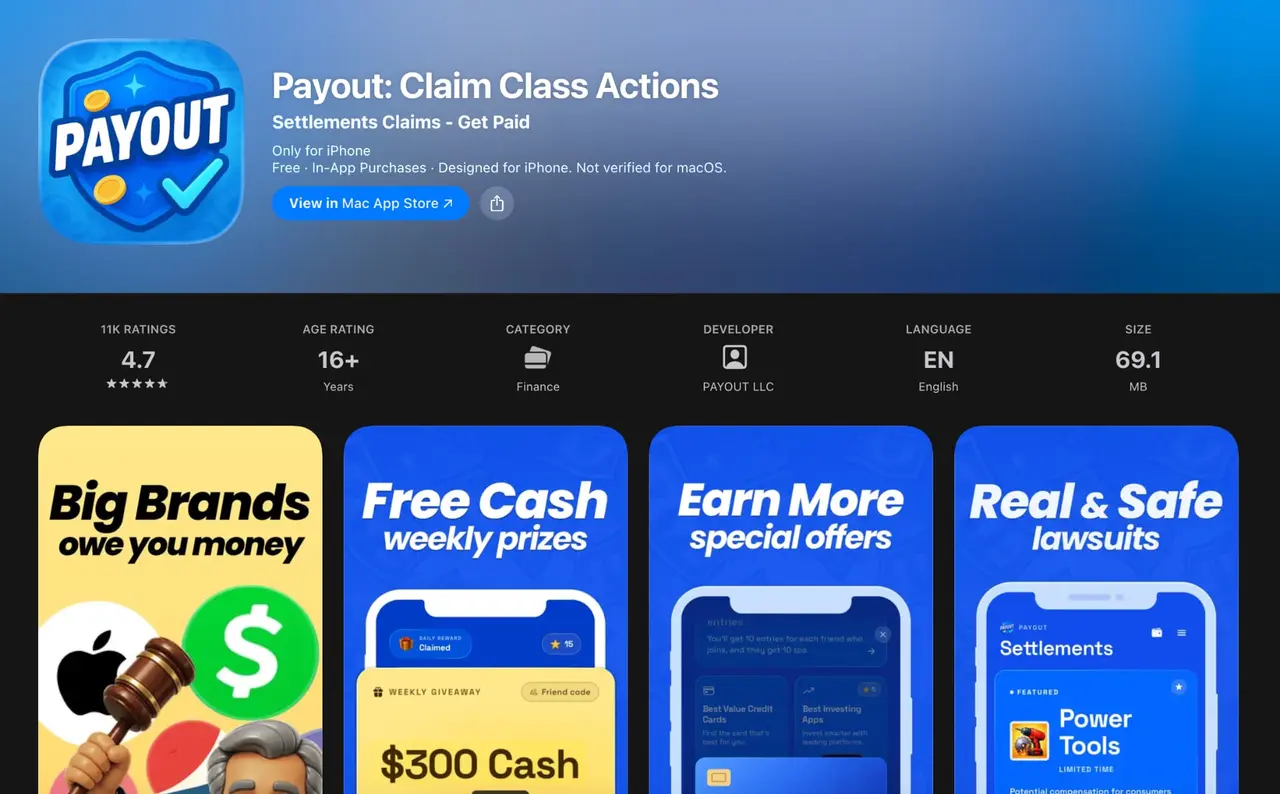
Payout lets you browse class-action settlements, and if one applies to you, you gather the required documents and cash in.
The US is famously litigious. Class actions over false advertising and product defects are an everyday occurrence, and most consumers don't even realize they're included.
A theme that only makes sense in America captured a huge number of users.
Of course this app sells.
Even if you have to pay $20 a month, finding a single qualifying settlement worth $100 more than covers it.
Apps that give you a visible, tangible incentive — money — are incredibly strong.
The exact same theme would be hard to replicate in many other markets, but variations like apps for reclaiming overpaid interest or finding grants and subsidies you're eligible for might work.
💡 Study Onboarding Obsessively — and Optimize It
What surprised me most when I first covered Connor was how thoroughly he analyzes other apps' onboarding and optimizes his own.
Whenever he builds a new app, he downloads 20 competing apps in that space, analyzes them, and uses what he learns to design the best possible onboarding.
More than 90% of users never see anything past the onboarding. That's exactly why, according to Connor, onboarding is what you should obsess over and optimize first.
Here are the elements he considers essential:
1. Evoke emotion
First and foremost, you need to move people emotionally.
Most purchases are made emotionally, not through logical decision-making. As an app developer, you need mechanisms that stir the user's emotions.
2. Make the incentive explicit
It's also important to clearly show the incentive for using the app.
What's the benefit of this app? Users are always sizing up apps with a skeptical eye.
With a clear incentive, users move easily. Payout's incentive is obvious.
3. Make it feel personalized
Making users feel the app has been personalized for them is extremely important.
Many apps ask a long series of questions during onboarding, then show a screen that appears to be personalizing the experience for the user. The effect is enormous.
It doesn't just improve the user experience — it also triggers the sunk cost effect and lifts conversion.
The user thinks: "I answered all those questions and it personalized everything for me. It'd be a waste to stop now."
4. Build credibility
Finally, pages that make the app more convincing — showing scientific evidence or user reviews — matter a lot.
I've analyzed a lot of onboarding flows, and nearly every app that sells well includes these elements.
People who install an app almost always have some kind of problem, and they chose the app to solve it.
Onboarding's job is to bring that problem to the surface and make the user think, "This app will actually fix it!"
Unfortunately, Payout isn't available in my region, so I couldn't see its onboarding. But I've collected onboarding flows from a huge range of apps on OnboHub, so please take a look.
You can also browse the viral social posts that became the growth engine for each app.
So far, I've covered Payout — the app he grew so fast during last year's Shipaton — and his obsession with onboarding.
From here, let's dig into how he grows multiple apps in parallel.
Between what he's said in various places and my own experience analyzing app success stories in this publication, a clear pattern emerged for why he can grow apps so repeatably.
His growth methodology breaks down into just two steps.
Let's dig into them.
It's not easy, of course, but I think you'll see why this approach lets you grow app after app.
Read to the end and actually act on it, and you'll be in a strong position to grow your own apps.
📈 The Two Steps Connor Used to Grow His Apps to $4M a Year
To sum up his growth playbook in a nutshell:
Push revenue per download (often called ARPU) as high as possible
Partner with an influencer who fits the app, split the equity 50/50, divide the roles, and let them handle acquisition
That's it.
I've written about revenue per download in an earlier piece on Timo Köhler and ChartDetector AI: the metric to watch is "Realized LTV per Customer" in RevenueCat.
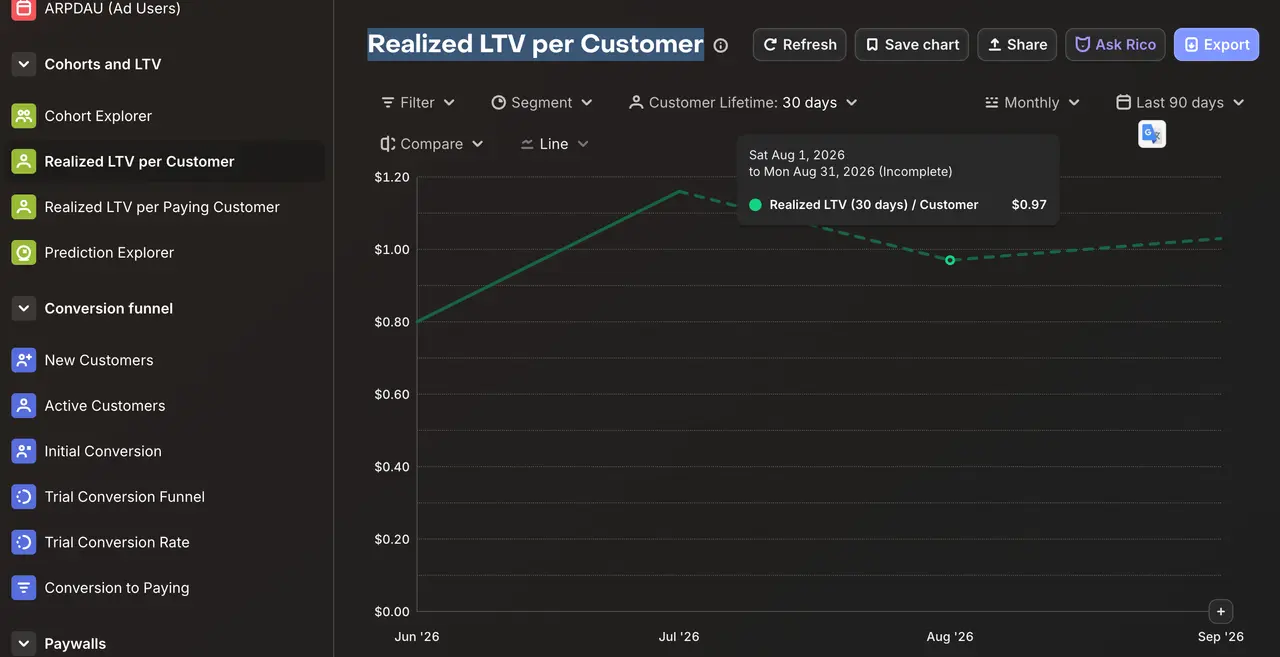
One of my own apps hovers around $1 per download, while top-selling apps in the market bring in around $2.50 per download. (For convenience, I set the lifetime window to 30 days here, but you can extend it to see profitability over a longer period.)
Obviously, the higher this number, the better.
It matters most when you scale with ads or influencer marketing.
Say your cost to acquire one download through ads is $2. If your revenue per download is $1, the more you spend on ads, the more money you lose.
But if it's $2.50, the more you spend, the more you earn.
In reality, acquisition costs rise as you spend more, so you can't grow revenue infinitely. But in theory, as long as
Revenue per download − Acquisition cost per download
stays positive, there's no ceiling on revenue.
That's why raising the profitability of the app itself often matters more than tweaking ad creatives or targeting to push acquisition costs down.
And that's why Connor focuses relentlessly on maximizing app profitability first.
So what does he prioritize to make that happen?
💰 Start With a High-Revenue Theme
To maximize revenue per download, you first have to choose a theme that can generate high revenue.
Get the theme wrong, and no amount of onboarding or paywall tuning will move the needle much.
Connor says you should "build apps rooted in fundamental human desires."
Everyone wants things like:
Money
To look better
To be more attractive
If you can touch even one of these, your app's revenue potential goes up dramatically.
Payout is rooted squarely in the desire for money.
The best-selling categories — fitness, calorie tracking, looksmaxxing — are rooted in the desires to look better and be more attractive.
Examples in these spaces:
FaceKit, a looksmaxxing app that crossed $50K a month at launch
Cal AI, the blockbuster that grew to over $5M a month in two years
There are also lots of "scan it with AI and analyze it" apps lately, across all kinds of themes. Which ones are exploding?
Antiques, trading cards, coins, rocks.
They're all tied to money!!!
Antiques and trading cards obviously are, but coins and rocks can be rare and valuable too — sometimes worth a lot of money.
That's why "AI rock identifier" apps sell so ridiculously well.
Even if you're building an AI identifier app, asking "does this connect to money?" matters. (I once built an AI app that identified craft beers. It went nowhere.)
⏰️ Urgency Changes Everything, Too
This one isn't something Connor said — it's my own take — but I believe the urgency of the problem also changes profitability.
The more urgent the problem, the higher the conversion rate, and the higher the revenue per download.
One caveat: these apps convert on short-term needs, so retention tends to be lower.
Among the cases I've covered, AI "cheat" apps for students are a great example of high urgency and massive sales.
Students are constantly chasing deadlines for papers and exams.
Apps that speak to those students are urgent and convert easily.
It's not hard to imagine that an app that lets you write papers with AI without your teacher noticing would sell extremely well.
🌍️ Country Matters a Lot
Revenue also varies wildly by country. My apps are purchased by people in many countries, and the US is by far the strongest.
That RevenueCat revenue-per-download figure I showed earlier jumps to around $2.90 if I filter to the US alone.
Other English-speaking markets like the UK and Australia, plus high-income parts of Europe, are also strong.
Conversely, marketing in countries with lower average incomes barely sells.
Beyond income, whether a country has a culture of paying for apps makes a huge difference. Countries without that culture pay almost nothing.
Georgia, where I live, has low incomes and basically no culture of paying for apps, so really nobody pays.
Many readers of this publication probably build for a domestic, non-US market. But revenue per download is overwhelmingly higher in the US and other high-income markets.
So if you want to raise revenue, you should seriously consider going global.
That was a lot, but the point is this: if you want to make money, start by choosing the highest-revenue theme you can. Specifically, choose:
A theme rooted in fundamental human desires
A problem with high urgency
Countries with a lot of high-income users
💸 Once You Pick a Theme, Maximize App Profitability
Next, once you've picked your theme, push the app's profitability as far as it'll go.
That's where the onboarding I covered earlier becomes crucial.
On top of that, Connor emphasizes the importance of a hard paywall.
A hard paywall means there's no free plan — users have to pay from the start.
Within hard paywalls, there are two types:
Hard paywall with a free trial
Hard paywall without a free trial
Almost all of Connor's apps use a hard paywall with no free trial.
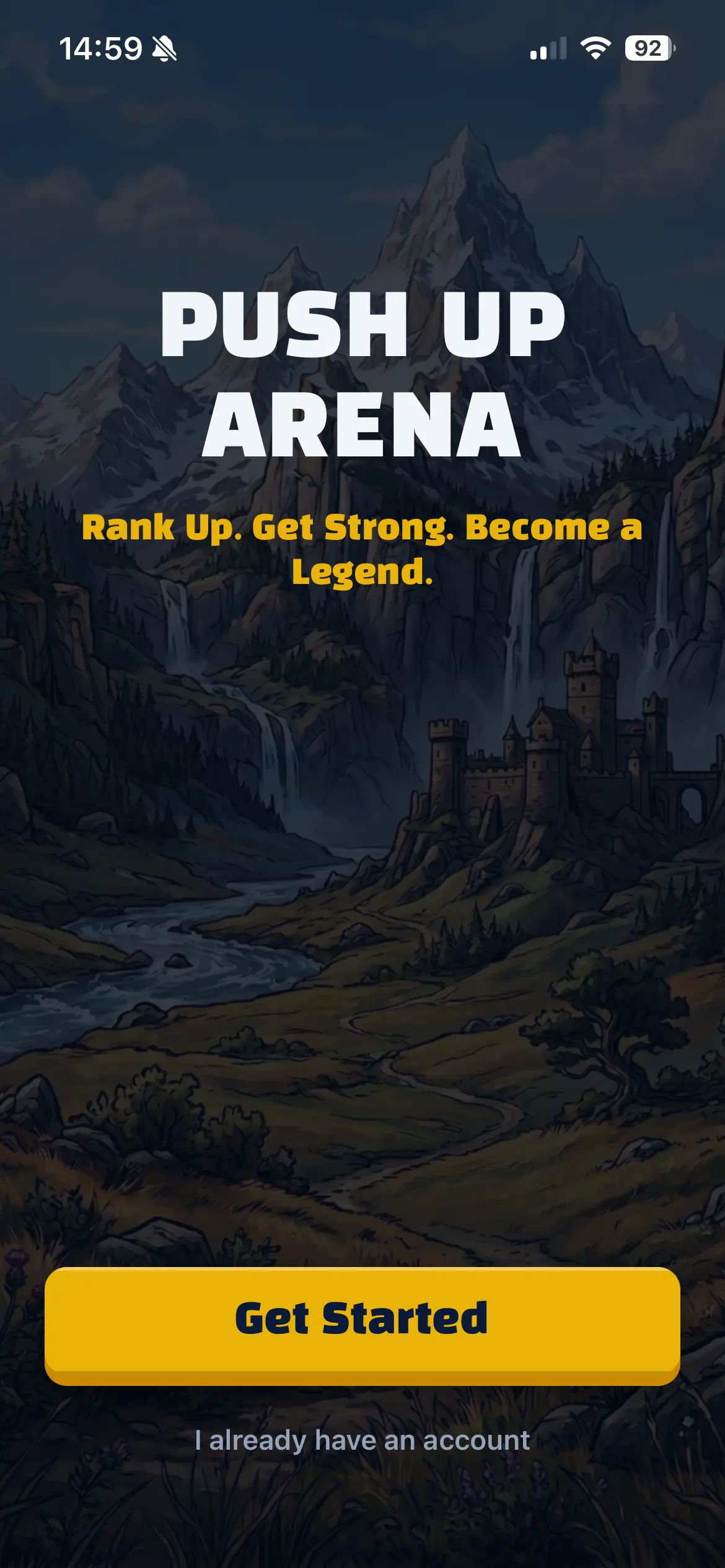
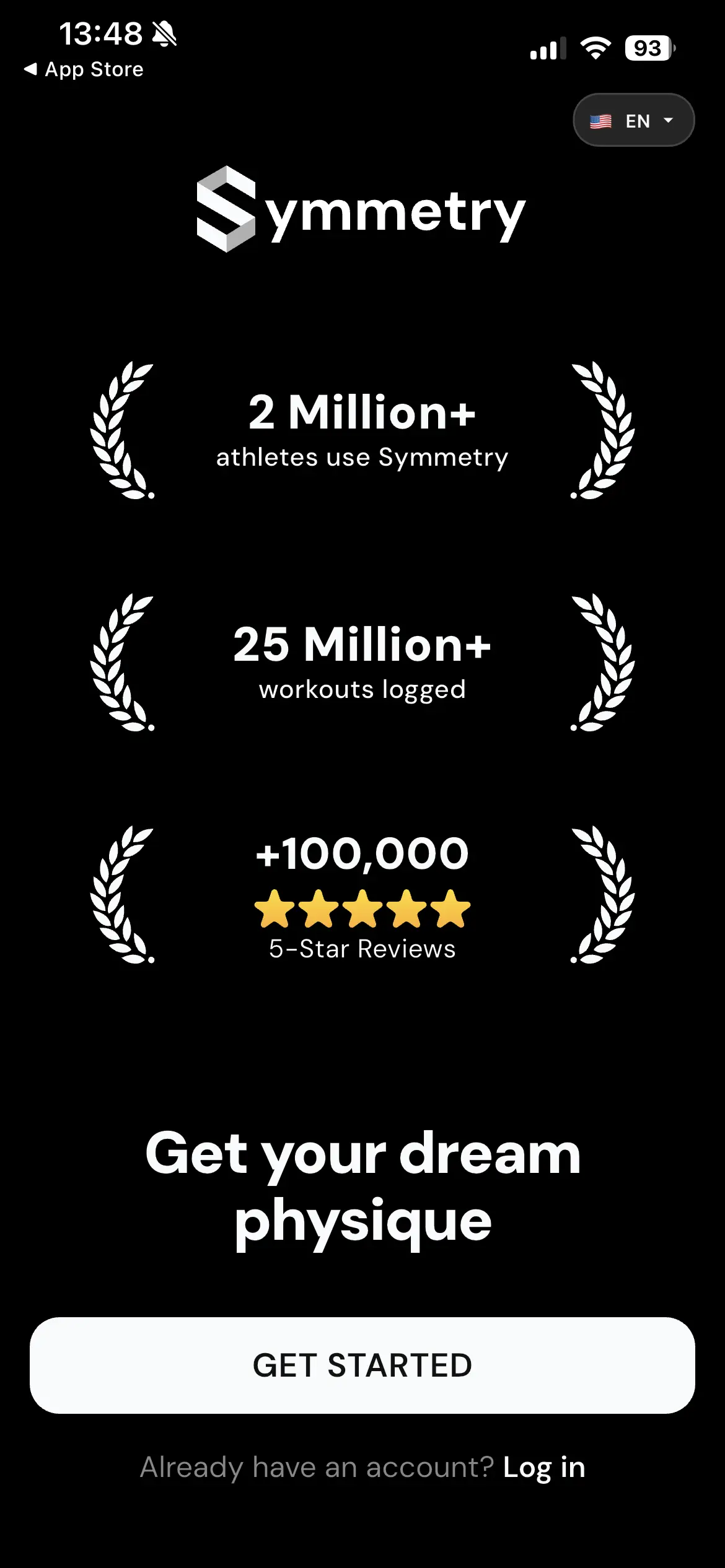
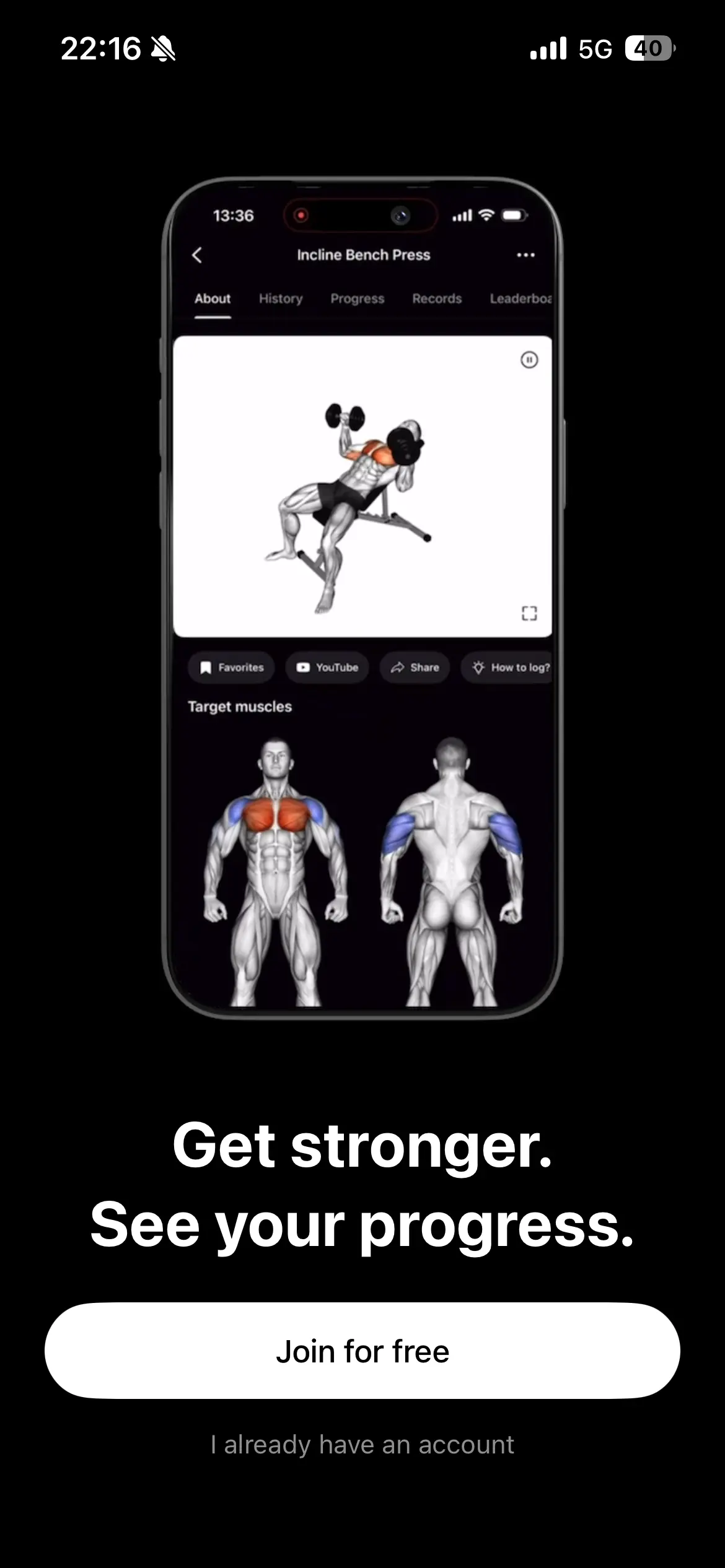
Among the cases I've covered:
both use a hard paywall with no free trial.
With a free trial, users download with a "why not try it" mindset and churn without ever using it seriously.
With a hard paywall that requires payment up front, users become more committed the moment they pay, and retention and ratings tend to go up.
With the app I'm growing right now, I tested a lot of patterns and ultimately settled on a hard paywall with no free trial.
It raises profitability by a wide margin. And I have a feeling it ends up increasing user satisfaction, too.
That said, I think it depends on the product's theme and stage.
Social apps, where scale creates network effects, are better off freemium. And if you're aiming for a product doing tens of millions of dollars a year, freemium may be the better choice.
Duolingo is freemium, and Pingo AI, which I covered before, started with a hard paywall but appears to have switched to freemium after getting into Y Combinator.
I also suspect web apps are better off freemium, since that makes acquisition through SEO and social much easier.
That's why OnboHub, which I run, uses a freemium model.
Ultimately, you won't know what's best for your product until you test it, so I'd experiment with a variety of paywall patterns.
But if you want to raise your app's profitability, you really can't go wrong starting with a hard paywall.
🤝 The 50/50 Equity Deal: A New Way to Partner With Influencers
So far, I've talked about how to maximize app profitability. This phase is critical. If you skip it, the next phase doesn't work.
Now let's move on to acquisition.
After maximizing an app's profitability, Connor grows it by forming equity partnerships with influencers.
What's interesting is that he doesn't just book one-off sponsored posts or set up affiliate deals. He gives them equity and goes all in together.
Behind Payout's rapid growth is Casper Capital, a finance influencer with 2.9 million followers — and Connor gave him 50% of the equity to grow it together.
That's why Payout's link stays in Casper's profile on an ongoing basis.
But how do you even approach creators like that in the first place?
When most indie developers think about reaching influencers, they picture sending DMs on Instagram or TikTok. Connor deliberately avoids DMs and focuses on email instead.
The reason is simple: popular creators' DMs are flooded with sales pitches, and they simply don't get read.
A business email address, on the other hand, is more likely to be treated as a "real conversation" and less likely to get buried.
His other weapon: polished mockups built in Figma.
Instead of an abstract pitch like "want to work on something together?", he sends concrete visuals: "Here's what the onboarding would look like with your brand, and here's the post format we could run."
That dramatically improves the reply rate.
That's sales 101, but it's rare to see an indie developer go this far when pitching influencers.
Still, even with all that preparation, there's no guarantee an influencer will respond right away.
Connor didn't land equity partnerships easily, either.
With Payout, he refined the concept, prepared mockups, and emailed over and over — and got no replies. In the end, he managed to make contact through a friend's connection.
That's the level of effort it takes. You almost want to say, "At this point you're not an indie developer, you're a salesperson!" — but maybe that's just the era we're in.
This kind of gritty, hands-on sales is probably what separates the winners.
So Connor's approach is: find a high-revenue theme, lock in the app concept, bring it to an influencer partnership, and grow it. He's stuck to that playbook and grown revenue across all his apps.
With this approach, you don't have to focus on marketing yourself. You can concentrate on choosing themes and building features.
And this is where having maximized the app's profitability really pays off.
If the app's profitability isn't high, the influencer might be better off selling their own product.
In that situation, the partnership falls apart. That's exactly why it's so important to push profitability as high as possible first.
I think this is a very viable approach for developers who don't want to do marketing.
It wouldn't surprise me to see more indie developers everywhere start growing apps aggressively this way.
🍎 Protect Your Brand With Apple Search Ads
Now let's look at the next scaling phase.
Once several apps are each doing $20K+ a month, a new problem appears: copycats and freeloaders.
The more famous your app gets, the more lookalike apps with similar names and concepts show up on the App Store.
Without countermeasures, users who search for the brand you spent money building awareness for could end up flowing to a copycat.
Connor's countermeasure is to bid on his own app name and brand keywords in Apple Search Ads.
Paying for your own brand name might seem wasteful at first, but CPCs stay very low, and compared with the cost of losing users to copycats, it can be well worth it.
That said, this is something you can think about once an app that fully copies yours actually appears.
📊 Scale From Organic Into Meta Ads
For further scale, he also uses paid ads.
Connor's approach: test creatives first through influencers and organic content, then scale the formats that hit with Meta ads.
Honestly, I think this is how most growing apps do it.
Some apps get to tens of thousands of dollars a month without paid ads, but beyond that, paid ads start to feel essential.
Organic virality is unpredictable. Nobody can predict whether you'll go viral at the same level again.
Paid ads, on the other hand, reliably buy reach in proportion to your budget. Once you find a winning creative, you can scale mechanically by putting ad spend behind it.
The key here is the relationship between CPM and CVR.
Videos that are entertaining and hold viewers' attention tend to get favored by the platform, which lowers CPM.
But a low CPM doesn't necessarily translate into conversions. Conversely, videos with high conversion rates often come with higher CPMs.
So what matters isn't just cheap CPM or just high CVR — it's identifying creatives that balance both.
Pick the "just right" creative: viral enough to spread, and persuasive enough to convert.
📝 Wrapping Up
This time, we looked at Connor.
The first thing to do is simple: keep pushing your app's profitability higher.
Neglect this phase and the acquisition phase that follows won't work.
Influencer partnerships will be hard to land, and ads will struggle to perform.
I think Connor's approach is a very sound one.
There are actually a lot of people out there who post constantly and have real influence, but have nothing to sell. Plenty of people are cranking out content without any exit strategy.
Pitching those people — "let's build an app together!" — and forming a real partnership could be a great approach.
But handing over equity can get complicated, so be careful. You no longer have to do the marketing, but you inherit a different set of headaches: sales and management.
You could structure it as a revenue share instead, or pitch something even lighter!
That's it for this week's deep dive on Connor.
Thanks for reading all the way through! If anything caught your attention or you have questions, just hit reply — I read everything.
And if you post your thoughts on X and mention me, it makes my day. I always respond.
See you next time!
References
Connor Burd on X: https://x.com/BusDownBonnor
Connor Burd's post on X: https://x.com/BusDownBonnor/status/2080174335432458311
AlexIsBuilding on X: https://x.com/AlexIsBuilding/status/2095588275641778559
YouTube interview: https://www.youtube.com/watch?v=rD3MeYGqaec
Payout: https://www.trypayout.app/
Connor Burd on LinkedIn: https://www.linkedin.com/in/connor-burd-800482225/
Starter Story — Connor: https://www.starterstory.com/connor