The Guy Who Built the MVP in a 21-hour and Grew an AI Flashcard App to $100K/Month
He built the MVP in a 21-hour coding sprint off a random tweet. Two years later it had a million users. Here's the exact playbook — and what I stole for my own app.
August 31, 2026

There’s a developer named Julian Alvarez who built an AI flashcard app called Jungle AI and grew it to roughly $100K a month.
I build AI flashcard apps too. Mine teaches Japanese, and I’ve grown it to around $2,700 a month in revenue. Julian is doing $100K a month. That’s not a different league — it’s a different sport. The numbers are literally an order of magnitude apart.
So of course I had to know: how did he grow a flashcard app that far? As someone building in the exact same space, I couldn’t rest until I’d taken his entire playbook apart, piece by piece.
And when I dug in, I found a lot buried under the surface. The way he designed the product experience and engineered his acquisition funnel is genuinely brilliant.
If you’re building — or thinking about building — a study app or a tools app, this is gold. But honestly, even if you’re nowhere near the education space, the lessons on how to grow a product from zero apply to almost anything. Stick with me to the end.
🎮 A game-addicted kid from a small Texas town shipped his first app at 13
Let’s rewind and start with his background.
Julian grew up in a small border town between Mexico and Texas. His childhood, in a word? He was a video game addict.
What changed the trajectory of his life was a single sentence, spoken to him at 13 by a friend of his father’s:
“Hey — want to try building a calculator app for the iPad?”
At the time, Apple had just released the iPad, and — believe it or not — it didn’t ship with a built-in calculator app. Julian’s gut told him this sounded fun.
So he wrestled with it for months and finally released both a paid version ($0.99) and a free version to the App Store. The result: 400 downloads on the paid app, and over 30,000 on the free one.
Julian later looked back on that moment in a LinkedIn post:
“It felt like magic — you discover a need in the world, and with coding as your superpower, you can build technology that reaches tens of thousands of people around the globe at almost zero cost.”
I feel this in my bones. Building products is one of the most hopeful things you can do — it’s the single most powerful way to put something you made into the hands of people all over the world at almost no cost.
I’ve built a lot of products over the years, and I’ll never forget the rush of the very first sale. Julian got to feel that at 13.
🌃 Chasing startups, going nowhere — then one idea falls out of the sky
From there he went to college, majoring in computer science with entrepreneurship on his mind. He tried to build a startup with friends during school, but nothing clicked. After graduating, instead of founding a company, he joined Meta.
A software engineer at Meta — the kind of high-status career most people would kill for. But the founder’s itch never left him.
While keeping his Meta job, he spun up project after project. First a Web3 “learn-to-earn” platform. Then a personal-growth social app. Then a gratitude-habit app. Idea after idea.
None of them landed.
And then one day, adrift, he saw a tweet:
 X (formerly Twitter)
Julia Wu (@thejuliawu) on X
My dream GPT product is a tool that can generate flash cards (like anki) from books/articles I'm reading so I can quiz myself
X (formerly Twitter)
Julia Wu (@thejuliawu) on X
My dream GPT product is a tool that can generate flash cards (like anki) from books/articles I'm reading so I can quiz myself
The moment he read it, he knew: this is it.
He and a friend named David sat down and built the entire idea in a single 21-hour coding sprint. Then they shipped it and replied to that same tweet — “hey, I built basically the tool you described.”
The reply started racking up likes. For most people, that’s where the story ends. Not for Julian. From here, he made a bold, almost absurdly earnest move — and this, I think, is exactly what separates the people who get results from everyone else.
📩 The DM blitz that landed his first 100 users
His move was pure grind: he DMed every single person who engaged with that post. The sheer volume of outreach was insane.
That DM blitz got him his first 100 users. The price he paid? His X account got suspended for the sheer intensity of the outreach. That’s how hard he went.
Think about it. Most people see a viral tweet, think “I could build that!” — and never move with anywhere near that speed or volume. Julian’s raw willingness to act is what generated the outcome.
Eight weeks after launch (around late March 2023), he posted an update on LinkedIn:
“It’s been 8 weeks since launching Jungle (AI-generated flashcards).”
7,000 downloads
2,500 weekly active users
Users in 120+ countries
Just $800 spent on marketing
A CAC of $0.25–$1
From there it kept climbing. By September 2023: 60,000 cumulative downloads and $15K in cumulative revenue. By the end of 2024: $850K ARR. And just six months after that, he crossed 1 million total users and $1M ARR.
An MVP coded in one 21-hour sprint off a stranger’s tweet became, two years later, an AI learning app with a million users.
That kind of velocity is a timeline you simply couldn’t reproduce before the AI era. Which cuts the other way, too: in this era, opportunities like this are lying around everywhere. You just have to go grab them.
So from here, let’s get into how Jungle actually grew to $100K a month. It looks like a smooth climb from the outside, but the path was full of experiments, dead ends, and course corrections:
How he grew to his first $2,000 MRR in about two months
How he broke out of a plateau at $2,000 MRR by narrowing to a niche — and rocketed to $15K MRR
The relentlessly polished onboarding experience
Where the app’s future growth might come from
As a fellow flashcard-app operator, there were several points where I thought “damn, they got me” — and I immediately folded his tactics into my own app.
If you build study apps or tools, this is a must-read. But even if you don’t, the lens of “how do you actually grow a product?” will pay off. Let’s go.
📚 What is Jungle? A look inside the product
First, let’s dig into the product itself.
Jungle is, in short, “the AI-native version of Anki or Quizlet.”
The core feature is simple. Upload almost any source material — lecture slides, PDFs, web pages, YouTube videos — and the AI parses it and automatically generates flashcards and multiple-choice quizzes.
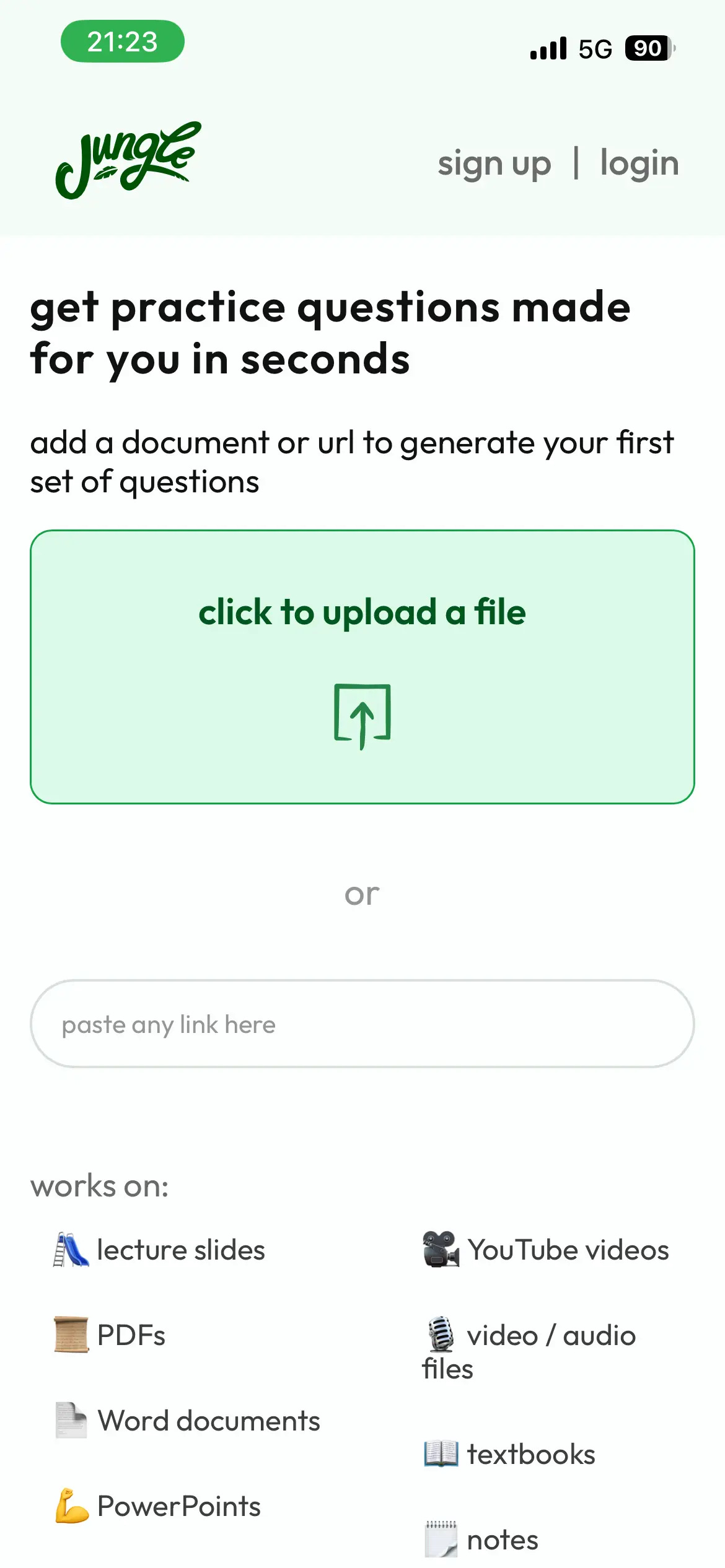
You don’t even need to upload a file — you can just paste a link.
The auto-generated quizzes are editable by hand.
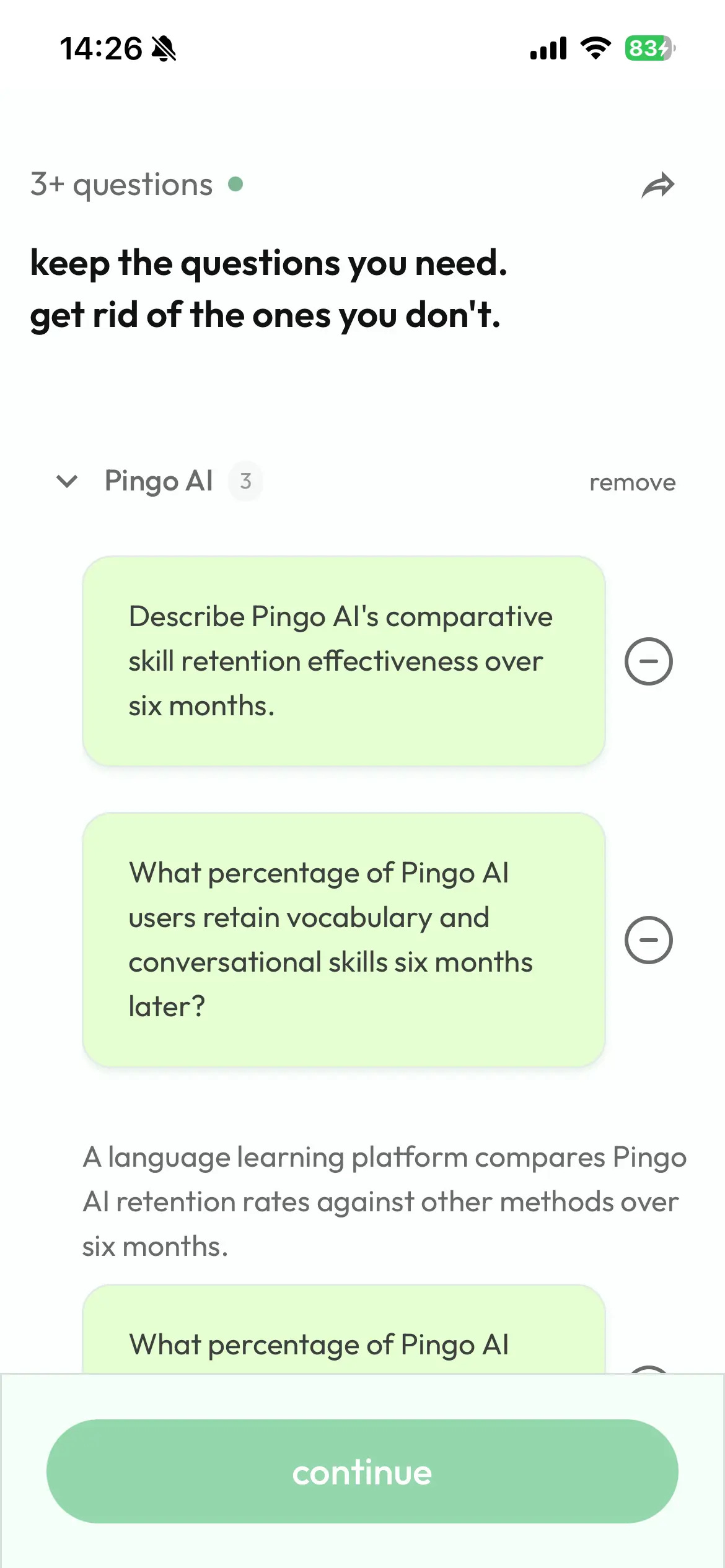
Then you drill yourself on them.
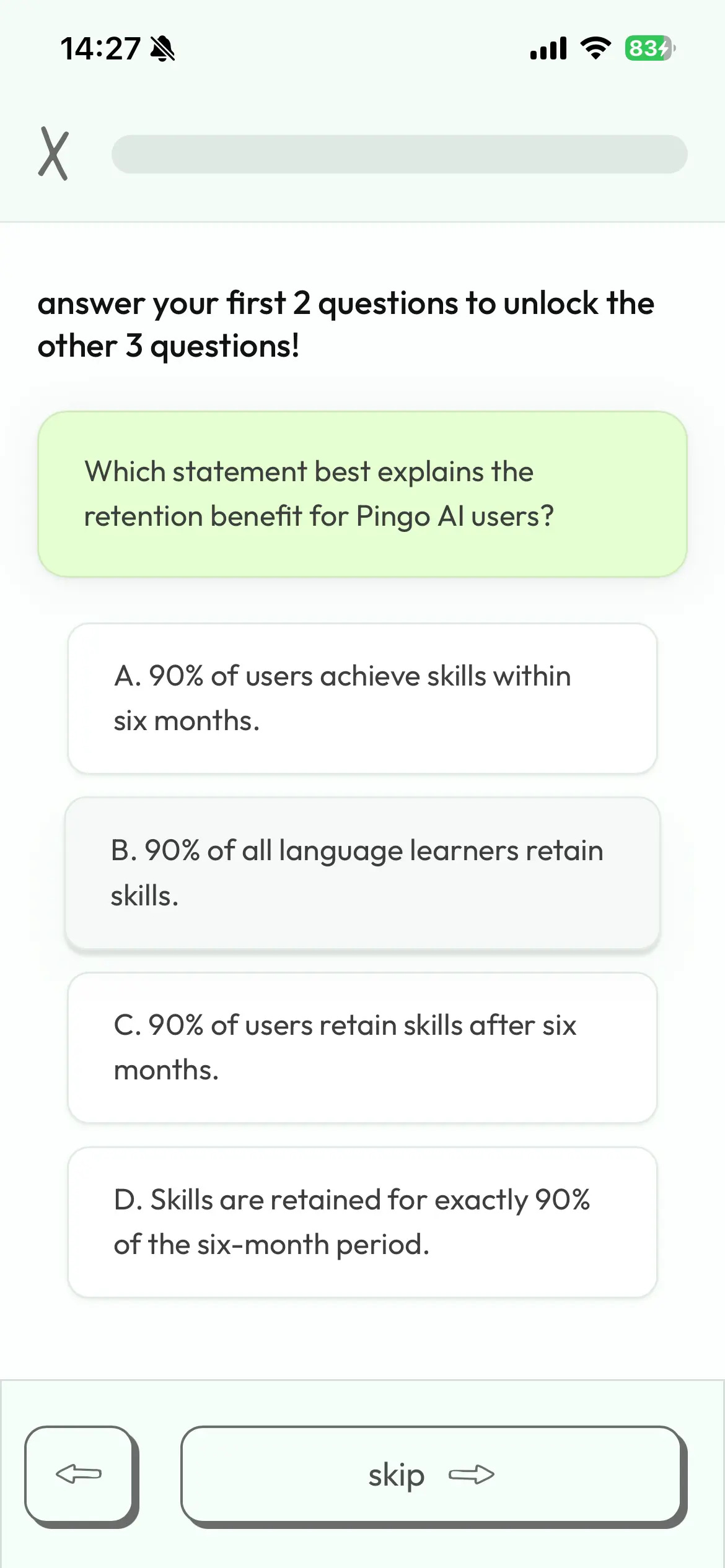
On top of that, there’s a spaced-repetition algorithm built on the forgetting curve, so the questions you’re served shift dynamically based on how well you actually know the material.
Every memorization-style flashcard app uses some version of this algorithm — mine included. And honestly, the technical side isn’t that hard: with an API from GPT or Claude, you can build this. You have to tune the prompts, but you don’t need some elaborate workflow.
So where’s the moat?
Julian is blunt about it: in the generative-AI era, AI-wrapper apps have no fundamental defensibility. If a moat exists at all, it’s relentless trial and error — experimenting until you find what works.
And you know what? In this era, he might be right. Speed and a bottomless appetite for experimentation may be the moat.
In fact, his team runs 50–100 experiments a month. Ad creative, landing pages, pricing, onboarding, features, email marketing, referral programs, geos, new segments — they run dozens of hypotheses across every layer, every single month.
The best detail: every Monday they hold an “Experiment Hour,” a dedicated block for nothing but testing.
So many of the developers who win are just experimenting, shipping, and iterating at a ferocious pace. Generative AI made it possible to run those experiments faster than ever. For founders and indie hackers in the AI era, experimentation is the single biggest competitive advantage. So experiment relentlessly.
📲 Onboarding built around delivering the “win” first
Jungle’s onboarding is a departure from the apps I’ve covered in this newsletter before — it’s genuinely unusual.
It doesn’t open by asking you questions to personalize the experience, or by selling you on the app’s value. Instead, the very first screen you see is a prompt to upload some material.
You upload whatever’s handy, and — boom — a set of quizzes gets generated for you.
Julian describes his obsession plainly: “How quickly and smoothly can we deliver the user’s first win?”
This is a hugely important insight. So I redesigned my own flashcard app’s onboarding to get the user to make their first flashcard right away. Asking users to take a concrete action pulls out their commitment — and it lifts conversion.
By the way, Jungle’s onboarding is broken down in detail over on Onbo Hub if you want to see the screens.
🎮️ An app packed with gamification
Jungle is also stuffed with mechanics designed to keep you from getting bored so you actually keep studying.
Julian’s view: in learning, the thing that matters most is “how do you keep it fun enough that people come back every day without burning out?”
First, you pick a character.
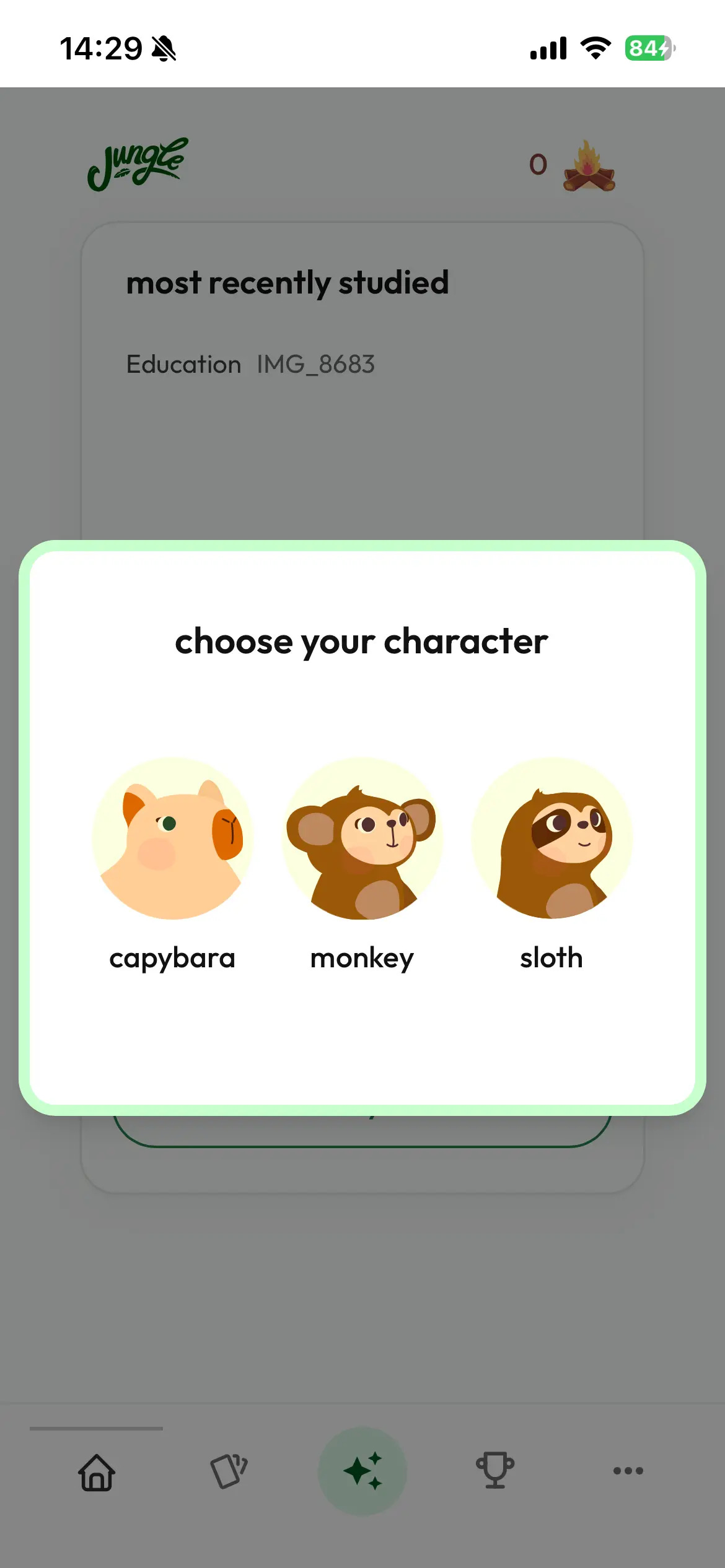
Then you pick an accessory for it.
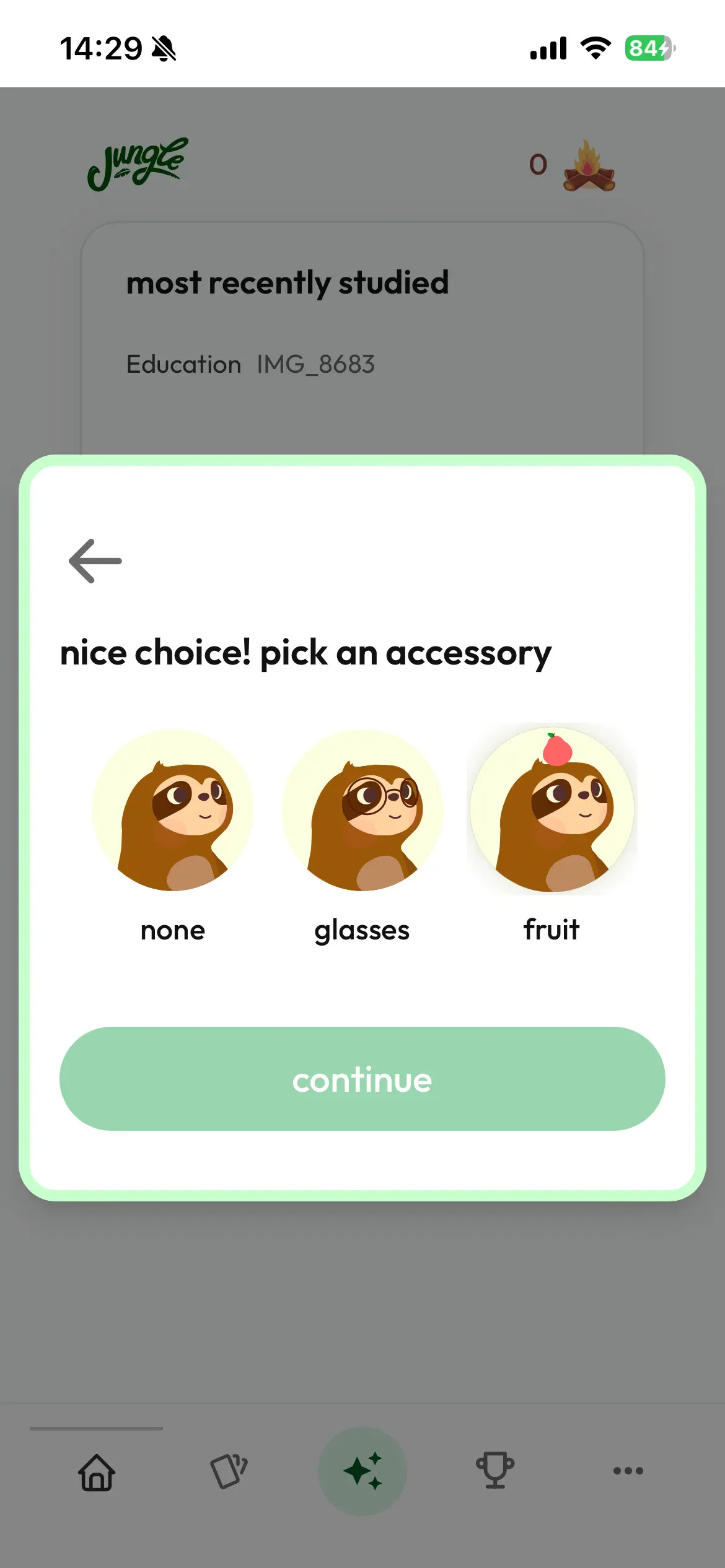
All they had to build was a 3×3 grid — nine possible character combinations. But because you chose it, you get attached to it.
Every time you answer a quiz correctly, a tree grows a little more on screen.

It’s a small thing, but it’s good — you can literally see your progress, which turns into a sense of accomplishment.
And when you finish a quiz, you earn XP and watch your character advance deeper into the jungle.
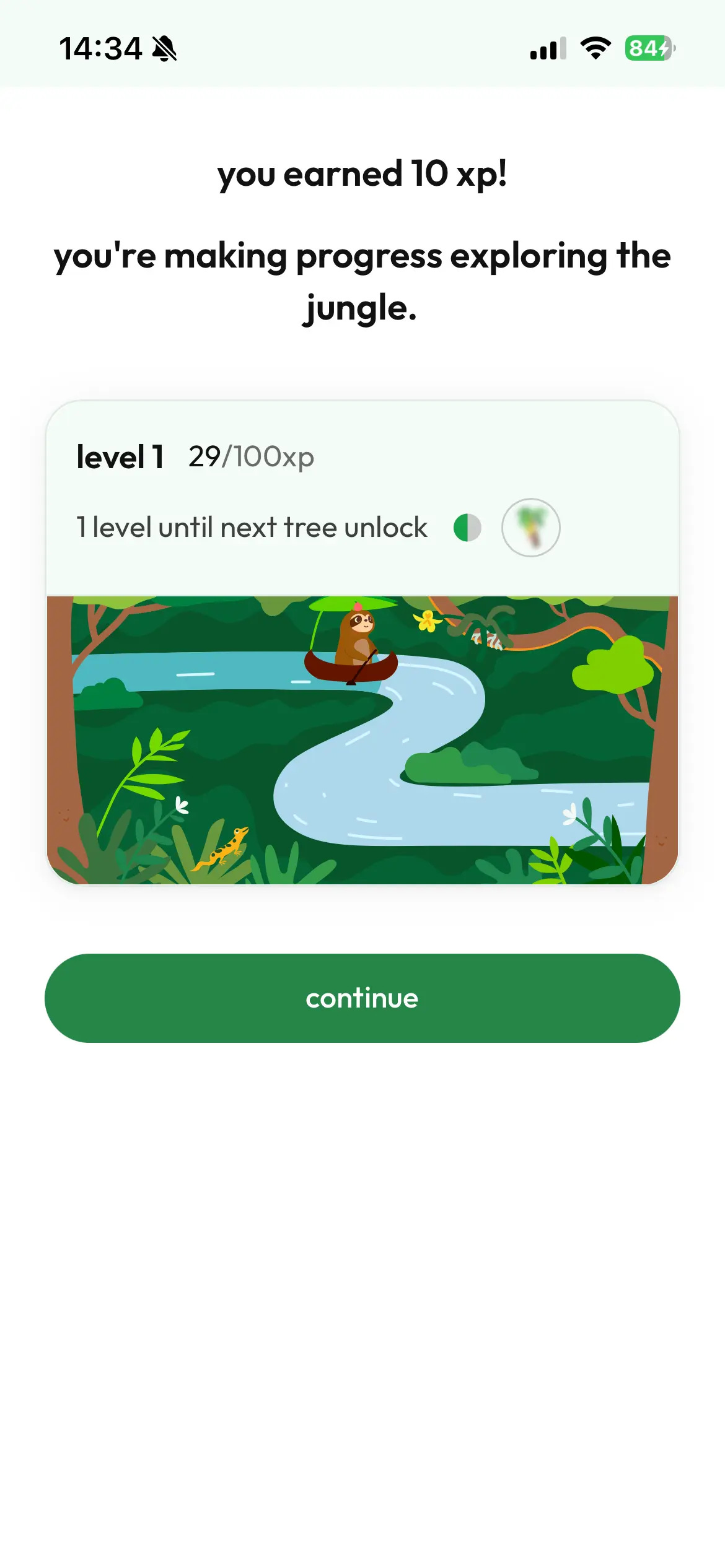
There’s no doubt these little touches of playfulness feed directly into satisfaction and, crucially, retention.
👨💻 A viral boost from AI directories
So how did Jungle actually grow? We covered the first 100 users via DMs. But how did it scale from there?
He talked 1-on-1 with those first 100 users, funneled their feedback into the product, and kept polishing. And in parallel, he submitted Jungle to every “AI directory” he could find — sites that catalog AI tools.
Jungle launched on January 29, 2023. ChatGPT had only appeared in November 2022, so AI tools still felt shiny and new. A wave of directory sites had sprung up to list them all — and a horde of AI influencers were checking those directories daily, trying new tools, and cranking out videos to farm impressions.
In that environment, Jungle caught an influencer’s eye. It got featured in a video by Futurepedia, for example:
That video — a rapid-fire tour of a bunch of AI tools — racked up 1.58 million views, so you can imagine the impact. (Fun fact: at launch, Jungle was actually called “Wisdolia.”)
Boosted by that Futurepedia feature and others like it, MRR climbed to about $2,000.
👨⚕️ Going all-in on one niche — medical students — broke the ceiling
So the AI directories fed influencer coverage, and MRR grew almost on autopilot. But that influencer bump was temporary and largely out of his control. MRR stalled.
Now what?
The first thing they did was narrow their user segment. Digging through the data, they noticed something: medical students were using Jungle far more heavily than anyone else.
And that wasn’t a coincidence. The primary users of Anki — the most widely used flashcard app in the world — are, in fact, medical students.
Med students have to hammer countless drug names, diseases, and symptoms into their heads. They memorize enormous volumes of material every single day. That makes them the single user group with the highest demand on Earth for flashcards and memorization tools.
So Julian made a call: point the entire marketing strategy at medical students.
This is a seriously smart decision. When you aim an early-stage product at “everyone,” you end up resonating with no one. You should start by narrowing to the one core segment with the most urgent pain — and go win them.
🕺 A med-student TikTok influencer took MRR to $15K
So how do you efficiently go after medical students? The answer, again, was TikTok.
TikTok has a massive subculture called “Medical School” — or “MedTok” — where med students share their note-taking systems and study methods. Julian decided to plant his flag right there.
They found TikTok creators who were active as medical students and asked them to make review videos of Jungle. The bet paid off spectacularly.
A med student named Aghogho made a piece of content that blew up:
The video captured the grind of med-school studying while showing her using Jungle (then still “Wisdolia”). It hit 2.5 million views.
MRR, which had been stuck at $2,000, jumped to $15K within one to two weeks. Absurd.
🌀 Turning a squad of med students into a UGC machine
Realizing a single influencer could move the needle that much, Julian asked the obvious next question: “Can we systematize this?”
He tried to line up more influencers, but quickly learned you don’t get an Aghogho-sized home run every time. So he went bigger, into a full-blown UGC strategy.
He assembled a squad of roughly 30–40 creators and built a machine that posted as many as 400 videos a week across TikTok and Reels.
Each creator posts organic-feeling videos “as a single student” who just stumbled onto this god-tier tool called Jungle.
With this UGC engine, they racked up 76 million views in just three months.
Honestly, almost every fast-growing consumer app overseas is running this exact UGC play. The Pingo AI case I covered previous is the ultimate example of it.
 Onbo Hub
"Pingo AI": The Monster Language Learning App Created by Two Students, Generating Over $500k in Monthly Revenue in Just One Year
After extensive research for my own Japanese learning app, I discovered "Pingo AI"—a viral sensation launched by two students that hit $500k MRR in just over a year. Simply insane.
Onbo Hub
"Pingo AI": The Monster Language Learning App Created by Two Students, Generating Over $500k in Monthly Revenue in Just One Year
After extensive research for my own Japanese learning app, I discovered "Pingo AI"—a viral sensation launched by two students that hit $500k MRR in just over a year. Simply insane.
⚡️ UGC growth hacks don’t last forever
Julian moved from influencer marketing into UGC and grew explosively on short-form video — but he’s candid that “this kind of UGC strategy is, at the end of the day, just a growth hack.”
“A hack, by its nature, exploits a gap in the market. Gaps get filled. Now every brand is doing UGC, and consumers are starting to notice — ‘oh, another ad’ — they can smell the inauthentic content.”
So he’s now returning to the most durable metric of all: retention. The gamification I described earlier is part of that push — they keep refining it to lift retention.
The result: about 40% of new signups now come from referrals. Reaching that state is a genuinely strong position to be in.
A big reason it works is, again, the choice to target a niche — students, and specifically medical students. Students study together, at universities and in libraries. So when one student pulls out Jungle and their little tree starts growing on screen, the person next to them is going to ask, “wait, what is that?”
That’s how it spreads by word of mouth, and how the product keeps growing.
💪 Is there more growth ahead?
That said, I sense some clouds gathering over their growth.
The “AI flashcards” theme alone doesn’t go viral the way it used to, and their short-video marketing doesn’t look like it’s firing the way it once did. They don’t have a killer, built-in content hook the way Pingo AI (which I covered previous) does.
Maybe that’s the lesson: in today’s landscape, if you want to grow via short-form video, you may need to bake a feature into the product itself that becomes the hook for the videos.
There’s a structural problem, too. Jungle won by narrowing to medical students — but that kind of user only reaches for the product around exam time, which makes retention hard. And once they graduate, they churn. This is a bind every learning business faces: products used for school exam prep are structurally very hard to grow LTV on.
Narrowing to the med-student niche is exactly what gave Jungle its explosive early growth. But to grow meaningfully from here, I suspect they’ll need some kind of new lever.
Contrast that with language learning, where Duolingo has been an overwhelming success. Language learning demands long-term commitment, and it isn’t boxed into “students” or “working adults” — anyone can be a lifelong learner. That makes LTV far easier to grow and the market enormous.
I think language learning has real upside, so I’m planning to build a product aimed squarely at that space.
📝 Wrapping up
We’ve now gone deep on the story of Julian and Jungle. His journey is packed with lessons for any indie developer in the AI era.
What stuck with me most was his early bias toward action and speed. He saw a stranger’s viral tweet, built a product off it at breakneck speed, and rode the wave. Then he DMed people so aggressively his account got banned — and in doing so, landed his first cohort of users. On top of that, he got himself onto AI directories and, from there, into influencer coverage.
New technologies and new services keep arriving. Whether you can catch a big wave and ride it to success genuinely matters. To do that, you have to keep your antenna up and build a foundation that lets you move the instant an opportunity appears.
Case in point: “Huneter,” whom I’ve covered before, spotted the moment Instagram let you add links to Stories, treated it as his window, launched his app — and ended up doing over $100 million in revenue.
Ride the waves of the moment.
The other thing that stuck with me was Julian’s philosophy about the product itself: how smoothly and quickly can you deliver the user’s first win? That question is everything. Their obsessive answer to it is what earned the product its reputation and got it spreading by word of mouth.
Don’t lean solely on the momentary virality of short-form video — think about product-led growth.
The more I study these overseas success stories, the more I realize opportunity really is lying around everywhere. The possibilities are endless — so let’s go chase them together.
That’s it for this deep dive into Julian Alvarez. Thanks so much for reading all the way through. If anything caught your attention or you have questions, just hit reply to this email — I read everything.
And if you mention my X account with your thoughts, it genuinely makes my day, and I’ll always respond.
See you next time.
References
https://www.linkedin.com/in/julianalvarez42/
https://www.tiktok.com/@junglelearning_
https://startupspells.com/p/how-jungle-ai-tapped-into-medical-student-influencers