How a 22-Year-Old College Dropout Grew a Spanish-First Gym App to $240K a Month in One Year
He was diagnosed as obese in high school, then took a leave from college to hole up in the Spanish countryside with two friends. One year after launch, their gym app has 3M downloads and $240K a month. Here's the full playbook, from 220 videos a day to the screen that really drives retention.
September 29, 2026

Today's subject: Mauro Botanes.
The app he built is called Symmetry, and on the surface it's a very familiar thing: a gym app that lets you track your workouts.
There are gym apps everywhere. The market looks saturated, and it seems like there's no room left to win.
And yet, just one year after launch, Symmetry has hit:
$240K in monthly revenue
Over 3 million downloads
#1 in Health & Fitness on the Spanish App Store
And the founder is a 22-year-old college dropout. He was only 21 when he built the app.
We've covered plenty of young founders whose revenue exploded, but his case is a little unusual: he started by targeting the Spanish-speaking world, scaled there first, and only then took on English-speaking markets.
Even in a market that looks saturated, localizing for a specific non-English language market may still leave plenty of room to win.
So let's look at how he grew a gym app this fast.
💪 From an Obese Teenager to a Confident Lifter Who Started Creating Content
First, Mauro's background.
He's from Spain. In high school, a doctor told him he was obese.
Back then he had no real purpose in life and spent his days in a lazy loop.
But at some point he thought, "I can't keep going like this," and decided to turn it around.
He started going to the gym, built his body, and built his confidence along the way.
It goes without saying that this personal experience is what led to his gym app.
Across all the success stories we've looked at, one pattern keeps proving itself: products that grow directly out of the founder's own lived experience are strong.
After slimming down and gaining confidence, he went to university. He's Spanish, but he studied in the Netherlands, majoring in computer science.
He enjoyed computer science, but his passion for lifting was even stronger.
So in January 2024, he started sharing his training on a YouTube channel.
I think it's incredibly important these days to publish about whatever you love and can get obsessed with.
My own experience is proof. In college, I published a huge amount of what I was learning and doing, and that's what led to where I am now.
I loved reading, so I read five books a week and summarized them on a blog. I loved the outdoors, so I reviewed all kinds of gear. I wrote up the AI and data science theory I was studying at the time.
I think the habit I built back then is the foundation for how I'm able to write these breakdowns every week now.
💥 Holing Up in the Countryside With Friends
Mauro's YouTube channel eventually grew to 54,000 subscribers.
He also had two friends who were fitness YouTubers too: Miguel and Diego. The three of them were the same age and had been pushing each other for years.
Here are their channels:
Miguel's YouTube (357K subscribers): https://www.youtube.com/@miguel11mom
Diego's YouTube (23.5K subscribers): https://www.youtube.com/@DieguitoMoreno
Mauro's YouTube (53.7K subscribers): https://www.youtube.com/@Tonhete
All three grow their audiences in the Spanish-speaking world around training and self-improvement.
These three peers, all creating on YouTube and competing in a friendly way, decided to take on a bigger challenge in pursuit of even bigger success.
They took a leave from school, went off to the Spanish countryside (Valencia), and started building a business together.
By the way, Valencia is the city that hosts the famously wild tomato-throwing festival, La Tomatina, every year.
I went about eight years ago, and it was completely crazy and a blast.
Once they'd shut themselves away in the countryside, they launched a challenge: build a gym app in 40 days and earn 10,000 euros. This was February 2024. 👇
From there, they posted their progress on YouTube every single day.
If you check the channel, you can see they really did post daily, and the videos got a decent number of views.
It would have been nice if it had all gone smoothly, but reality wasn't that kind.
The challenge failed. They couldn't even launch the app within 40 days.
Still, I'm sure this challenge contributed enormously to where they are today.
Precisely because they kept putting out content, including this challenge, they were able to drive real traffic and grow the app after launch.
The short challenge failed, but they never gave up on launching the app.
After a long stretch, on June 6, 2025, they launched Symmetry.
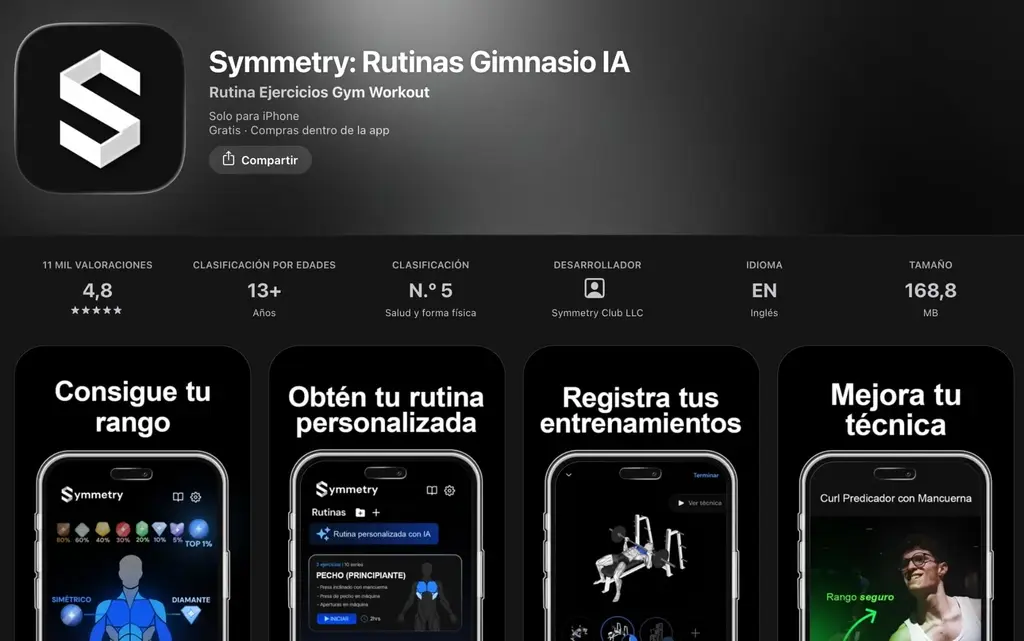
They focused on the Spanish-speaking world first, and recently they've expanded into English-speaking markets too.
The US App Store shows 6,000 reviews, which is impressive on its own, but the Spanish App Store has a staggering 11,000 reviews.
You can see how well it's selling in the Spanish-speaking world.
🏋️ So What Exactly Is Symmetry?
Let's take a quick look at what kind of app Symmetry is.
First, it has a wide variety of workouts, and you can log your training volume for each one. There are more than 300 exercises, each with an instructional video.
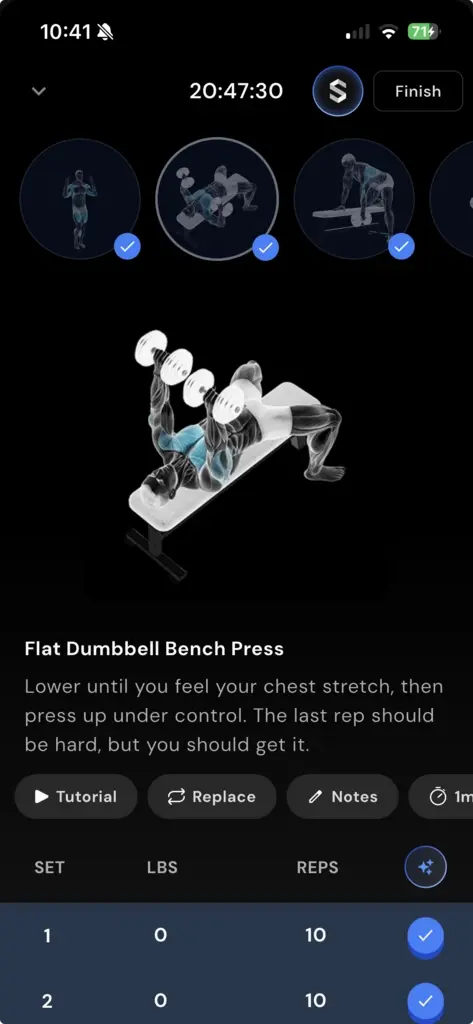
Apparently, creating tutorials for that many exercises was quite a job.
It also has a ranking feature. You get a rank for each exercise and each muscle group, so competing against other people is built in as a motivation mechanic.
In my view, rankings are a must-have feature for a lifting app.
Take Liftoff, the app I covered before that's past $700K a month in revenue. It's a lifting app built entirely around its ranking feature. "Strength training × rankings" matters a lot.
It also has social features: your feed shows other people's training logs, like a workout diary.
Then there's the feature that really went viral: the AI body scan.
You take a photo of your body, and it generates a score for each muscle, displayed like a soccer game's player stat card.
Mauro himself admits it isn't 100% accurate, but people love using it and sharing it anyway.
There's also an AI generation feature: tell it how much time you have, what equipment, and which muscles you want to train, and you get a workout plan in 10 seconds.
Building features inside the app that can serve as the starting point for a viral social post is important.
📲 Symmetry's Onboarding
Next, let's look at Symmetry's onboarding.
As I keep saying, onboarding is hugely important in determining an app's revenue.
The onboarding runs 41 screens, which is relatively long, and it's packed with the right elements.
First, you get a few questions about training.
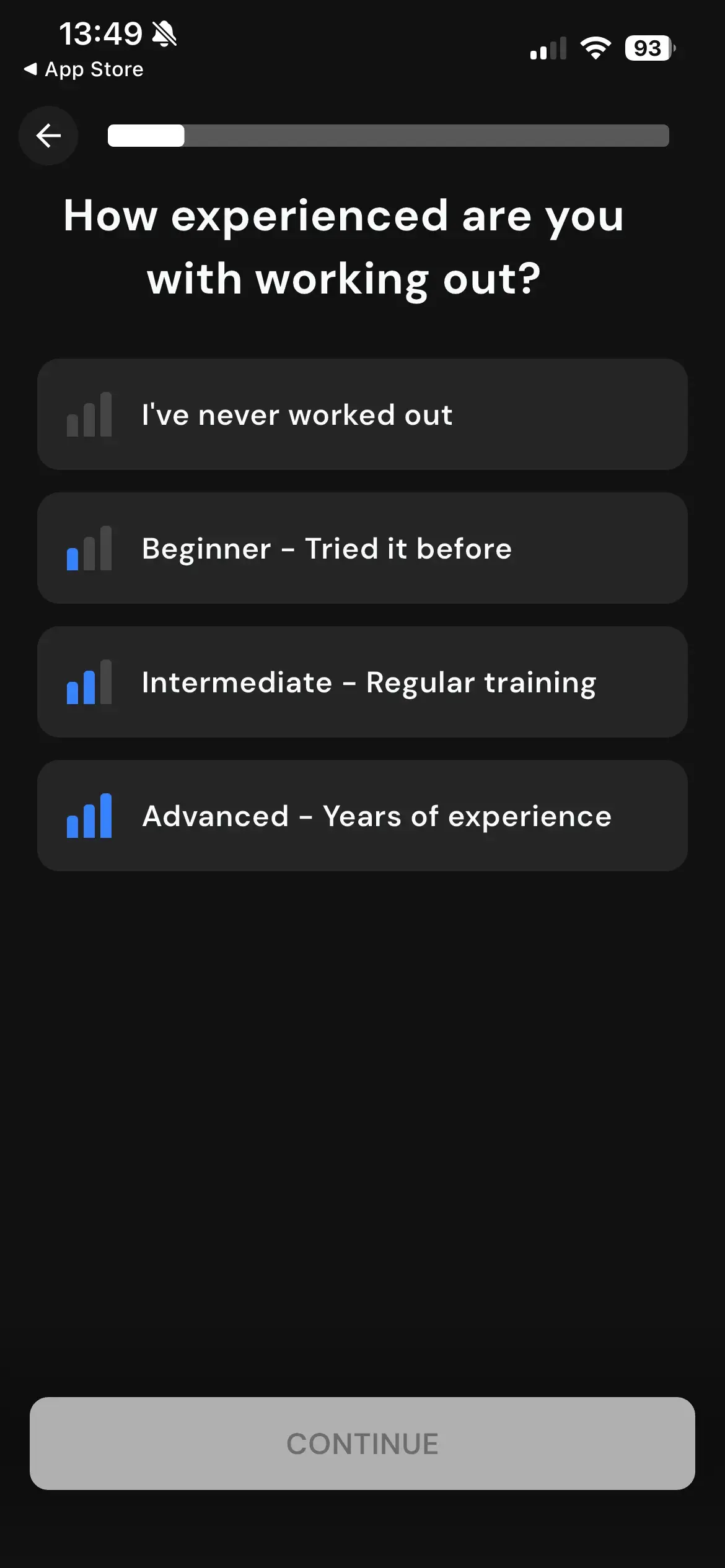
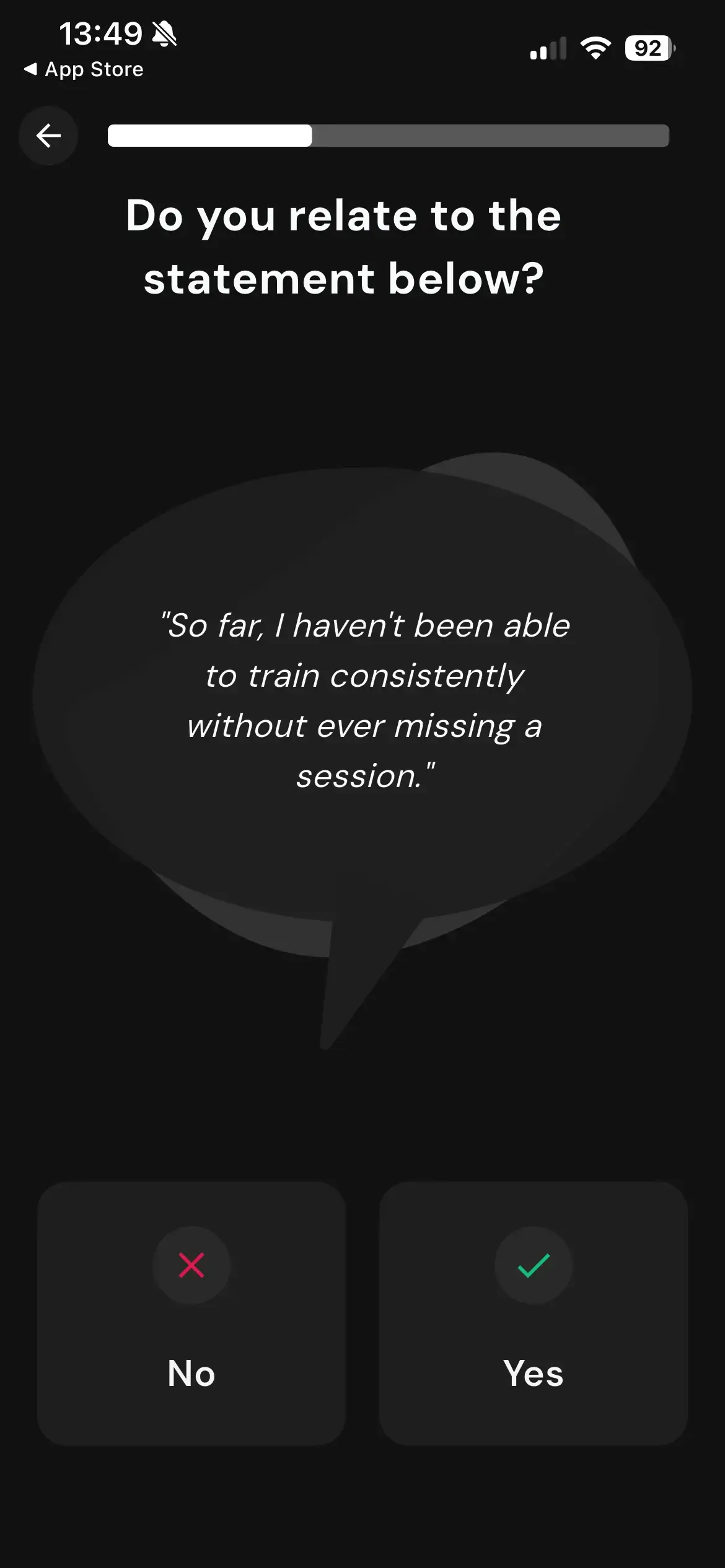
But the multiple-choice questions don't go on for long. Next come about five statement screens, where you answer Yes/No to statements.
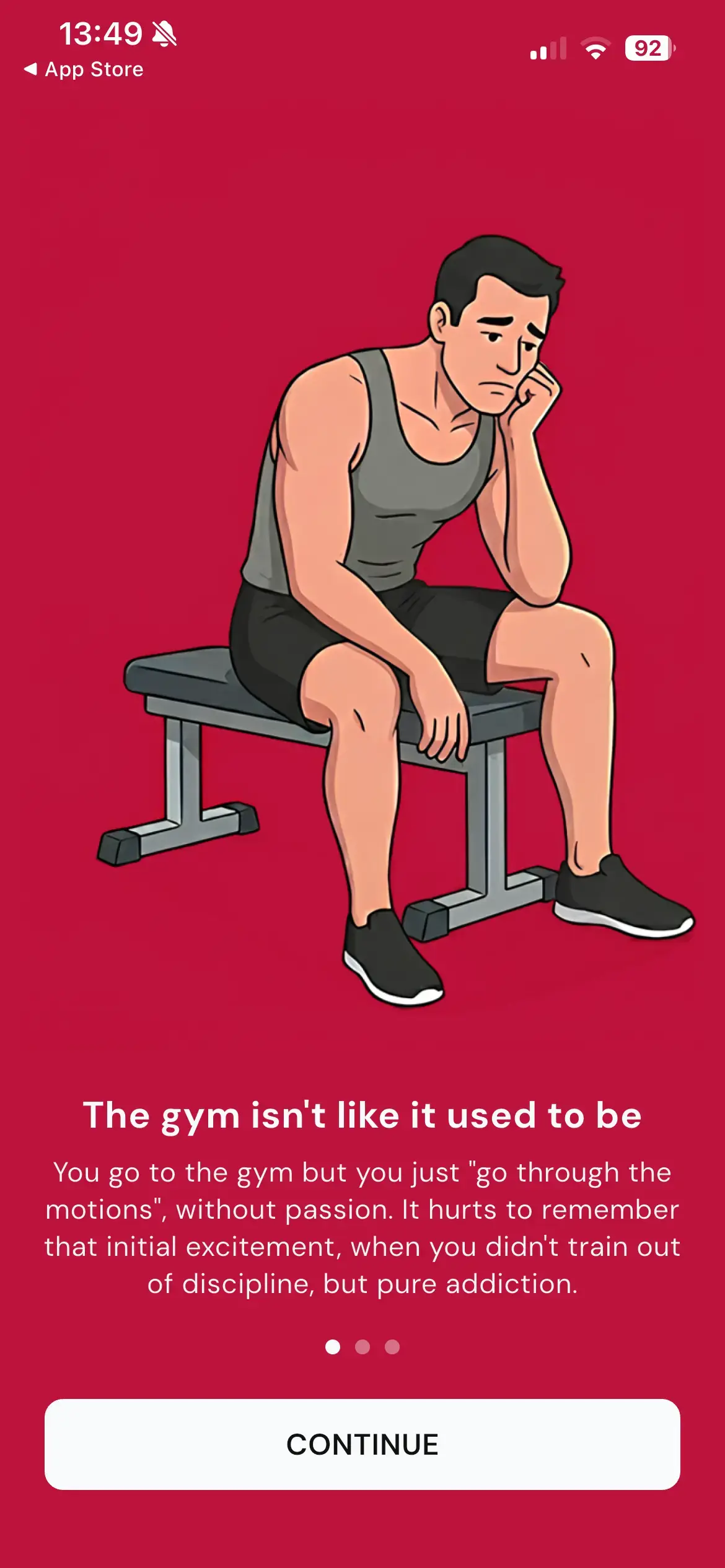
After that come screens designed to make the user recognize their problems.
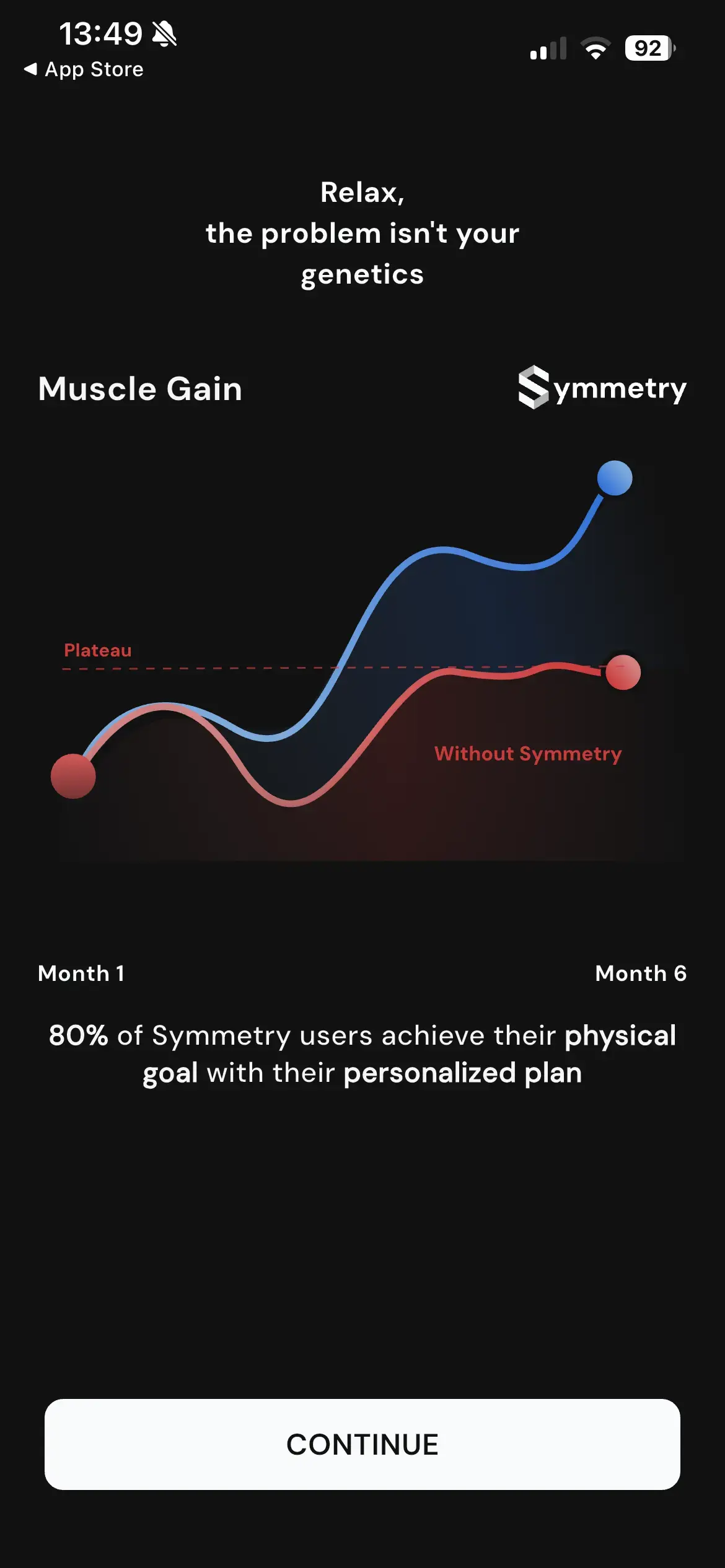
Then a graph makes the case for why you need Symmetry.
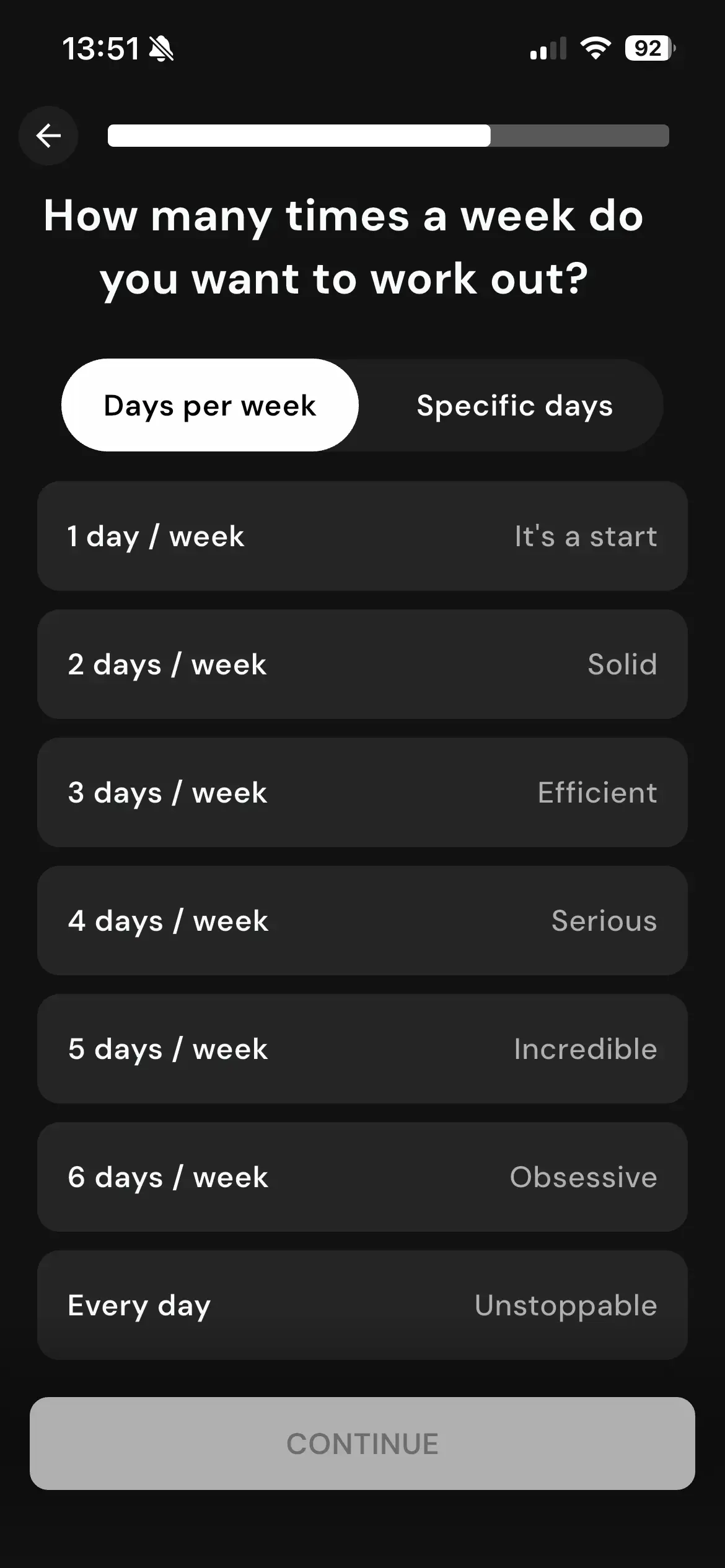
Then come the screens for setting up your training.
Then a personalization screen.
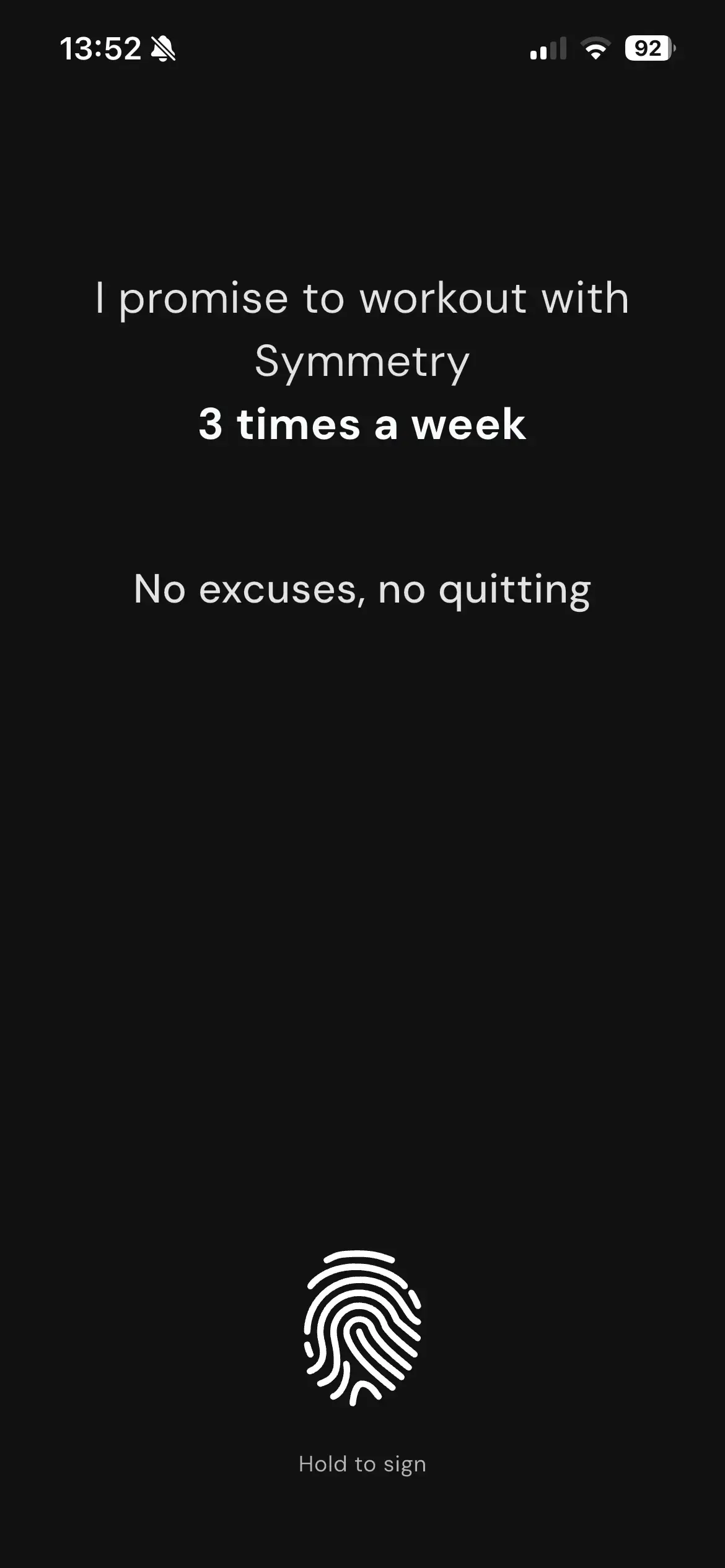
Then a commitment screen where you press and hold your thumb to the display.
And after a long run of screens, you finally reach the paywall.
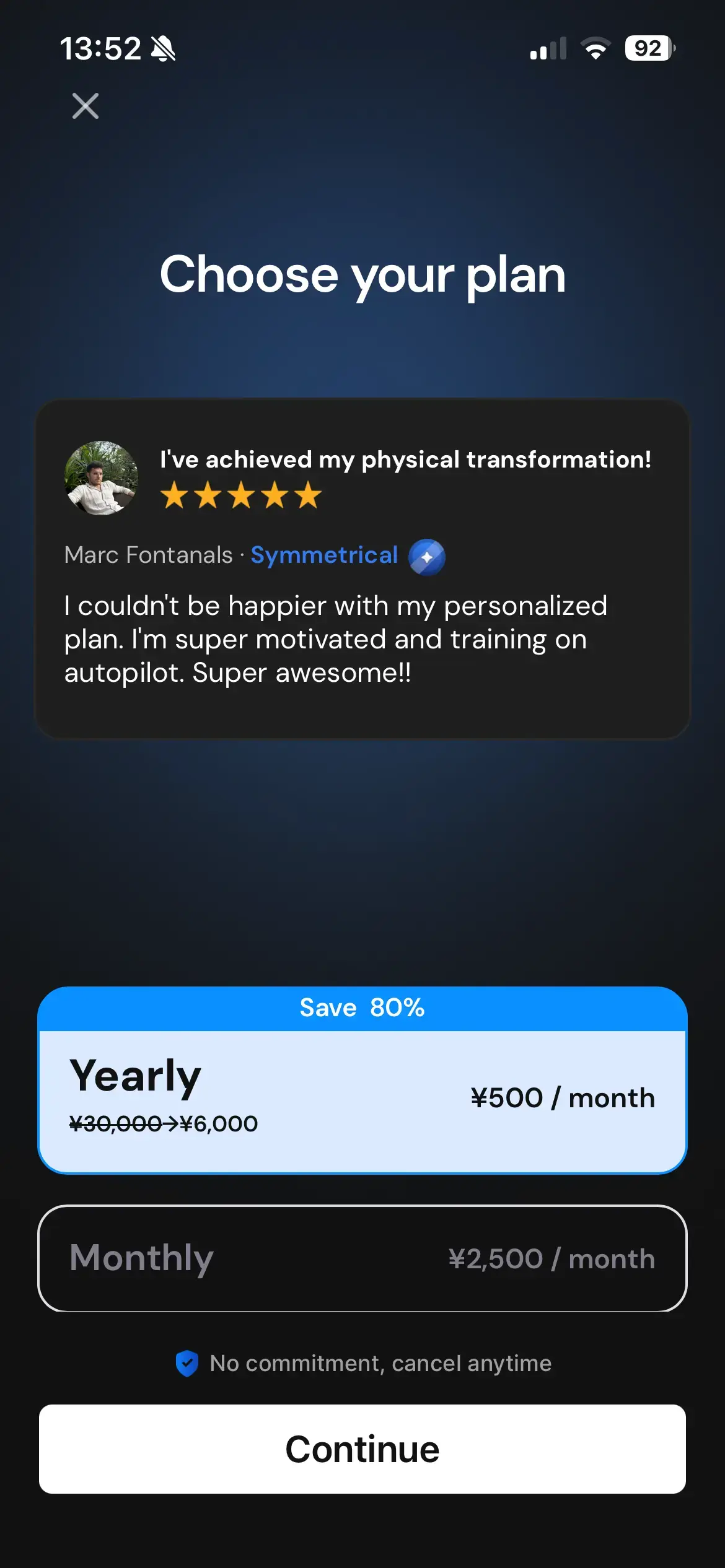
At first glance it looks like you can't proceed without paying, but the ✕ button actually works.
Tap the ✕ and you get a One Time Offer with a countdown timer.
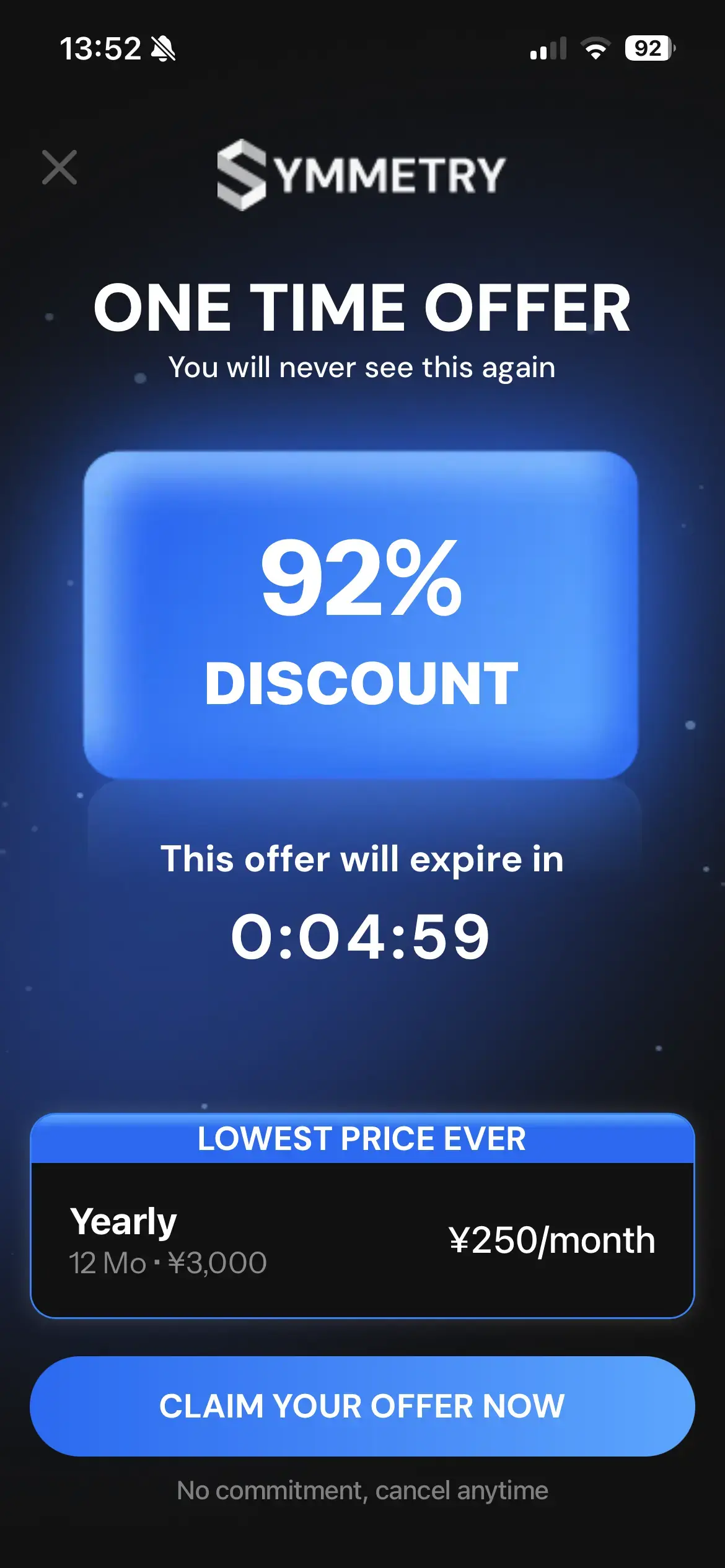
Tap the ✕ on that, and you get a free trial offer.
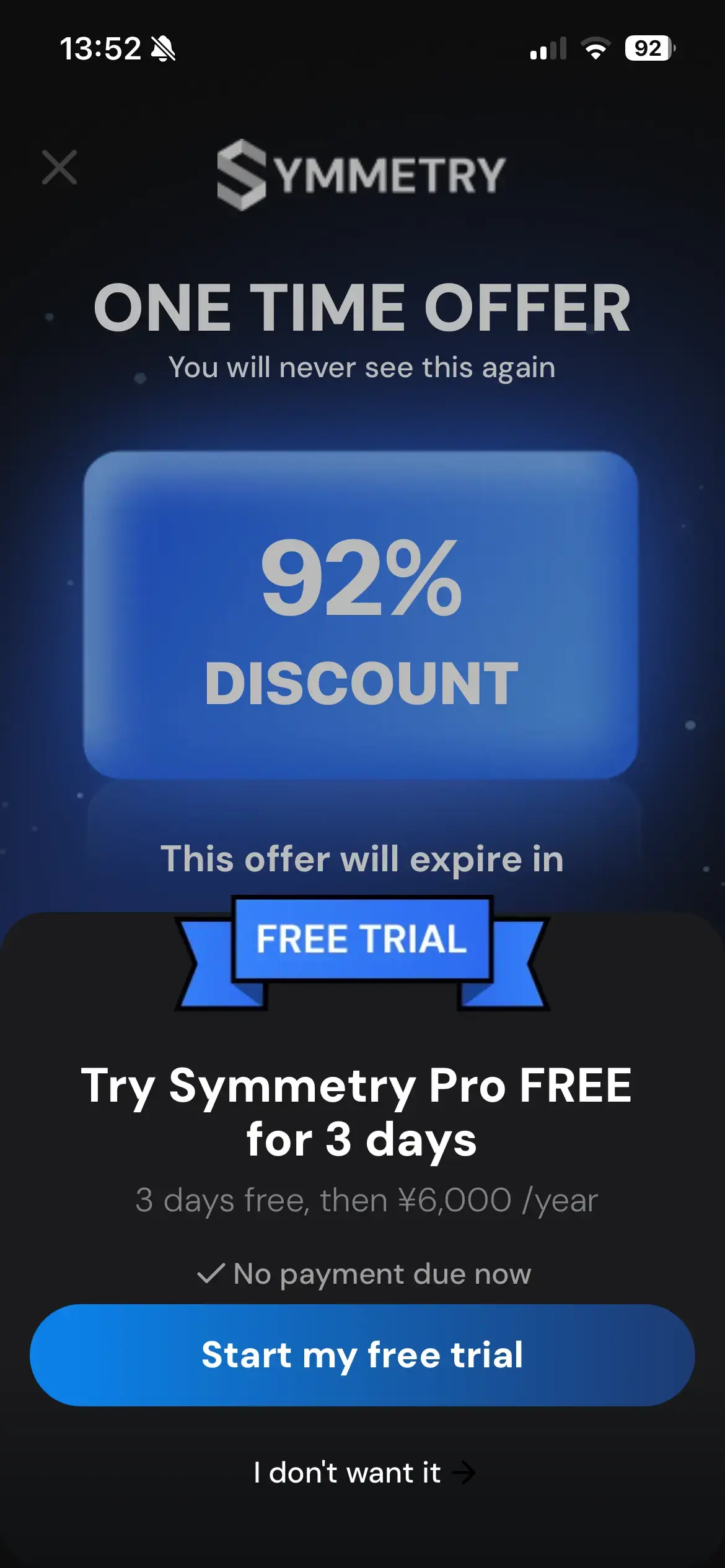
A chain of offers this aggressive is rare. It's so strong that I wondered whether Apple might reject it in App Review, yet it's clearly selling like crazy.
And that final free trial offer can be dismissed with an "I don't want it" button.
Do that, and you simply land on the login screen and can use the app.
In other words, at the end of a long onboarding, they've placed a soft paywall wearing the face of a hard paywall.
Users with strong intent are pushed to pay from the start, while users who really don't want to pay upfront get the app for free and can convert later if they like it.
By not losing either type of user, they raise LTV per download.
I've collected all of Symmetry's onboarding screens in one place, so please take a look:
📈 Explosive Growth in 2026: $240K a Month
Now that we understand Symmetry's features and onboarding, the important question is how they actually grew the app.
First, you should know that it didn't take off right after launch. Here's the timeline since launch: 👇
June 2025: Launch. A small bump from the founders' YouTube channels, but not as much as they'd hoped.
Summer 2025: Tried lots of tactics. Stuck at a low altitude, around 30,000 total downloads.
October–November 2025: Gradual climb. $30K a month.
January 2026: Rode the New Year's "this is the year I actually go to the gym" wave and exploded. Passed $100K a month.
2026 onward: Steady growth.
July 2026: $240K a month.
As you can see, the growth wasn't astonishing from the start.
Even with the three founders' gym-focused YouTube channels behind it, the app didn't grow that much. It shows that simply having influence doesn't get you very far.
They also tried influencer marketing, and it didn't work at all.
After that stagnant stretch, they struck gold.
From here, we'll look concretely at what gold they found and how they grew.
We'll also look at several of the winning short-form video formats they discovered.
As I dug in, the truly wild marketing and operations behind them came into view.
Specifically:
Why YouTube and influencer marketing failed
The winning formats they eventually found
A crazy operation: 220 videos a day, 80,000 total, 500 accounts
Generating thousands of pieces of content with AI, and running the operation out of Paraguay
The patterns that emerged from relentless cycles of experimentation and analysis
Their sheer volume of attempts and data-driven decision-making is genuinely crazy.
Please stick with me to the end.
💥 YouTube and Influencer Marketing Both Failed
When they first launched the app, what they leaned on was their own YouTube channels.
All of them are YouTubers, and one has 350K subscribers.
Naturally they assumed that would be their growth engine, but Mauro says it was no help at all.
There was a spike on launch day, but it never turned into sustained downloads. And structurally, it doesn't scale: to keep generating downloads, they'd have to keep filming forever.
That's the bottleneck of growing an app on a personality-dependent channel.
You might get a spike at first, but structurally it won't scale after that.
That said, I can't say influence is worthless. As I covered before, Sarah, a 25-year-old influencer, grew her app Stella to $300K a month in two months on her influence alone.
But relying only on your own influence means your product's growth doesn't scale. It always hits a ceiling, and at some point you have to switch your mindset.
Having hit that exact ceiling, the next thing they tried was influencer marketing. That failed too.
The reason was cannibalization with the influencers' own products.
Their app teaches you how to train, and many of the products influencers sell are coaching programs that also teach you how to train.
So for an influencer, promoting the app cannibalizes their own offering.
Obviously, influencer marketing was never going to work like that.
We've covered this influencer cannibalization problem before, and the category where it's least likely to happen was calorie tracking apps.
That's exactly why calorie tracker Cal AI grew so dramatically compared with other apps, and why other apps in the same theme keep growing.
To make influencer marketing work, you need an app theme where cannibalization with the influencer is unlikely.
🎬 220 Videos a Day, 80,000 Total, 500 Accounts
So, with their own YouTube and influencer marketing both stalling, where did they end up? UGC marketing.
The difference between UGC and influencer marketing is whether the account has influence and brand power, or whether it's an ordinary account with almost zero influence or one that was just created.
Recent algorithms let content go viral even without account power.
And an app mentioned casually in the post of an ordinary-looking account converts better than an app promoted by someone who obviously looks like an influencer.
That's why UGC strategies are so popular right now.
Recently growing consumer apps almost all use a UGC strategy. Some even build dedicated pages to recruit UGC creators in bulk.
And their scale is, first of all, abnormal.
In the past year they've posted roughly 80,000 videos and currently run over 500 accounts. That works out to 220 videos a day. Insane. Total views: 8 billion.
One of the winning formats among all that content is one where an iPhone lock screen shows an incoming message. 👇
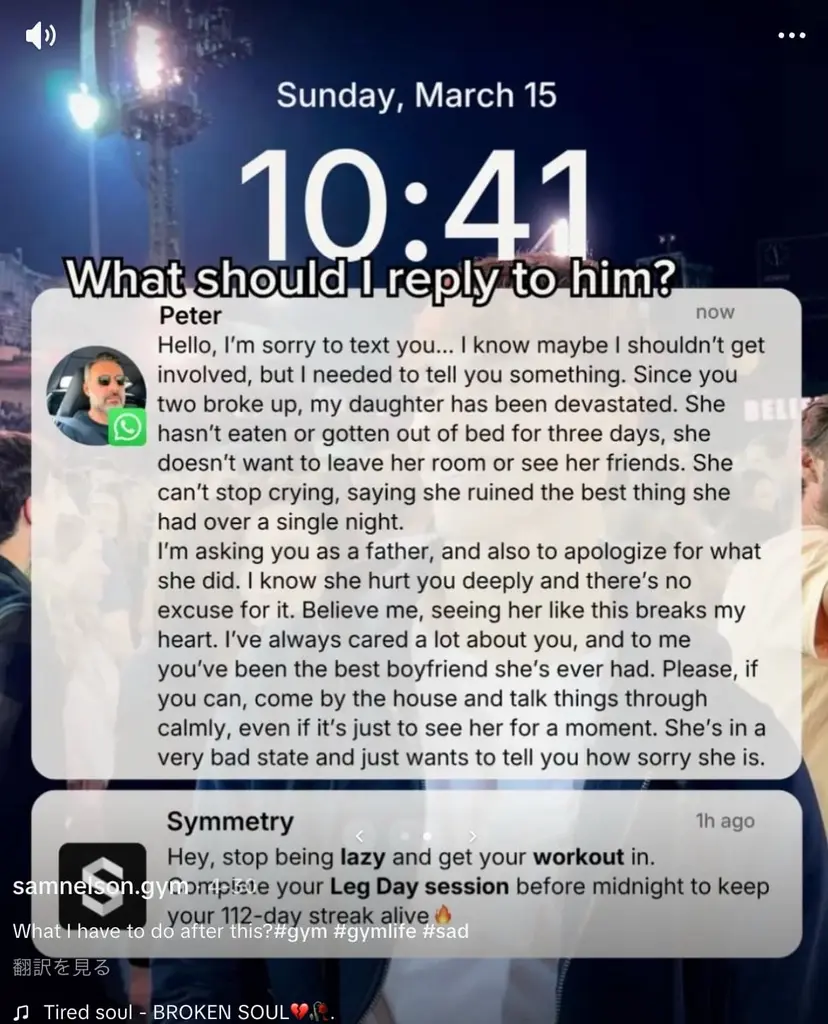
This one alone earned 17 million views.
It opens with a hook image, then continues onto an iPhone lock screen.
The story: after a breakup, the ex's dad sends a long message, and the poster asks, "How do I reply to this?!"
I got pulled in too. It's easy to see why it goes viral.
And tucked naturally into that lock screen is a Symmetry notification, so the promotion happens without feeling like a promotion.
I think this format works for any app. It's highly reproducible.
🤖 Thousands of Pieces of Content Per Second With AI
They have many winning formats like this, and they post an average of 220 videos a day.
How is such a huge volume of posting possible?
Mass production with AI.
Apparently they've built a system that uses AI to produce thousands of videos in a single second.
"Thousands per second" sounds like an exaggeration, but when you look at the posts they've made go viral, they're all things that clearly can be made with AI.
For example, this video ranks a bunch of gym apps and puts Symmetry at the top. 👇
For some reason ChatGPT is on the list, and famous apps are ranked near the bottom, giving people something to argue about in the comments. You can see how many variations you could make with this format.
Another is a slideshow format: still images of ripped guys, then images of gym-friendly meals, and finally the app promotion. 👇
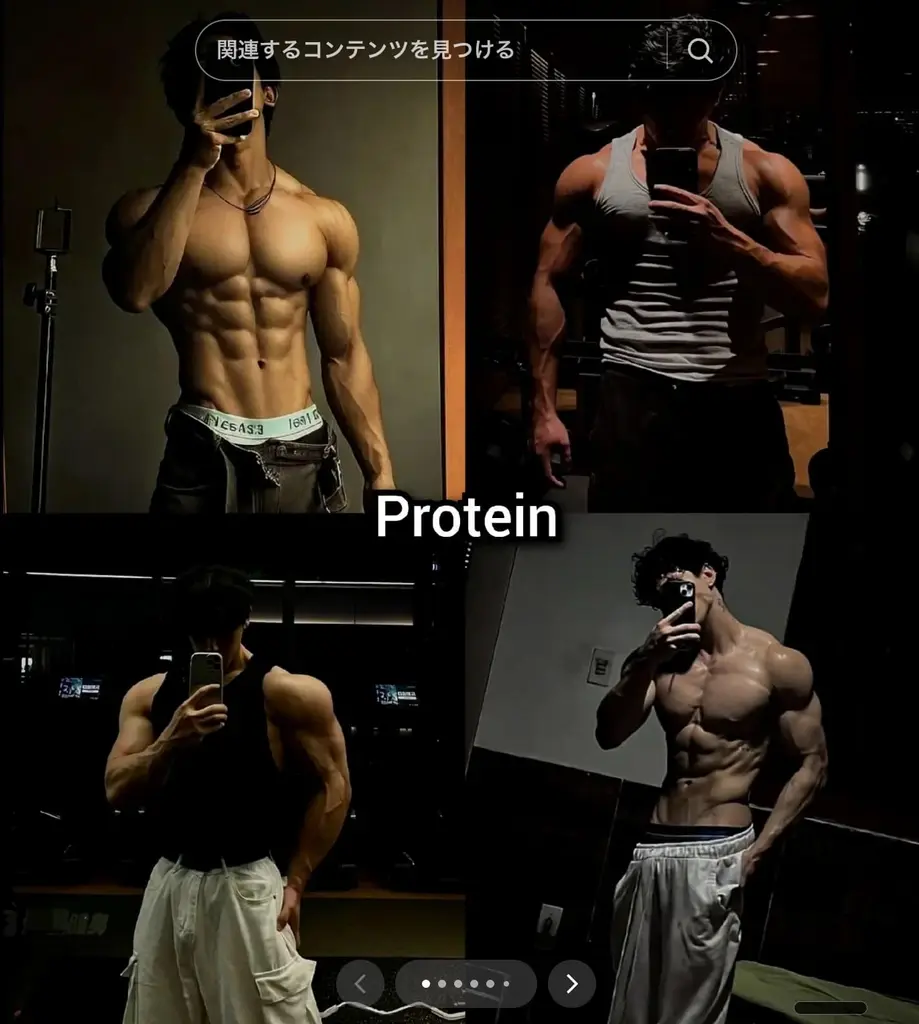
This format also lends itself to lots of variations relatively easily, which makes it powerful.
Another format shows workout tracking in a GitHub-style contribution graph design.
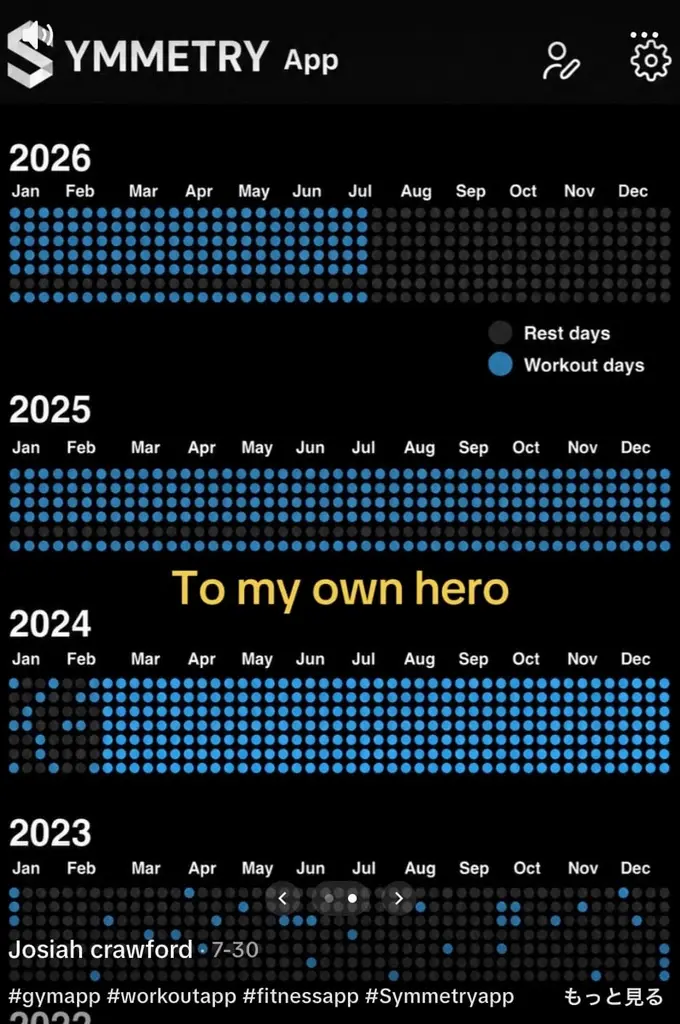
That one has gone hugely viral too, and you can see it isn't especially hard to make.
So they have many formats that can be mass-produced with AI.
Once you find a format that tends to go viral, you can tweak it with AI and make it go viral again and again.
For them, the bottleneck is no longer the amount of content. It's the number of accounts they can upload from.
And they've even built a system to solve that account-posting bottleneck.
Symmetry's careers page lists a role called "Accounts Operator." The location is Asunción, Paraguay, and it's fully on-site.
It has a fancy name, but I think it's basically a job of posting assigned content on physical phones, one post after another.
And they run that in Paraguay, a low-cost, Spanish-speaking country in South America.
It's impressive that they've built such an efficient operating system in earnest.
By the way, Paraguay is one of the cheapest countries in South America, and it apparently has tax advantages, too. Digital nomads are reportedly flooding in lately.
I ran out of time and couldn't visit on my last trip to South America, but it's one of the countries I definitely want to see next time.
It's impressive that they've picked a country like that and optimized their operations around it.
🧪 A Relentless Cycle of Experimentation and Analysis
Having seen all this, you might think they succeeded by mass-producing UGC short-form videos. I don't think that's the real reason.
The real reason is more fundamental.
It's that they built a system for tracking data thoroughly, ran a huge number of experiments on top of it, made data-driven decisions, and kept optimizing.
Even when adding or improving product features, they think in a thoroughly data-driven way.
They quantitatively measure how much impact a change will have.
That's why they A/B test the paywall and onboarding relentlessly, since those tie directly to revenue. They've instrumented events on all 41 onboarding screens.
Obviously, the earlier a step sits in the app's flow, the bigger the payoff from improving it. That's why improving onboarding matters so much.
Their experiments also turned up some interesting results.
For example, the screen that mattered most for retention was actually the workout search screen.
Conversely, the personal workout plan screen shown right after onboarding turned out not to matter much. They changed that top screen in various A/B tests, and metrics like retention didn't move.
At first glance, the home screen you see first seems like the most important thing. But what really mattered was the search screen.
It's a surprising fact, and at the same time it makes some intuitive sense.
When I worked at a company in the past, I did e-commerce improvement and data analysis.
And the search screen really was hugely important. It mattered more than the top page. Improving the search experience dramatically increased both conversion rate and repeat rate.
You can't learn facts like this without measuring carefully.
They do this thoroughly.
Because they keep running experiments like this, they can focus on what they really need to do.
They also found that adding a single commitment screen at the end of onboarding increased retention by 3%.
It's just one screen where the user declares, "I will definitely train."
That alone improved retention by 3%.
People try to stay consistent with what they've publicly declared.
Many apps put a commitment screen near the end of onboarding, but this is the first time I've heard a concrete number for its effect.
I haven't added one to my own apps yet, but it's clearly worth trying.
💬 Qualitative Feedback From Users
On top of quantitative data, they also collect qualitative data properly.
Quantitative data tells you where the problem is happening, but not why. To find out why, you need qualitative data.
That's right. To form hypotheses, you have to talk to users and gather qualitative data.
Symmetry actually runs a Discord community with tens of thousands of members, reachable from inside the app's settings.
In the community, talking with users surfaces unexpected ideas and feedback, and users also end up helping each other.
For users who have churned, they offer a free paid plan in exchange for a user interview, and they make that offer by email. Impressive. They're thorough...
The app's settings also link to a feature request board.
It lists existing feature requests. You can submit a new request, or upvote and downvote existing ones.
This dashboard is extremely helpful for deciding which user requests to prioritize.
Once my own apps have more users, I might try implementing something similar.
I don't think many people build systems this careful for collecting both quantitative and qualitative data. Impressive.
📝 Summary
So that's a look at Mauro Botanes and his friends, who grew a gym app to $240K a month in revenue in just over a year, at just 22 years old.
They fought first in the Spanish-speaking world and are now taking on English-speaking markets.
They say they're aiming for a unicorn with this app. That doesn't strike me as an easy target to hit, but they haven't given up. They're attacking hard.
What struck me most about their success story is that they're winning less because of the app theme and more because of how they fight.
They keep taking lots of swings while optimizing through data-driven decisions, and this is the result.
I thought I was already taking plenty of swings and measuring data to make decisions, but I realized I've still been half-hearted about it.
I've added lots of features with a vague "maybe it'd be good to have this" feeling.
I think most people who've pushed revenue past $100K a month measure their data precisely and make decisions based on it.
Getting to $10K a month might be possible on gut feeling. Maybe you get there on a lucky viral hit.
But to climb one more level from there, you need numbers, and the focus that comes from choosing and concentrating based on them.
Without that, you can't scale.
Time to get to work!
That's a wrap on Mauro Botanes.
Thank you for reading all the way through! If anything caught your interest or you have questions, feel free to reply to this email anytime!
And if you mention my X account when you post your thoughts, I'll be absolutely thrilled. I'll always respond!
See you again next time!