 Bible ChatStory
How Laurentiu Balasa Built Bible Chat to a $15M Run Rate in About a Year
After selling an app studio behind 3 billion downloads, Laurentiu Balasa built Bible Chat, which hit a $15M annual run rate in about a year. See its onboarding and the home screen widget behind its growth.
A home screen widget that shows one Bible verse a day. A short video showing it off got 3.7 million views on TikTok.
The app is Bible Chat, where AI answers your questions and worries based on the words of the Bible. About a year after launch, it was on pace for $15 million in annual revenue, and it now says it has 40 million users. Here's how it was built, with the real screens.
The founders: entrepreneurs who sold an app studio behind 3 billion downloads
Bible Chat was founded in Romania by Laurentiu Balasa (CEO) and Marius Iordache (CTO). Balasa grew up in a poor family in Eastern Europe and has said that, to him, success used to mean never worrying about money. He started his first business at 15, and Bible Chat is his eighth.
Before this, the two built T Me Studios, an app studio whose apps reached 3 billion downloads in total and whose team grew to more than 100 people before it was sold. Balasa has said that, looking back, the work didn't feel meaningful: they were only making small games and tools.
An app born from wanting to reduce suffering
In 2019, Balasa went through a hard time in his life. He read philosophy and the Bible, and came to the conclusion that everyone suffers, and that suffering is what connects people.
Next, the two built an app for readers. But the most engaged users were people reading books about faith. Many of them wanted to talk about their struggles without anyone knowing. That insight led to Bible Chat.
When it launched in 2023, there were already about 5,500 Bible apps. Bible Chat always builds its answers from Bible verses, and the team says it tunes the AI with pastors, priests and Bible scholars from different denominations. In February 2025, it raised $14 million. About 3% of users pay, and the other 97% use it for free.
Onboarding, part 1: show trust and a real answer first
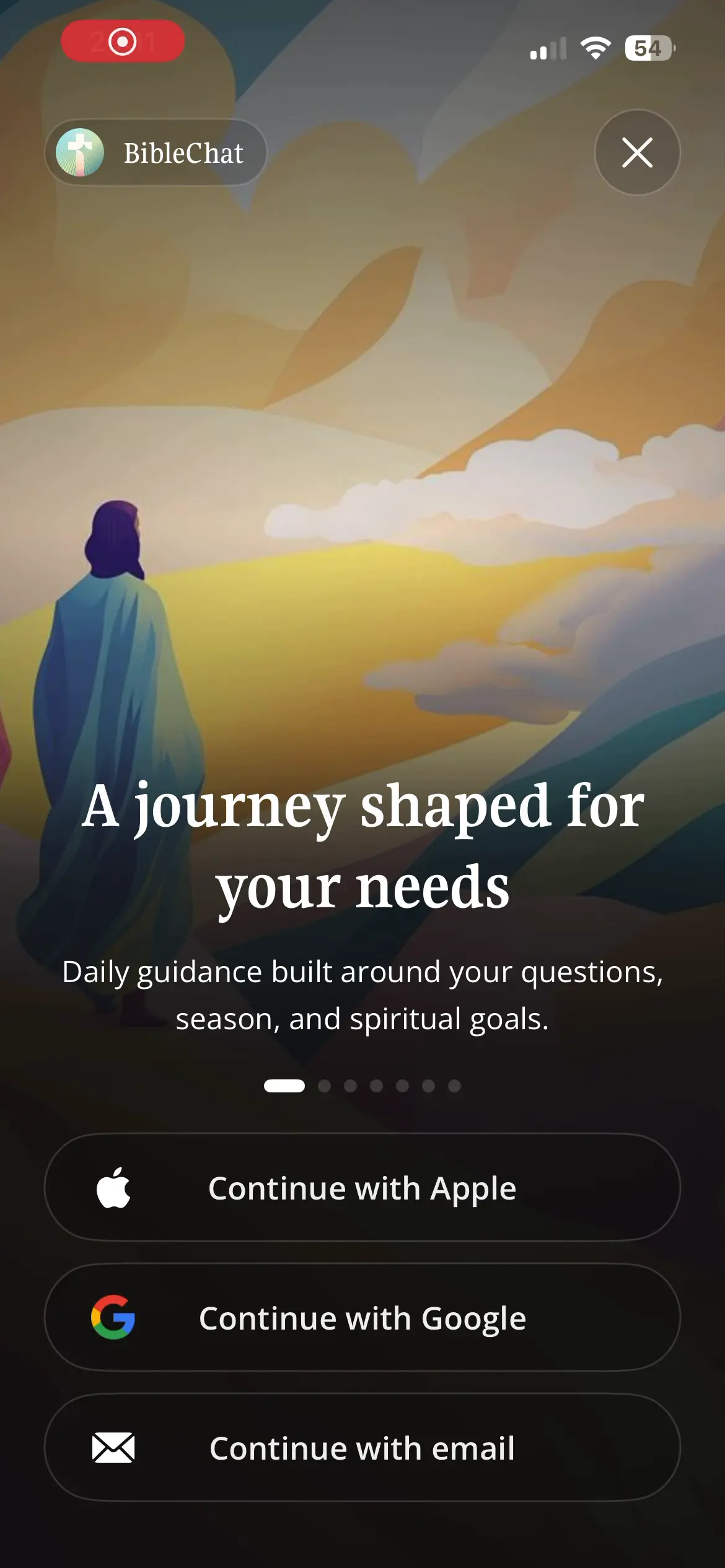
You start by signing in, for example with Apple. Then the app shows that more than 40 million believers have joined, along with reviews praising the widget.
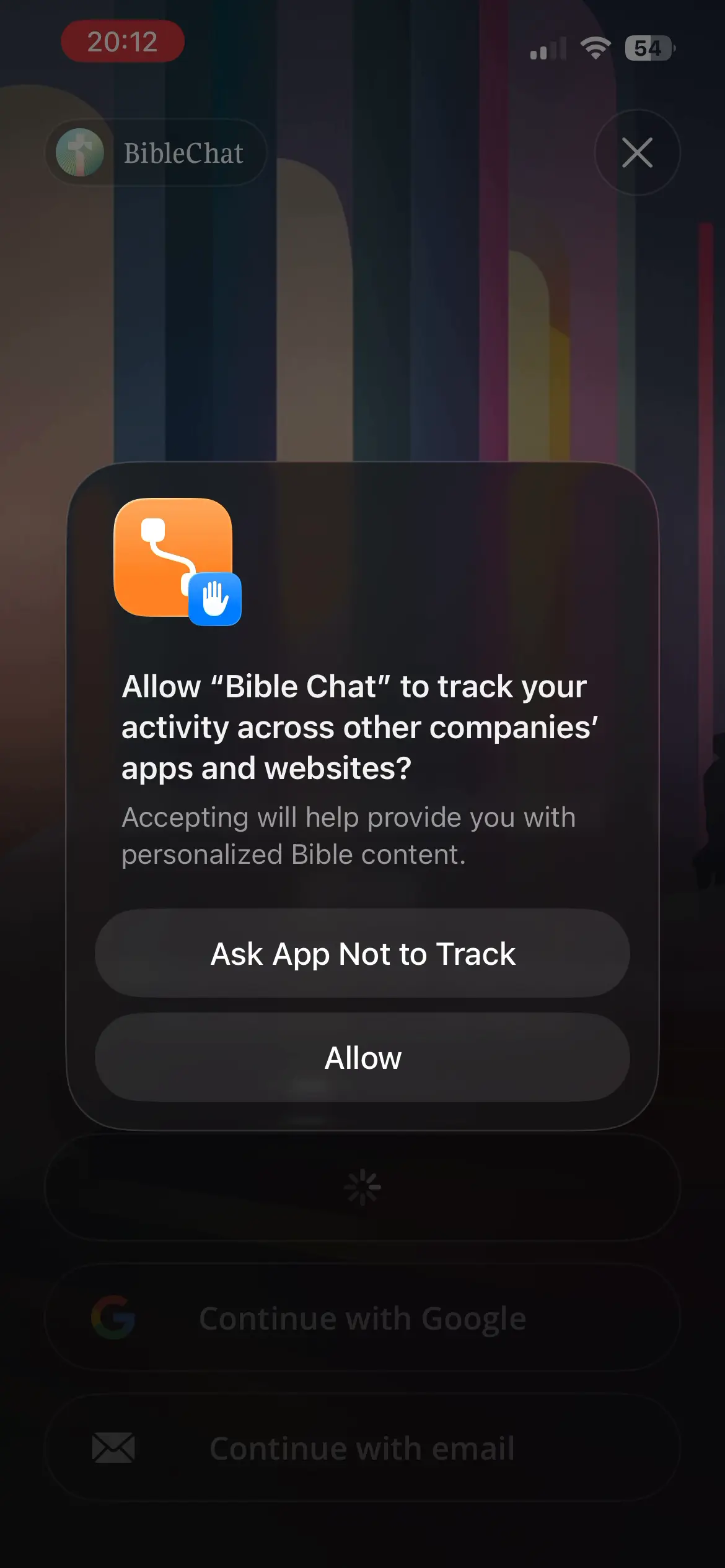
Next comes the notification permission. Then a screen about deepening your relationship with God shows a sample answer, built from Bible verses, to a question about how to strengthen your faith.
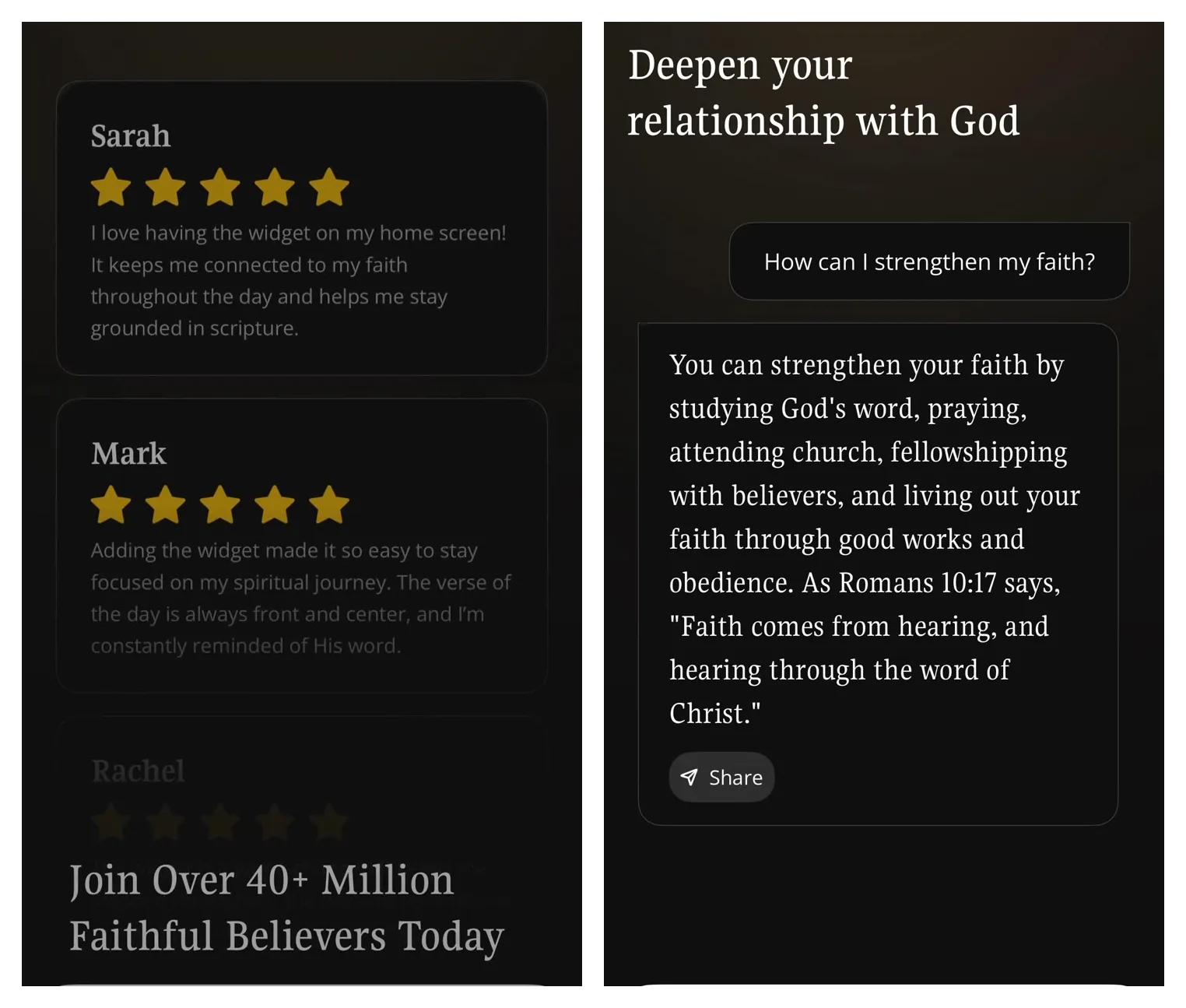
Before you answer a single question, you already know what the app does.
Onboarding, part 2: teach people how to add the widget
The app then asks for your denomination and the Bible translation you read, with more than ten to choose from.
One screen stands out: it invites you to make your home screen a place of faith and walks you through adding the widget, right in the middle of onboarding. After asking your age and gender, it shows a chart about how the widget turns faith into a daily habit.
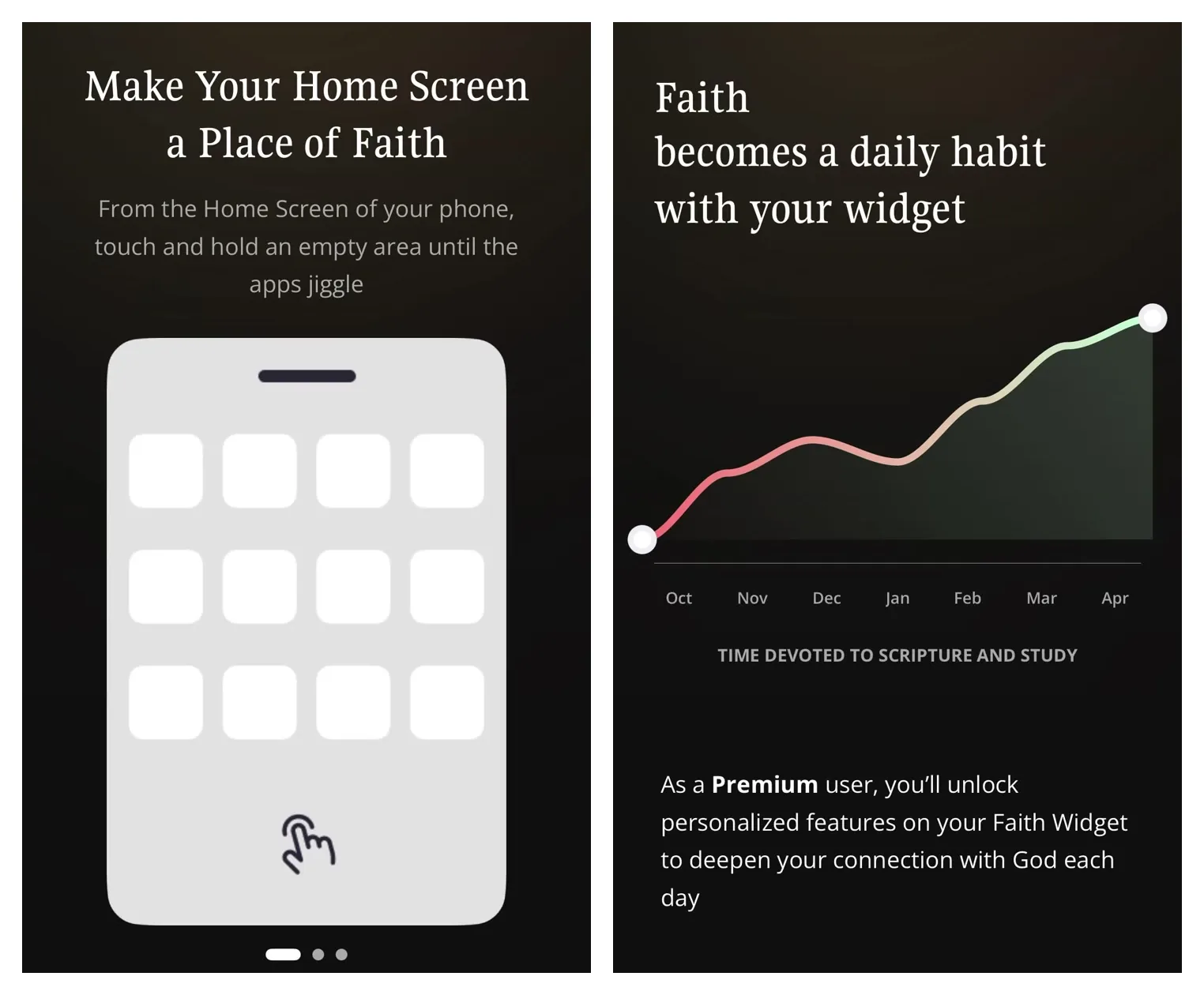
It then asks what you're struggling with most, such as anxiety, loneliness, addiction or stress, and lets you write in your own words what has been hardest. After a loading screen that says it's creating your personal faith widget, a seven-session plan appears, themed around not losing yourself even as you succeed.
Paywall: seven days free, so anyone can draw closer to God
Before the paywall, the app explains that the first seven days are free so that everyone can draw closer to God, then promises a reminder two days before the trial ends.
On the paywall, the free-trial toggle is on by default. After the seven-day trial comes a weekly plan, with an annual plan below it labeled as saving 85%. After the paywall, you get the verse of the day, a prayer, and the start of your day 1 streak.
Growth: videos that show off a home screen
The widget drives growth, too. The video with 3.7 million views starts from a familiar moment: peeking at your partner's phone.
A video with 1.5 million views says having Bible verses on your home screen is something to be proud of and shows how to set it up. Another, with 960,000 views, gives numbered steps for showing a verse on your lock screen. None of them are really about the app. They show a person whose phone screen is full of scripture.
Note: User numbers, annual revenue run rate and funding come from the February 2025 funding announcement (Romania Insider), 40 million from EY's profile (2026), and the share of paying users and the story of the first company from Tech.eu (June 2025). None of these have been independently verified. "More than 40 million believers" is a claim shown on the app's screens. This story is about how the app is built, not about faith itself. View counts are as of when this story was written.
 Keiki
 Halo AI
 Lively