 Halo AIStory
Dillion Verma's Last Bet: How Halo AI Went From $0 to $300K/Month in 45 Days
After 18 months of failed apps and a near-empty bank account, Dillion Verma borrowed about $100K and bet it on one video format. Here's how Halo AI hit $300K a month in 45 days.
From $0 to $300,000 a month in 45 days. That's the revenue chart Dillion Verma, the maker of the AI photo app Halo AI, posted on X.
Shortly before that chart took off, his bank account was nearly empty. After 18 months of failures, he borrowed about $100,000 and bet it on a single video format. Here's the comeback, with the real screens.
The founder: an engineer who loves to build
Verma studied computer science in Canada and interned at NVIDIA and Shopify. He has taken part in more than 20 hackathons.
At the end of 2022, he quit his job to work on his own products full time. Magic UI, his library of UI components, became a popular project with more than 20,000 stars on GitHub. A tool he built for visualizing AI usage logs was one of the winning teams at Vercel's AI accelerator.
Eighteen months of building and failing
Consumer apps were a different story. He and his co-founder kept building and shipping apps, and none of them took off.
Developer tools and consumer apps are different games. In consumer apps, the ability to get your product in front of people and sell it matters more than the ability to build it. After 18 months, his bank account was close to zero.
Halo AI, the last bet
In the summer of 2025, Google released a new image model, nicknamed "Nano Banana." With nothing left to lose, the two of them built an app on top of it in just two to three weeks. That was Halo AI.
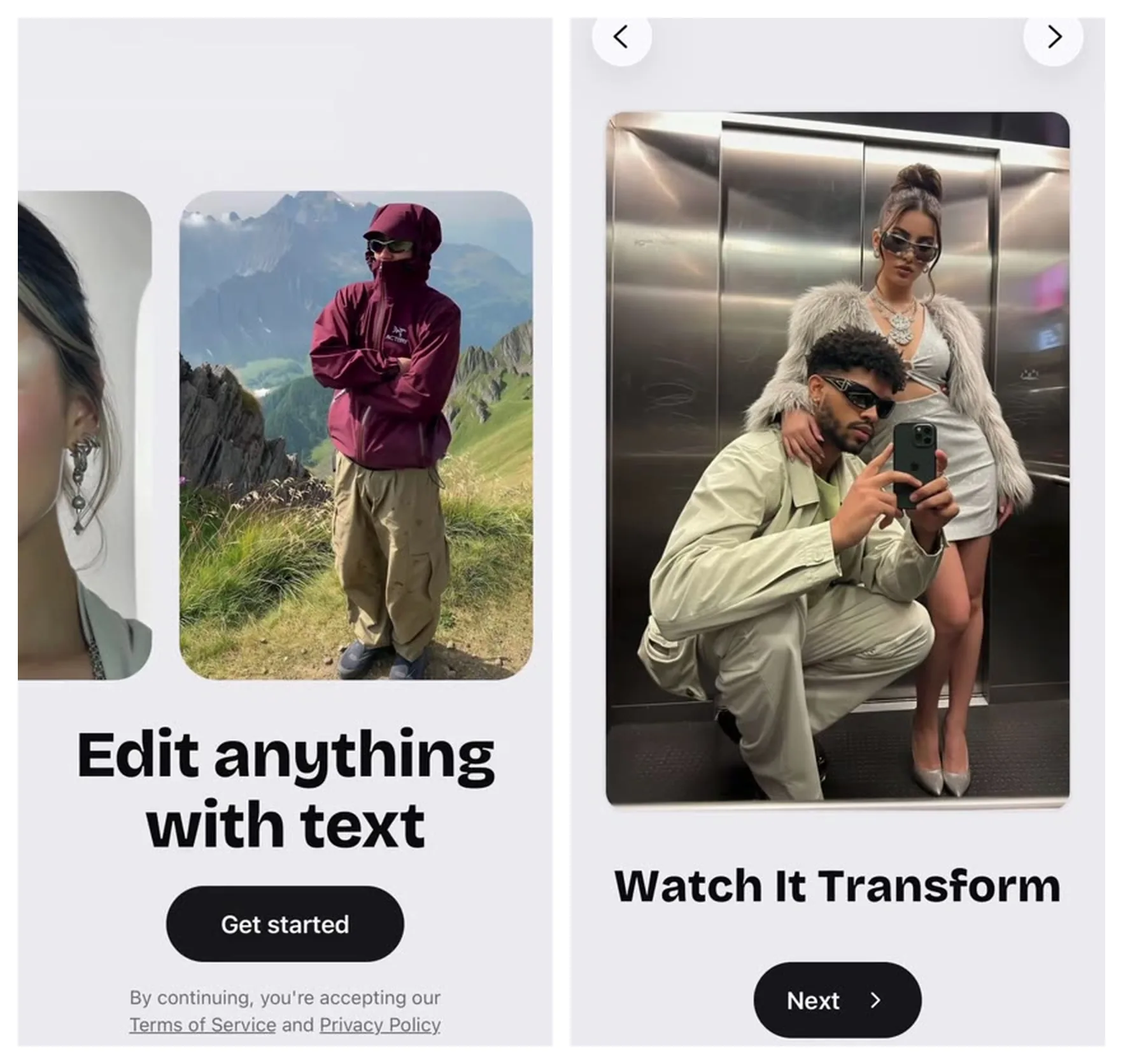
You pick a photo and describe the change you want in plain text. Technically, it isn't a hard app to build. But the moment a photo transforms is a hook for a video on its own. The feature itself was the content.
The winning format: prank videos
Halo AI launched in mid-October 2025, and two weeks later it was making only about $250 a month. That's when Verma zeroed in on prank videos.
In one, the creator uses AI to make a picture of their dad's prized koi cooked on a plate, sends it to him, and films the reaction. The videos follow the same three beats:
- Stop the scroll with a shocking image and a bold line
- Show the image being made in Halo AI (with the app's logo on screen)
- Keep people watching to the end with the chat with Dad
The koi video got 2.9 million views, and one in the same format about wrecking Dad's car got 3.4 million. An account aimed at Japan got 3.2 million views with an air-conditioner-on-fire prank. None of it feels like an ad, but the app's name sticks.
Borrowing about $100K to make more videos
Once he found the format, Verma borrowed about $100,000 and put it into recruiting creators. You can't know which video will go viral until you post it, so the plan was to take as many swings as possible.
- Recruiting: Posts in online forums and social media groups brought in more than 600 applicants within a few weeks. Each candidate got a five-day trial, posting one video a day at $20 per video. He didn't judge them on views, but on whether they could post every day, stay in touch, and edit with a strong hook.
- Pay: He showed 30 creators two options, pay per view or a flat $20 per video plus bonuses at view milestones. Twenty-nine chose the milestone bonuses.
- Running it: At its peak, 85 creators posted every day across four platforms, about 360 videos a day. In their Discord, an AI coach trained on transcripts of videos with over a million views helped anyone who ran out of ideas draft a script. When one video blew up, it was shared with everyone, and they all made their own version within 24 hours.
Monetization: a two-step paywall
According to Verma, the paywall works in two steps. The first paywall, right after you open the app, can be skipped. Inside, you browse trending templates and get excited about what you could make. When you pick one and tap "Try it," a second paywall appears.
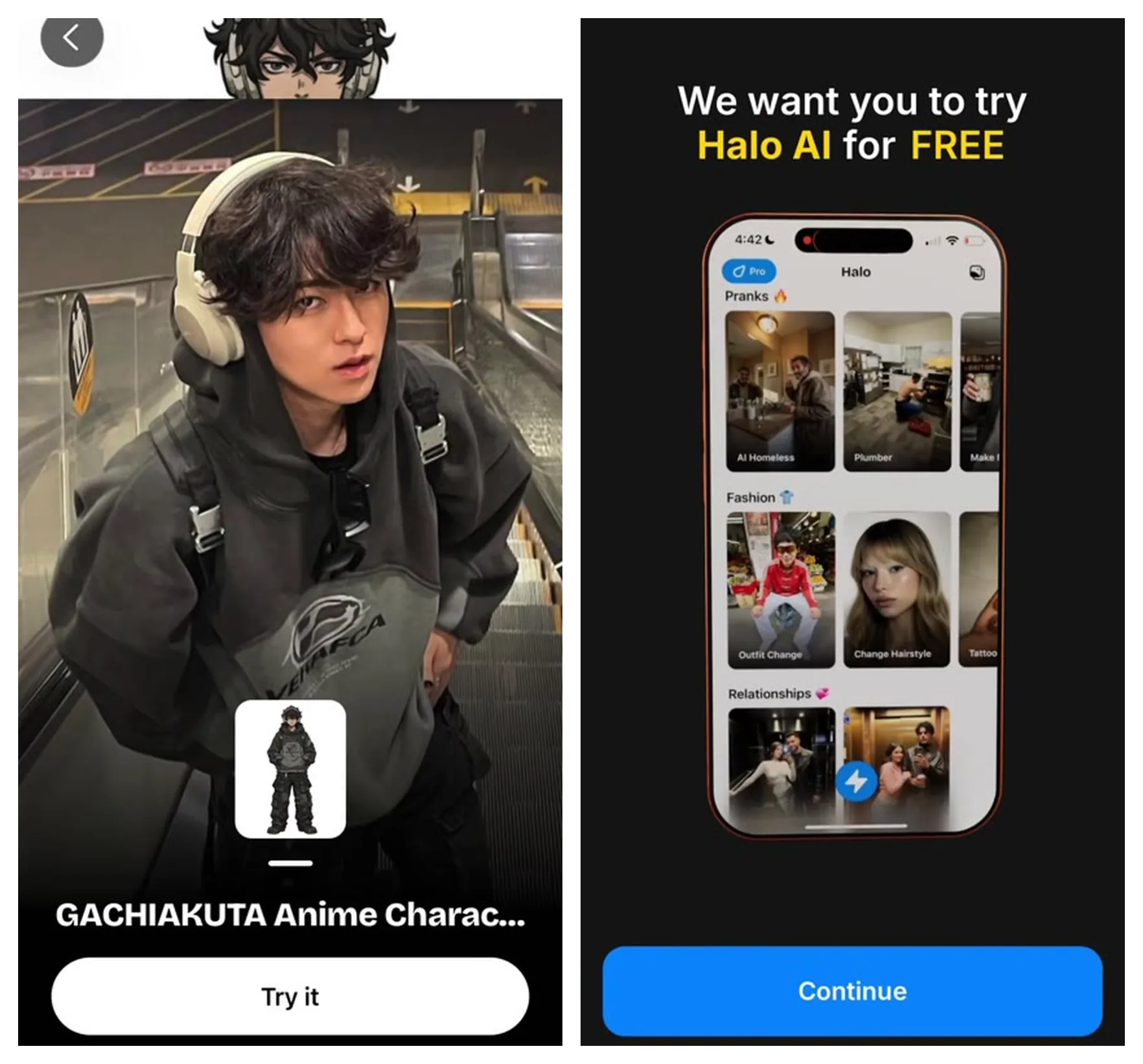
By then you've already chosen and set things up, so the result is one step away. He says this raised the share of people who pay to 16.5%. Plans are weekly rather than annual, because most people using a fun app don't plan to use it for long.
$300K a month in 45 days
The result is the chart at the top. According to his posts, monthly revenue went from $0 to more than $300,000 in 45 days, without paid ads or influencers.
Note: Revenue, view counts and the number of creators come from Verma's own posts and interviews and from published articles, and have not been independently verified. View counts are as of when this story was written.
Ideas worth copying
See Halo AI's full onboarding
This story only shows a few of the screens. Onbo Hub has all 16, from the first screen to the last.
View the onboarding


Newsletter
Founder stories and growth teardowns of apps that are actually making money.
Sources
- Superwall, "0 to $300k/mo in 45 days with my ai app (just copy me)"youtube.com
- Dillion Verma (X)x.com
- Dillion Verma (personal site)dillion.io
- Magic UI (GitHub)github.com
- Vercel AI Accelerator Demo Day (Vercel)vercel.com
- "I cooked my dad's koi" prank (TikTok @joshaipranks)tiktok.com
- "I wrecked my dad's BMW" prank (TikTok @joshaipranks)tiktok.com
- "The AC caught fire" prank (TikTok @nicholas_tomato)tiktok.com
- Halo AI (App Store)apps.apple.com
- Halo AI UGC Playbook (Stormy AI)stormy.ai

 MacroFactor
 Juno

 Reframe