 JunoStory
How Isaac Tolley and Marshall Gould Built Juno to 300K Users in a Year
Two UCL students who spent years going from doctor to doctor built Juno, an AI app for chronic illness now used by 300K+ people and making $80K a month. See its onboarding and a paywall that leaves no one behind.
They saw doctor after doctor, and no one understood. Two university students who went through that built Juno, an AI app that logs symptoms for people with chronic illness when they simply talk to it. About a year after launch, more than 300,000 people use it, and in June 2026 it was making $80,000 a month.
Here's how it was built, with the real screens.
The founder: a student with a cough that took 14 years to diagnose
Juno was founded by Isaac Tolley and Marshall Gould, who studied at UCL in London. Since childhood, Tolley had a cough no one could explain. Having his tonsils removed didn't help, and he spent years going from specialist to specialist.
He finally got a diagnosis after starting university: eosinophilic bronchitis. It had taken 14 years. At university, he met friends with similar symptoms and felt understood for the first time.
Forgetting what normal tiredness feels like
Soon after Gould started university, he began having fevers, dizziness and brain fog. He writes that he was exhausted every day, to the point where he forgot what normal tiredness felt like. When he started wearing a sleep-tracking ring, it showed only five minutes of deep sleep a night. It took about four years before he was diagnosed with chronic fatigue syndrome.
The conclusion they both reached was that they had to be their own advocates. In the fall of 2025, they launched Juno.
No more explaining it all over again
Appointments are short, and every time, you have to explain your symptoms from the start. With Juno, you just describe your symptoms the way you'd message a friend. It remembers your history, spots patterns in what makes things worse, and prepares a summary before your appointment.
In 2026, Juno was selected for Y Combinator. It has a 4.8 rating on the App Store from more than 10,000 reviews. And its early growth didn't come from ads, but from the founders' own posts.
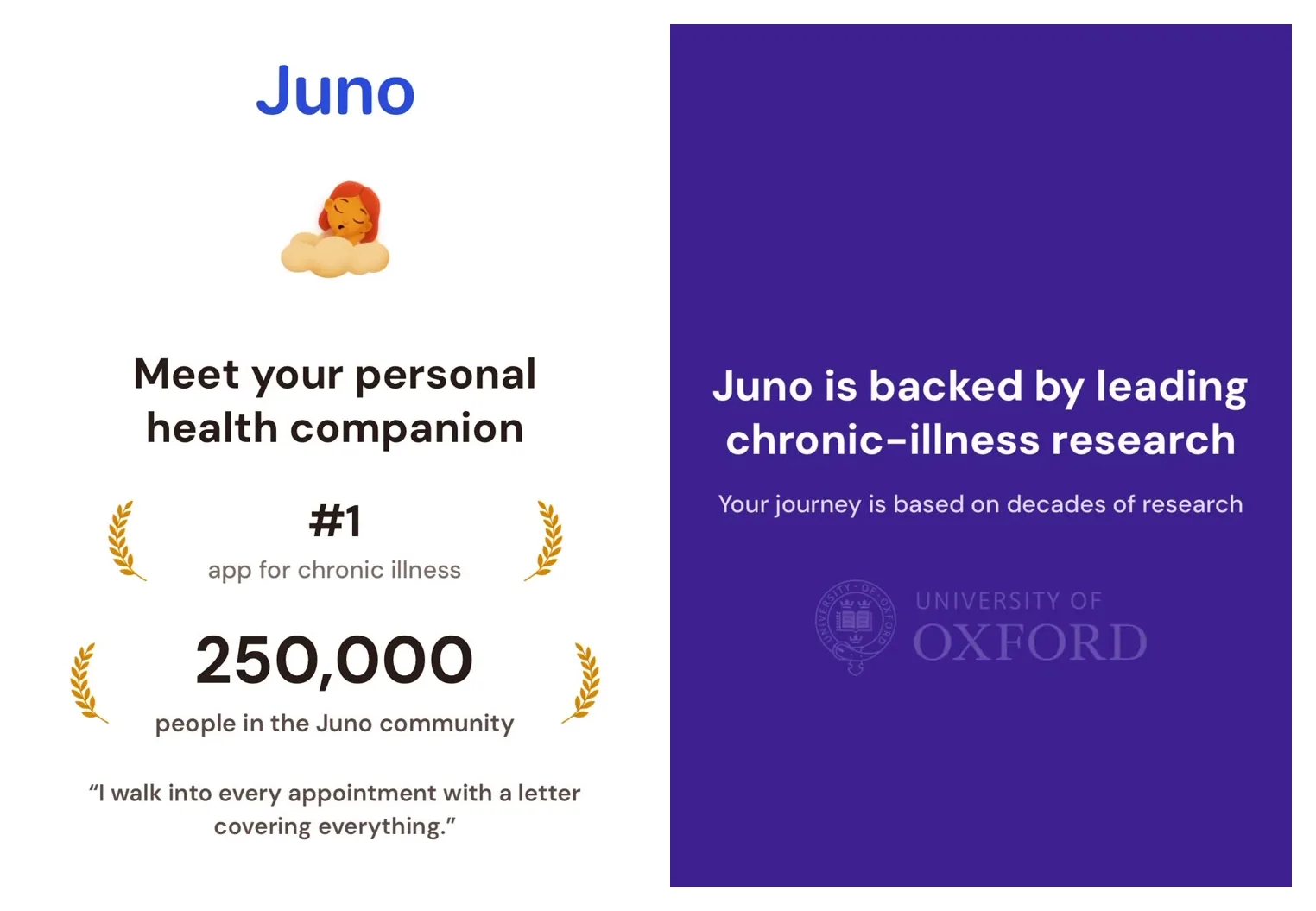
Onboarding: reassure with "#1" and research
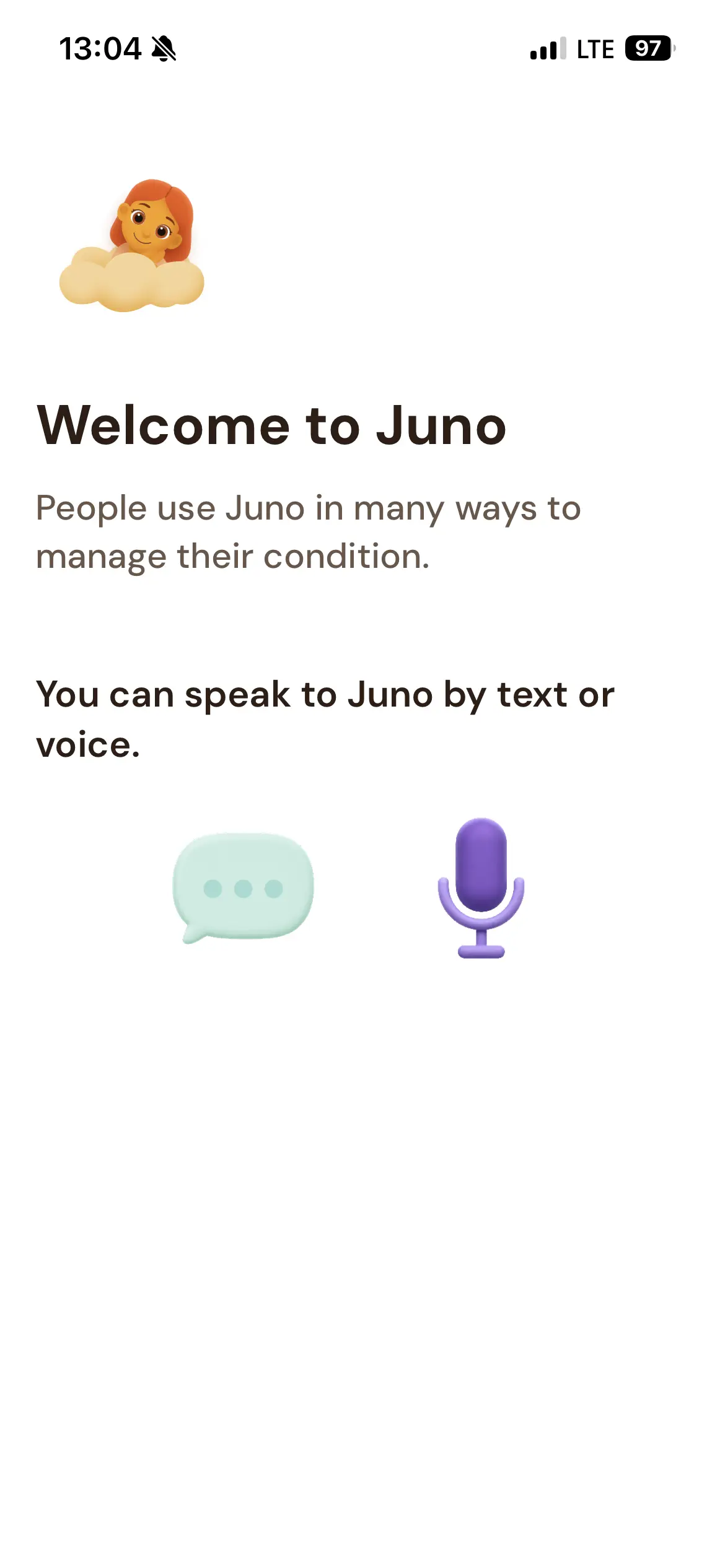
The first screen says Juno is the #1 app for chronic illness, with a community of 250,000. Next, it shows that the app is backed by research, including from the University of Oxford.
Paywall: no proof needed
Before the paywall, a screen explains that Juno is premium by design: no ads, no selling health data, and subscriptions are what fund its development.
If you try to close the paywall, the app says that people who are out of work, on a low income or studying may qualify for a sponsored plan. And it adds that no proof is needed: they'll take your word for it.
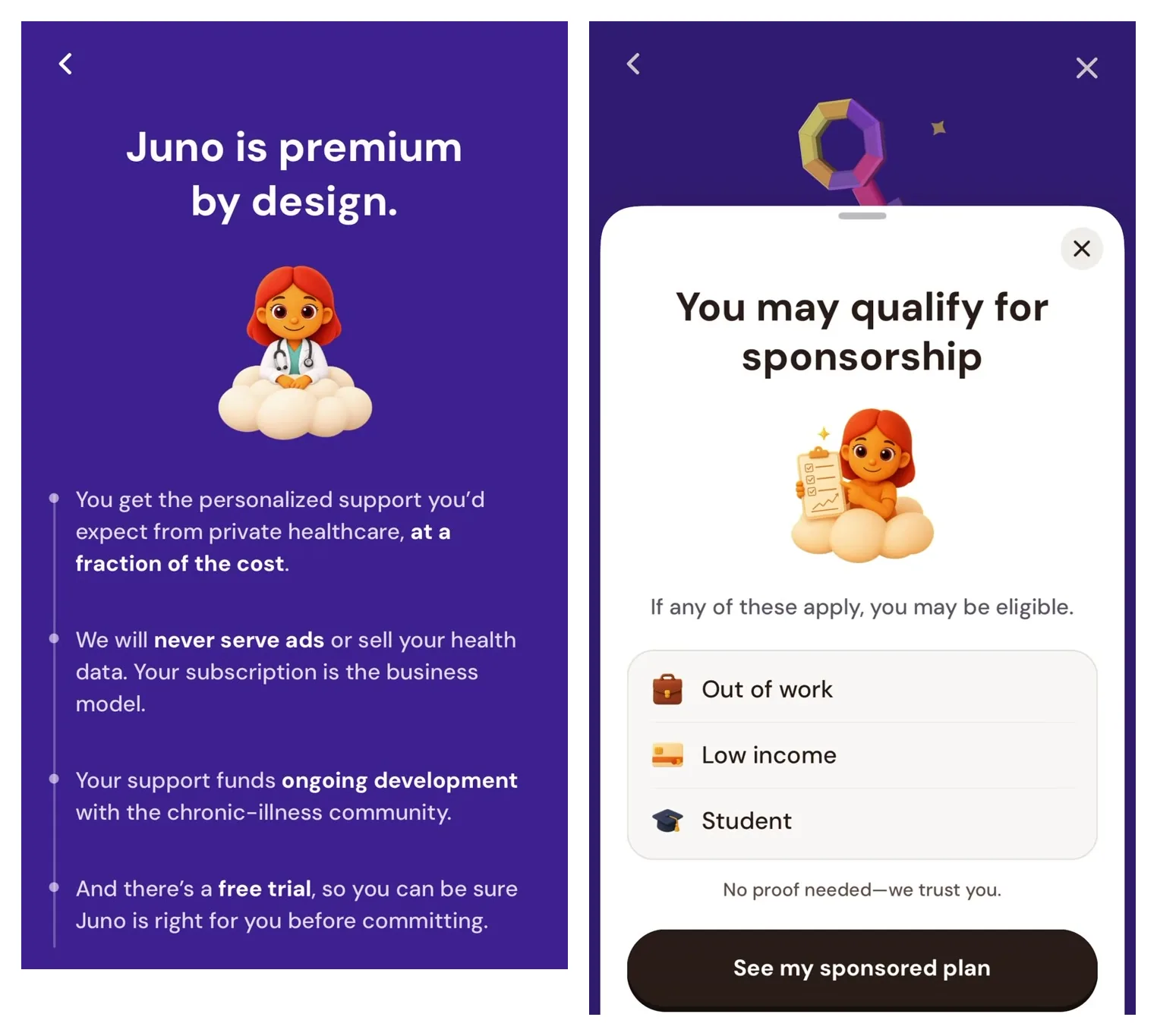
It's built so that people who are struggling financially aren't left behind.
Growth: the founder explains why he built it
The posts that grew fastest were the founder's own. A slideshow about what not to say at a doctor's appointment got 2.5 million views. At the end, the founder shows his face and closes by saying that's why he built the app.
It lands because it comes from someone with the same struggle.
Note: User numbers and years to diagnosis come from Y Combinator's company page and launch post. Monthly revenue comes from Tolley's Product Hunt post (June 2026), and the App Store rating is as shown in October 2026. None of these have been independently verified. Gould's experience and words come from the About page on Juno's official site. "A community of 250,000" is a claim shown on the app's screens. This story is about how the app is built, not about treatment. View counts are as of when this story was written.
Ideas worth copying
See Juno's full onboarding
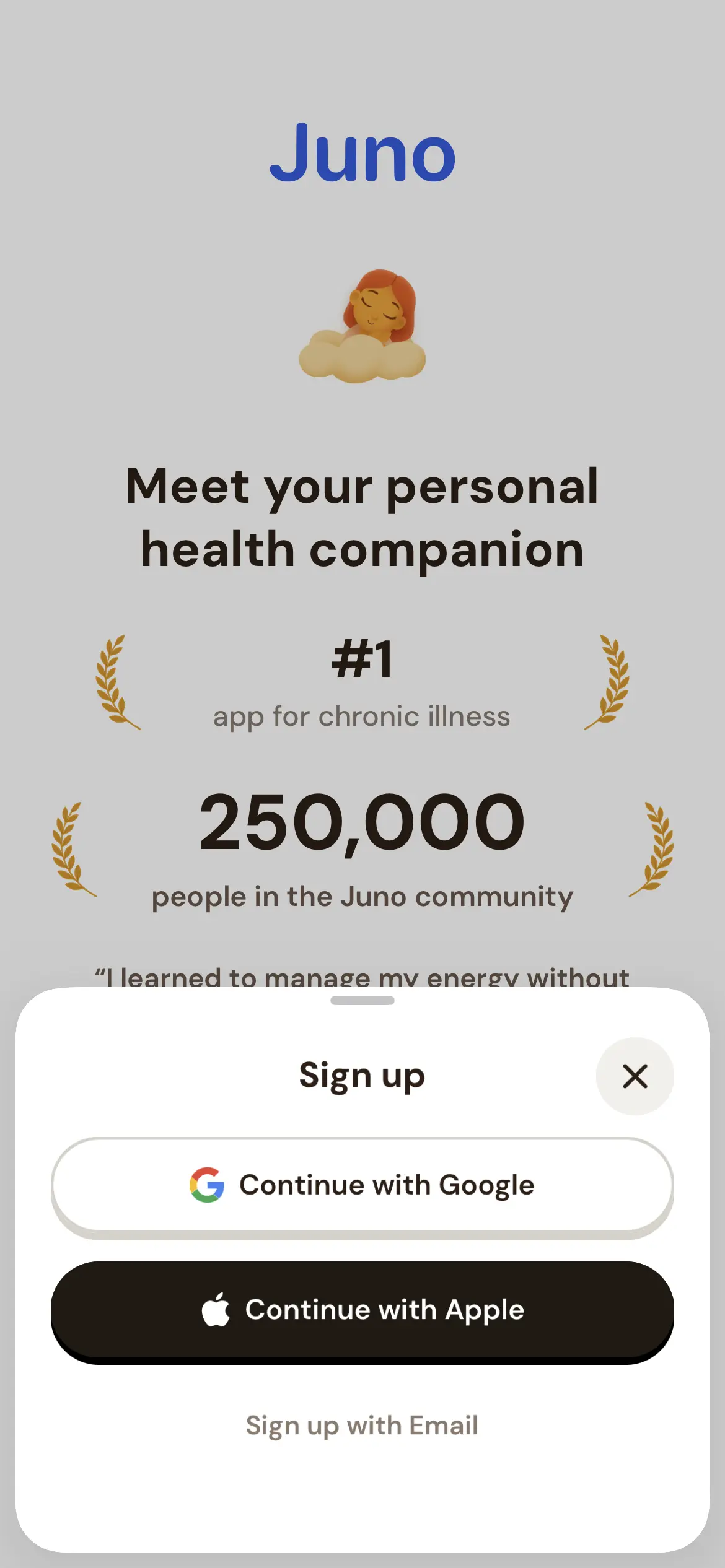
This story only shows a few of the screens. Onbo Hub has all 51, from the first screen to the last.
View the onboarding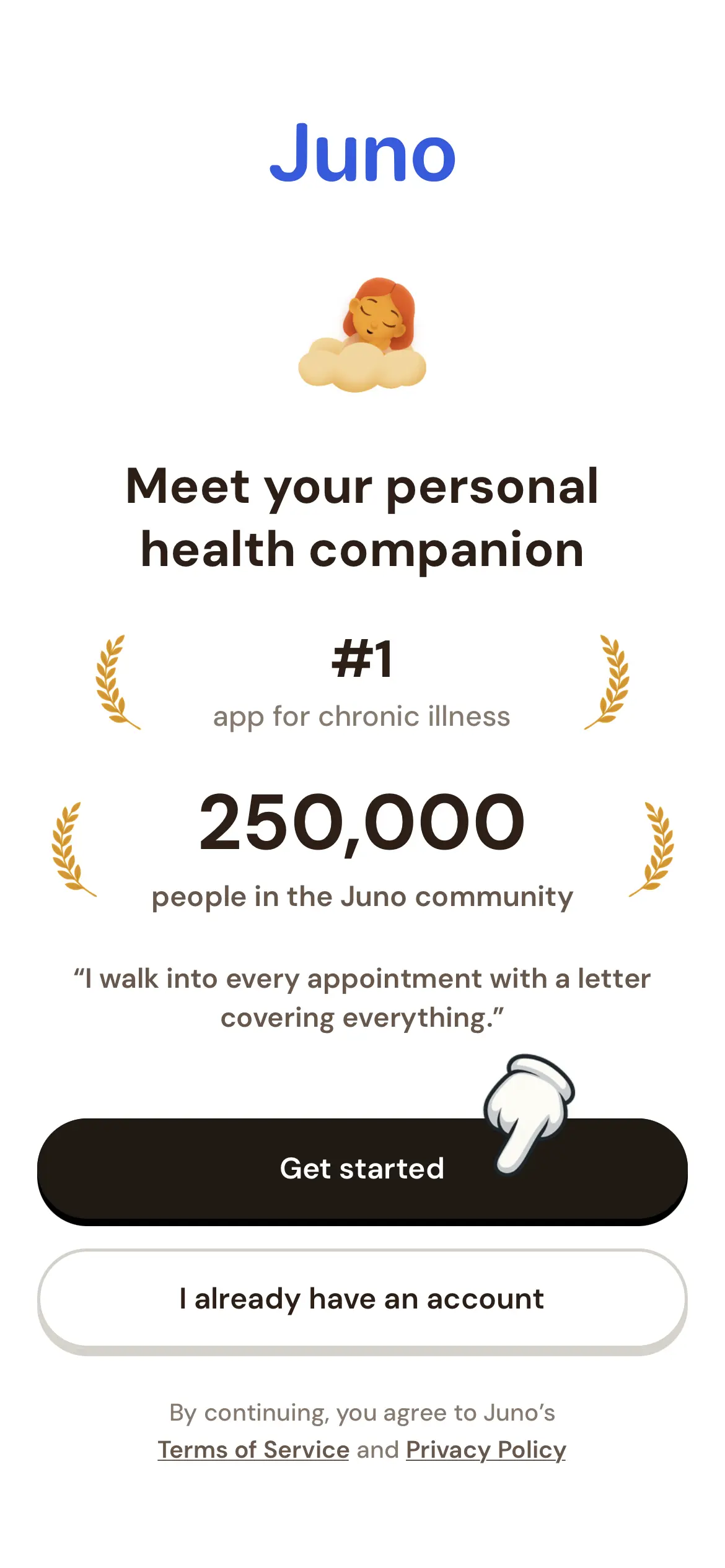
Newsletter
Founder stories and growth teardowns of apps that are actually making money.
Sources
- Y Combinator, "Juno: AI Health Assistant for Chronic Illness"ycombinator.com
- Y Combinator Launch, "Juno - AI health assistant for chronic illness"ycombinator.com
- Juno (About)junocompanion.com
- Isaac Tolley's Product Hunt launch post (June 11, 2026)hunted.space
- Juno (App Store)apps.apple.com
- What not to say at a doctor's appointment (TikTok @isaac.tryjuno)tiktok.com
 Reframe
 Lively
 MenuFit