 ReframeStory
How Vedant Pradeep Built Reframe, the Drink-Less App, to a $10M+ Run Rate
A student kicked out of two labs built Reframe to help people drink less instead of quitting, and passed a $10M annual run rate by 2022. See the onboarding that offers a middle path, and a paywall that lets you pick your trial.
Reframe is an app for drinking less, not necessarily quitting. Based on how the brain works, it helps you change your relationship with alcohol little by little. In 2022, its annual revenue run rate passed $10 million, and it raised money at a $100 million valuation.
It was built by a student who got kicked out of two university labs, and his co-founder. Here's how, with the real screens.
The founder: a student kicked out of two labs
Reframe was founded by Vedant Pradeep and Ziyi Gao. Pradeep grew up in Abu Dhabi, where his father was also an entrepreneur. He dreamed of becoming a genetic engineer and went to Georgia Tech in the US.
By his own account, he was a terrible student. He skipped half his classes, switched majors, and didn't want to work in a lab. He says he was kicked out of two.
It started with his own OCD
Around then, a friend he ran into on the bus told him about the university's startup program. Since childhood, his favorite heroes had been the ones without superpowers, and he wanted to build something that helps people become their best selves.
He first chose obsessive-compulsive disorder (OCD), which he lives with himself. But he noticed that many people with OCD were using alcohol to calm themselves. Rehab is very expensive, and groups for people who quit drinking can be hard to walk into. There was nowhere for people who just wanted to cut back. In 2020, Reframe launched.
Three rejections from Y Combinator, and emails about changed lives
Reframe was rejected by Y Combinator three times in a row before getting in on the fourth try. What made him happiest, he says, was when users started emailing to say the app had changed their lives.
By 2022, Reframe had about 100,000 paying members and 20 employees. It raised $12.5 million at a $100 million valuation. The team has decided not to run ads in the app and not to sell user data.
Onboarding, part 1: put "quit" and "cut back" side by side
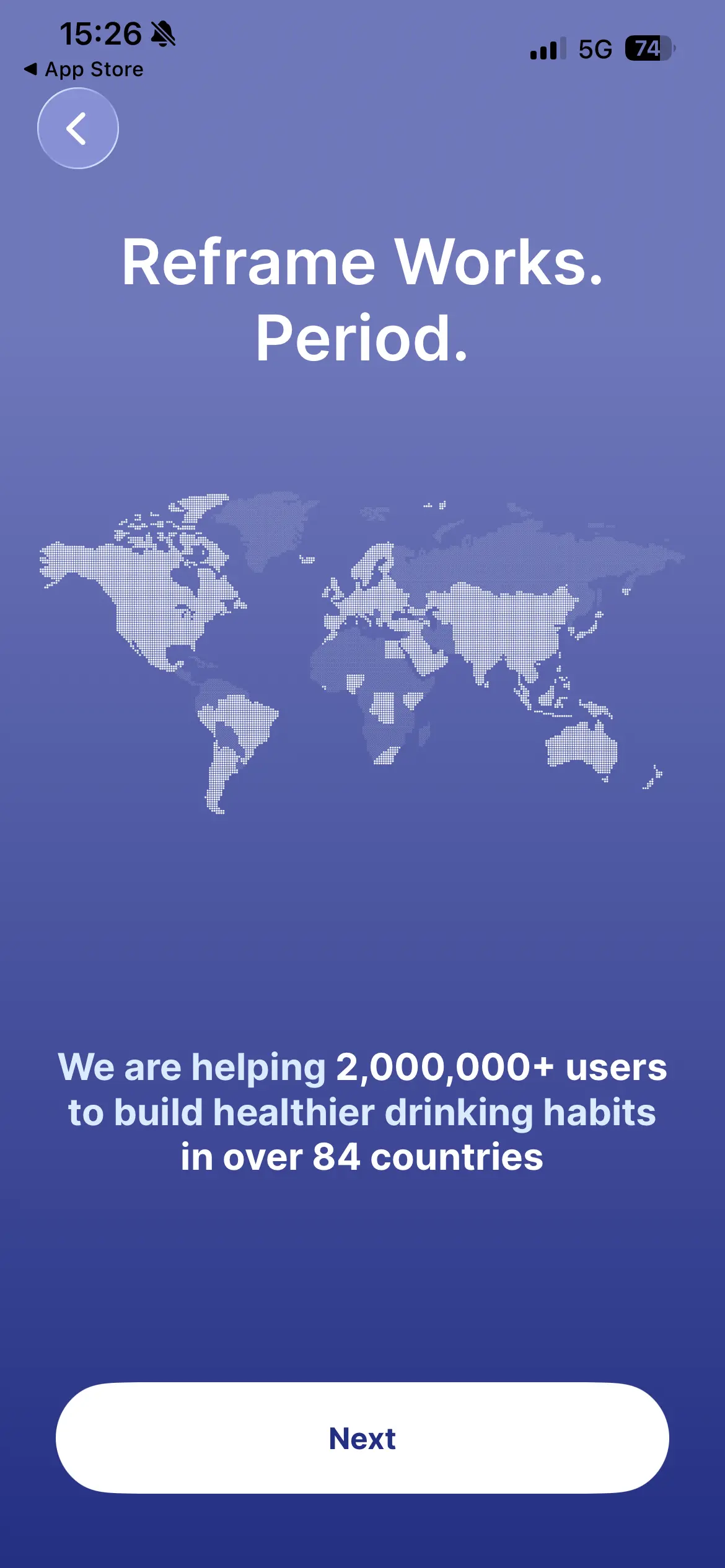
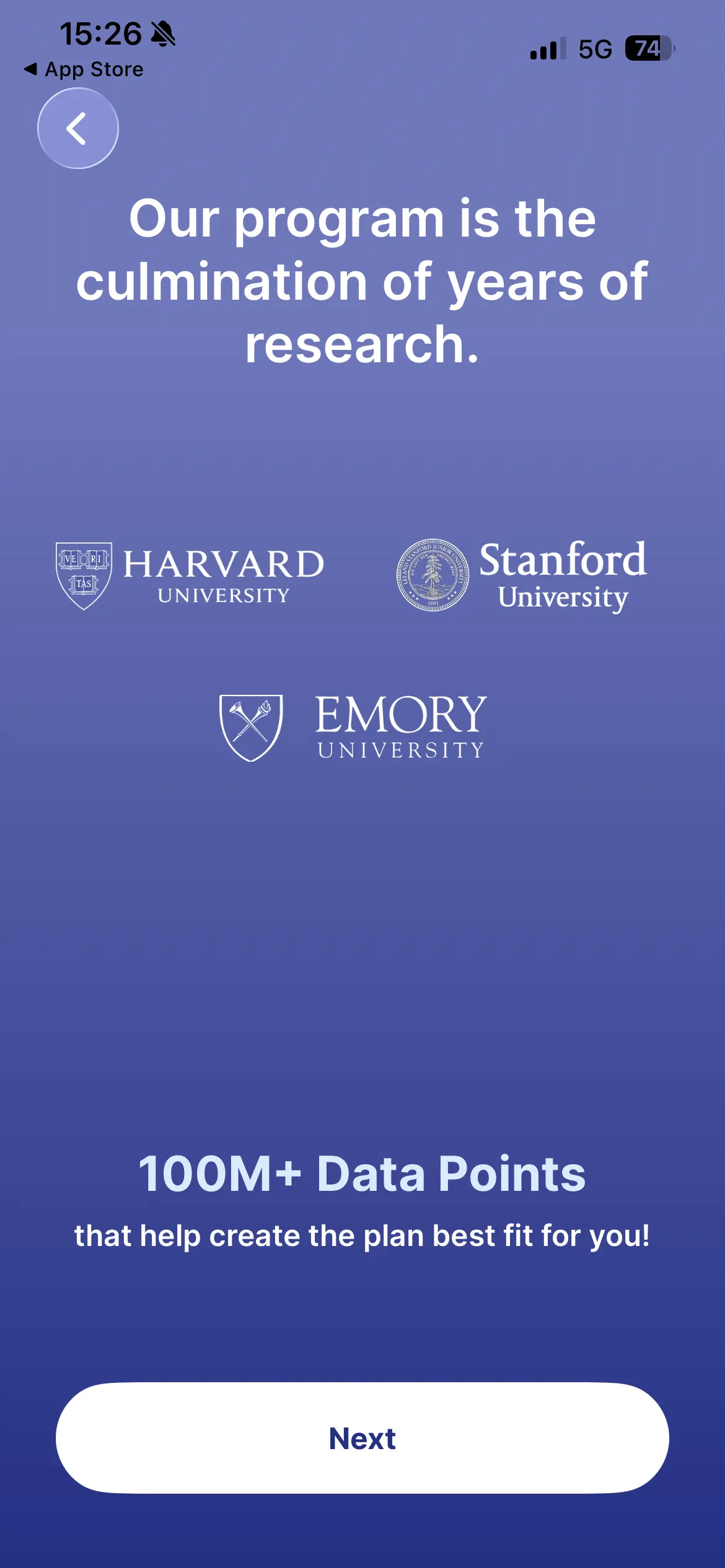
The first screen states flatly that Reframe works, and says more than 2 million people in 84 countries use it. Next comes a screen calling the app the result of years of research, alongside names like Harvard and Stanford.
Once you create an account, the first question is how you want to change your relationship with alcohol. Quitting completely is only one option. You can also choose to cut back without quitting, take a break for a while, or say you're not sure yet. Whatever you pick, the app tells you you're in good hands.
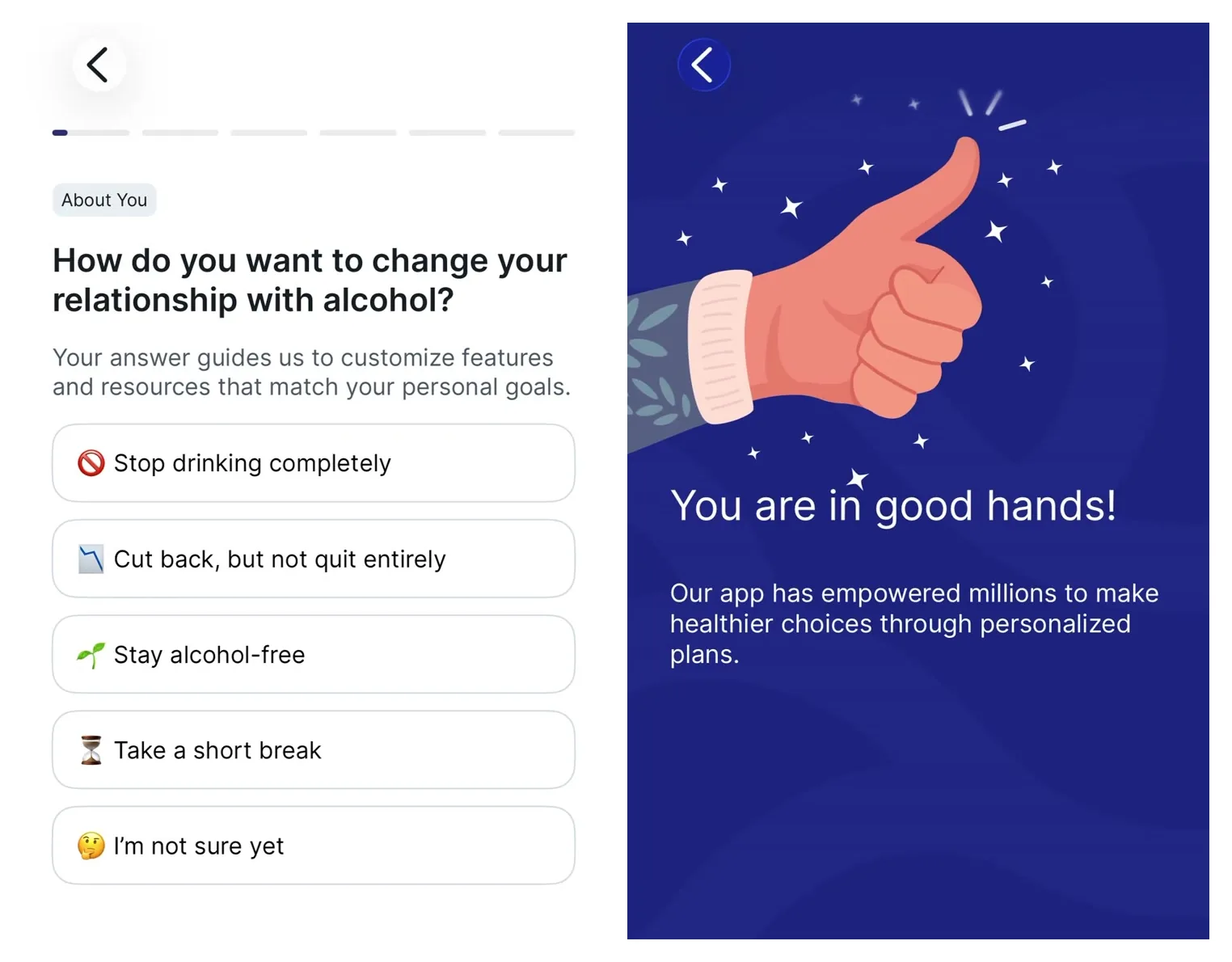
Even people who don't think they need to quit can start here.
Onboarding, part 2: show what you spend, and "one year from now"
Next, you use sliders to enter how much you drink in a week and how much you spend on alcohol, and the app shows what that adds up to in a year. When it asks whether you find it hard to stop once you start, it explains that the moment of having "one more" is one of the most studied moments in the brain.
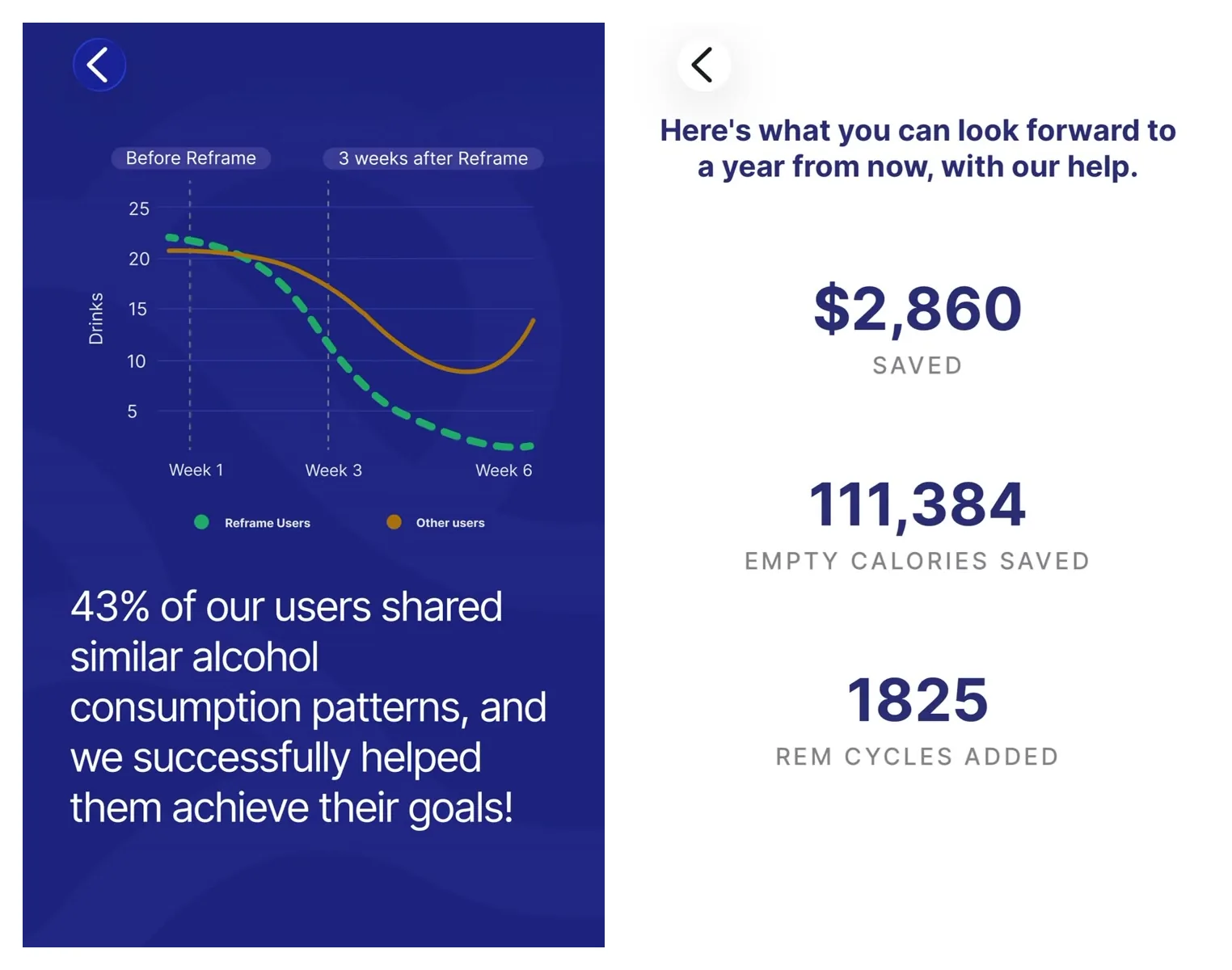
Along the way, a chart says 43% of people with similar patterns reached their goal. The questions run for about 50 screens, covering work, family, sleep, exercise and diet, and end with a prediction that you'll reach your goal in eight weeks.
Then comes what you can expect a year from now: the money you'll save, the calories you'll cut and the extra REM sleep cycles you'll get. It shows the future you in numbers.
Paywall: choose your own trial
Before the paywall, your personal plan appears with a 200% money-back guarantee if it doesn't work. The paywall's headline invites you to choose your own trial.
You can pick a 7-day free trial or a 30-day trial for a small fee. After that comes an annual plan, shown as a monthly amount, with a toggle to get a reminder before the trial ends. Instead of forcing a choice between buying and leaving, it even lets you choose how to try it.
Growth: videos about knowing, not preaching
The official TikTok has more than 50,000 followers. A video with 1.4 million views is just one line over an ocean sunset: when you remove alcohol from your life, a lot of problems leave with it. Another, with 1.9 million views, says that once you learn the truth about alcohol, you can't see it the same way.
Neither tells you to quit. Both are designed so that learning something changes how you see it.
Note: Paying members, annual revenue run rate, headcount, funding and valuation come from Fortune (March 2022) and have not been independently verified. "More than 2 million people in 84 countries," 43% and similar figures are claims shown on the app's screens. The "one year from now" numbers come from the amounts entered during the recording. This story is about how the app is built, not about the harms of alcohol. View counts are as of when this story was written.
 Lively
 MenuFit
 Deepstash