 MenuFitStory
MenuFit: How Cole Kosco Turned a Free PDF into a $1M/Month App
Cole Kosco gave away 500,000 restaurant calorie PDFs before building MenuFit, now estimated at $1M+ a month. Here's the onboarding that gets 99.8% of users to the paywall.
What should you order when you eat out if you don't want to wreck your diet? MenuFit is an app that answers that one question, and about a year after launch it was estimated to be earning more than $1 million a month.
According to its founder, 99.8% of people who start MenuFit's onboarding make it all the way to the paywall. Here's how the app came together, with the real screens.
The founder: a former athlete turned fitness coach
MenuFit was built by Cole Kosco, a former college athlete who went on to work as a fitness coach.
In 2025, Kosco started posting TikToks that compared menu items at chain restaurants. At Chipotle, for example: a bowl with 65g of protein at 500 calories, next to a burrito with about the same protein at 1,400 calories.
Anyone who commented "Food" got a PDF with calorie breakdowns for each chain. Across about six videos, he sent out roughly 500,000 copies. Before building anything, he already knew how many people wanted help ordering at restaurants.
Turning the PDF into an app
In August 2025, that PDF became MenuFit. Pick the restaurant you're going to, and the app suggests meals that fit your goal, with calories and protein for each.
Most calorie trackers have you log food after you eat it. MenuFit is for the moment before you order.
Onboarding: about 30 screens, all about eating out
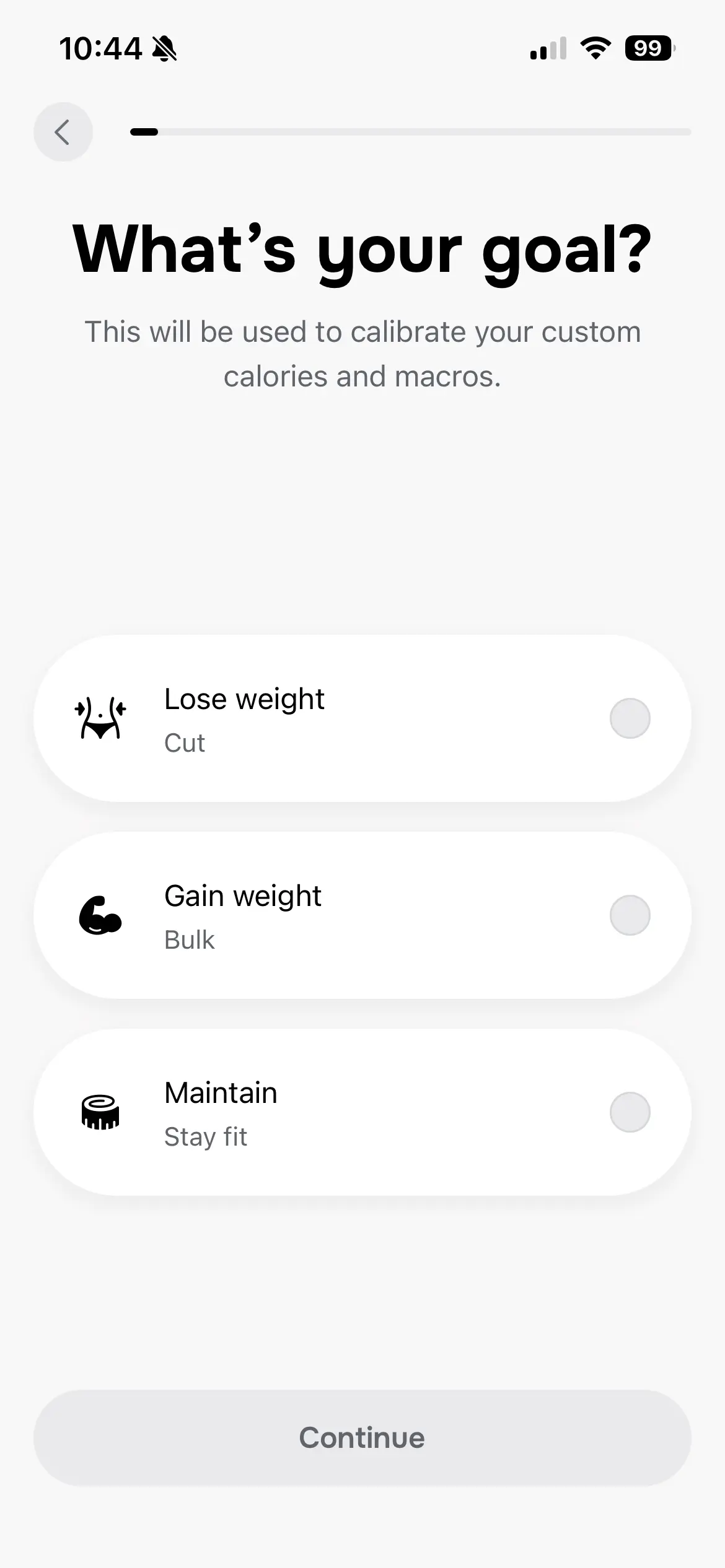
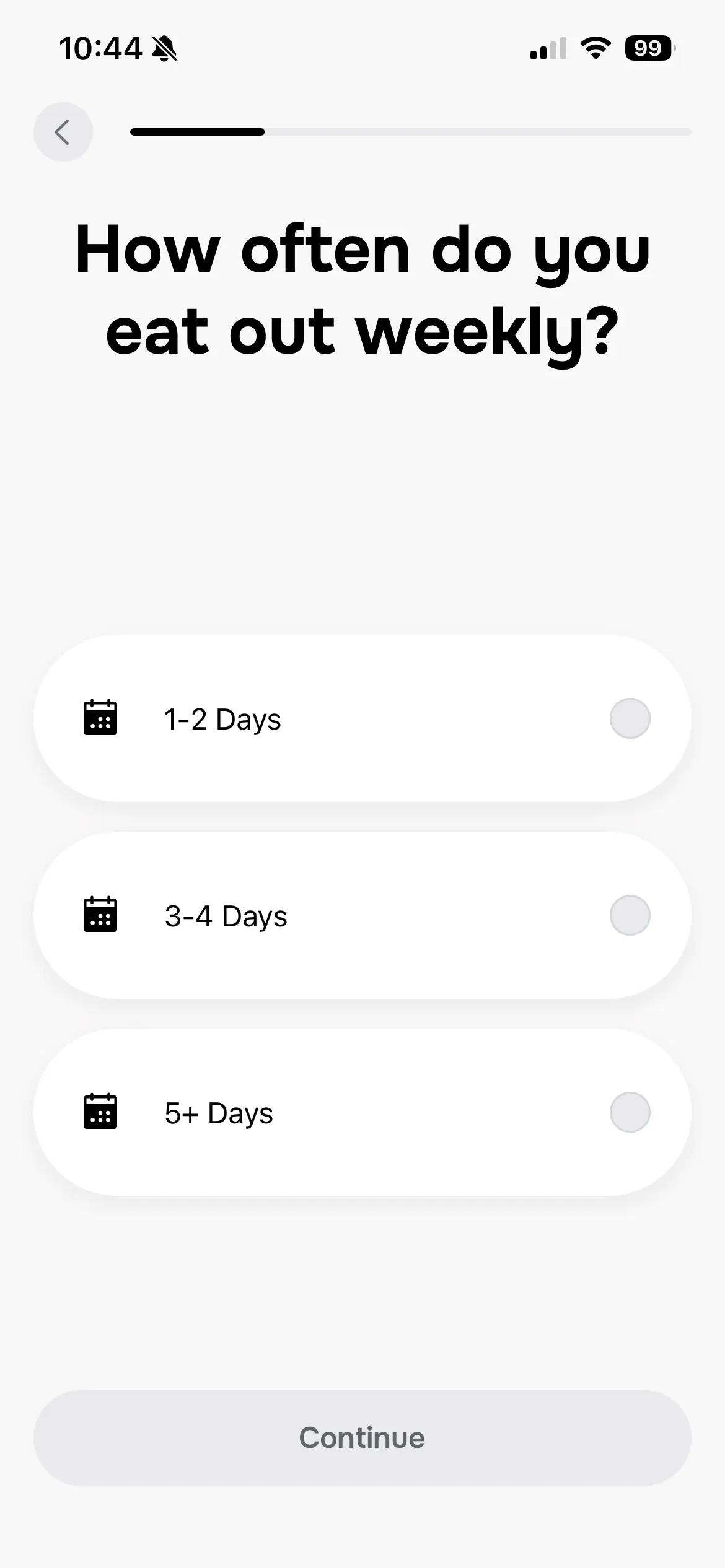
The first questions are your goal and how often you eat out each week. Then come questions only about restaurants, such as what your biggest struggle is when eating out and how you usually decide what to order.
After you enter your height and weight, a memorable screen appears: two meals from the same Subway, one at 1,230 calories and the other at 430, next to a line saying that bad choices when eating out can ruin a diet. That one screen explains why the app exists.
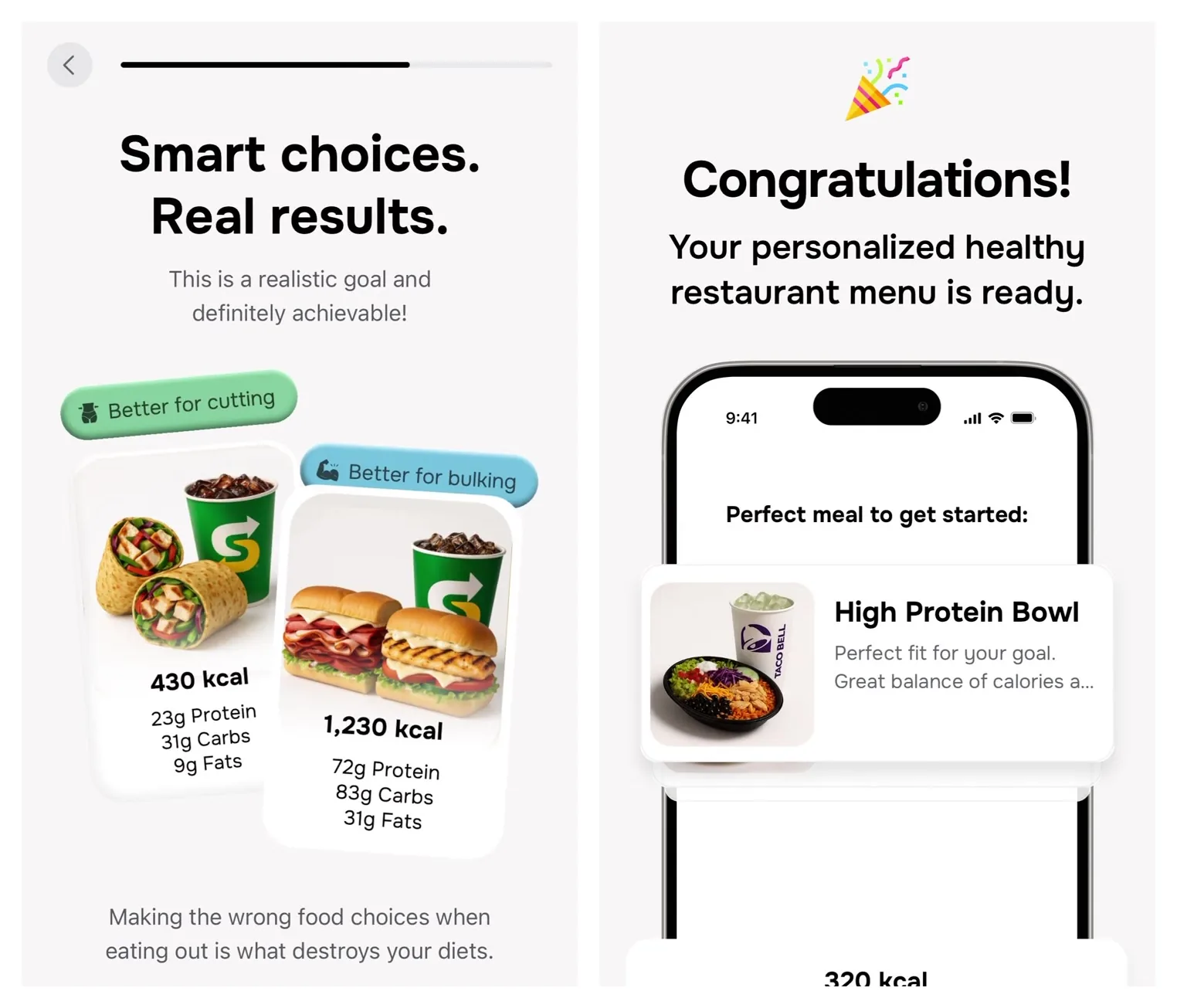
Next, the app says it covers restaurants worldwide and asks you to pick the chains you visit most. After a loading screen that says it's building your personal eating-out plan, your first recommended meal appears.
There are about 30 screens, yet almost everyone finishes. Every answer makes the plan feel more like it was built for you.
Paywall: remove the worry first, then offer 14 days to people who leave
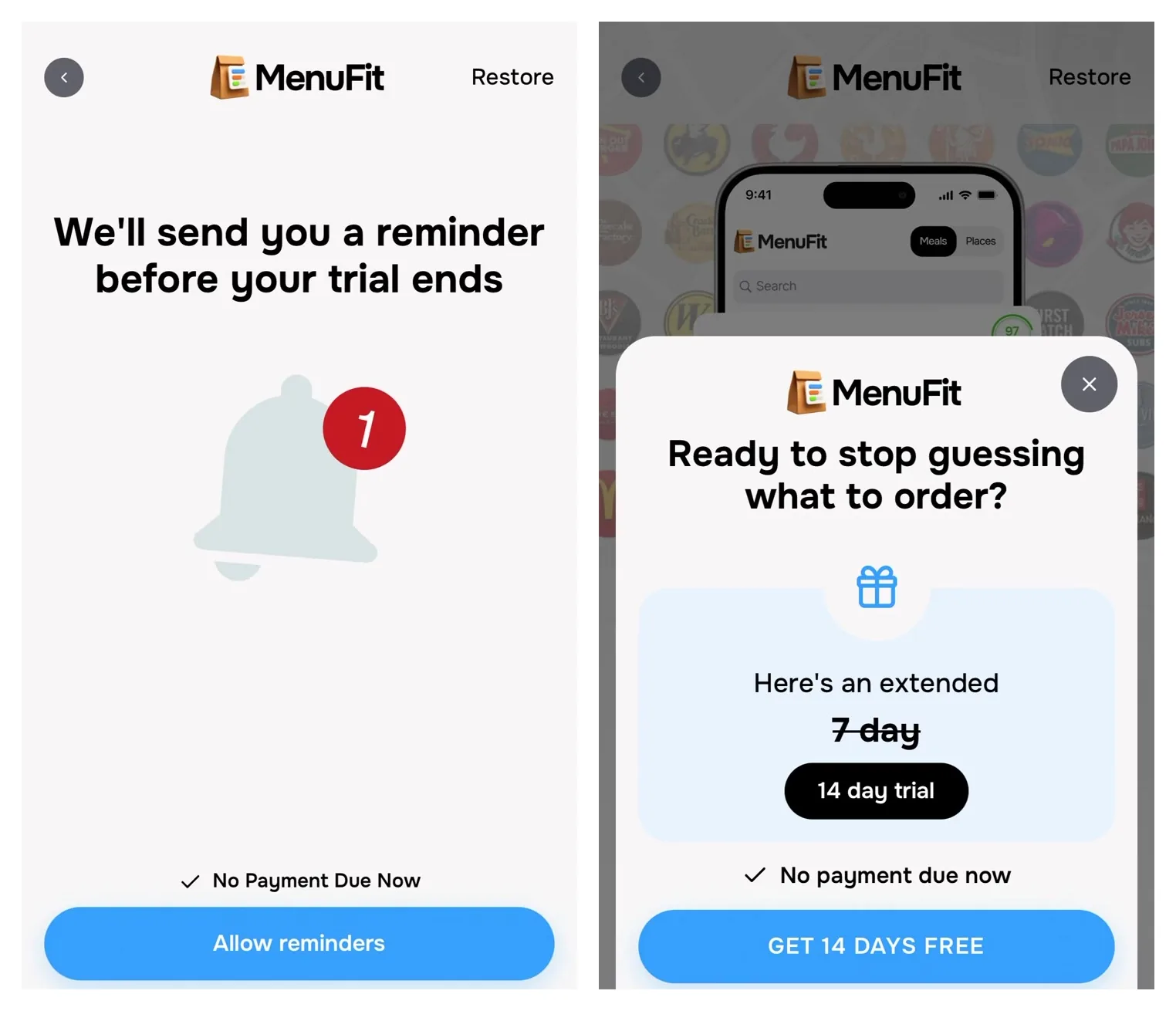
After you create an account, the paywall comes next. Right before it, a screen promises to remind you before your free trial ends. The app asks for notification permission here, which removes the fear of being charged without noticing.
The paywall offers a 7-day free trial with two plans, annual and monthly, with the annual plan selected by default. Try to close it, and an offer appears that extends the free trial to 14 days.
According to the founder, 40–45% of people who reach the paywall either start a free trial or pay.
Growth: wordless skits, and ads made from the videos that take off
Short videos drive growth. One video with 3.5 million views is a wordless skit: a man digs into fast food while the woman next to him finds a healthier order in the app and hands it to him. Without a single word, it shows that you can eat out and still choose well.
The official account also posts short videos showing the calories and protein of popular menu items.
The way creators get paid is unusual, too. Each video that's accepted earns $20 up front. The ones that perform well are run as Meta ads, and the creator earns 10% of that ad spend. Find the videos that work, then scale them with ads.
Note: The revenue figure is an estimate reported by 36Kr, based on AppMagic data. The 99.8% and 40–45% figures come from the founder's interviews. None of these have been independently verified. View counts are as of when this story was written.
Ideas worth copying
See MenuFit's full onboarding
This story only shows a few of the screens. Onbo Hub has all 32, from the first screen to the last.
View the onboarding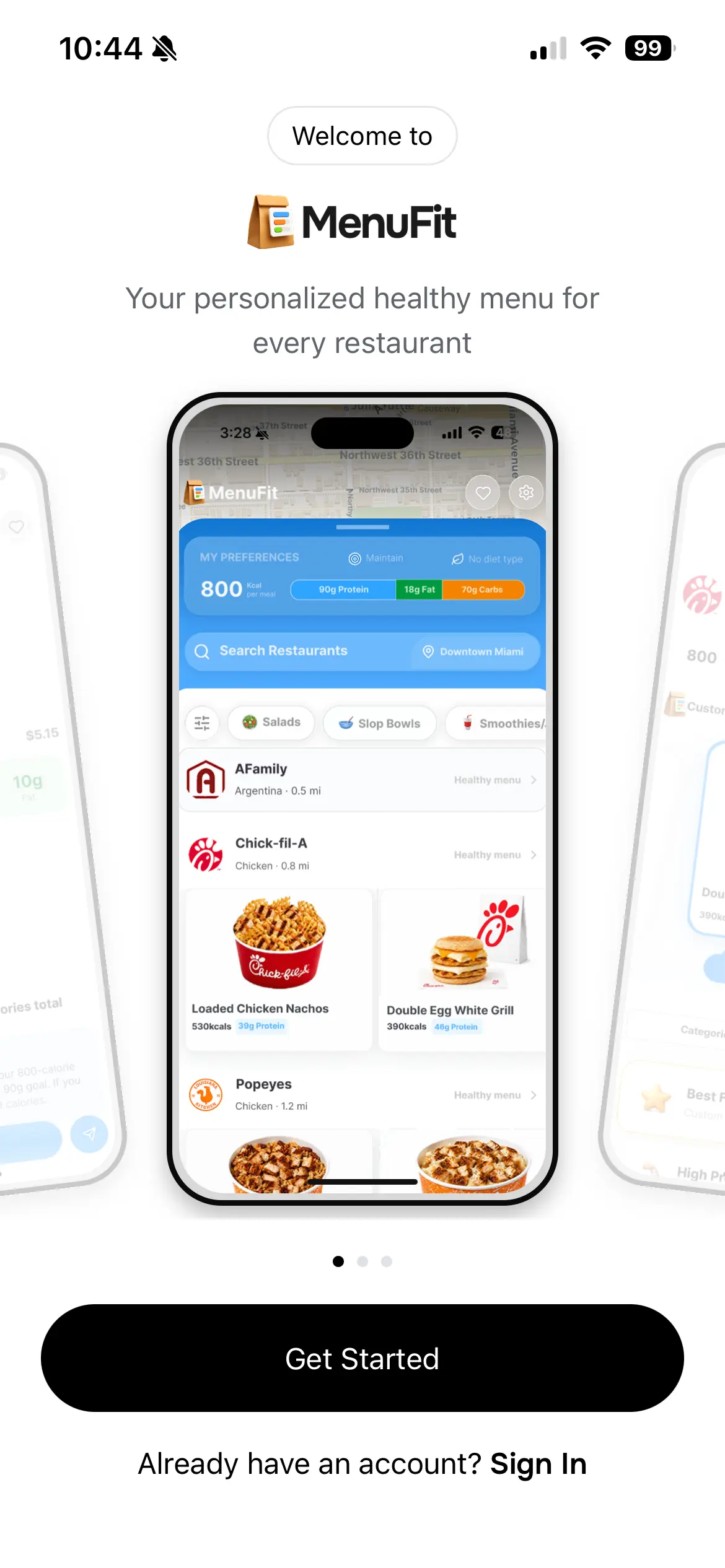
Newsletter
Founder stories and growth teardowns of apps that are actually making money.
Sources
- David Guttman, "Menu Fit Founder Shares Marketing Secrets and Insights For App Growth | Cole Kosco #029"youtube.com
- 36Kr, "Fitness Blogger Launches Calorie Recognition App, Achieves Global Top 10 Ranking"eu.36kr.com
- Social Growth Engineers, "Fast Food Swaps To $60k MRR In Two Months"socialgrowthengineers.com
- MenuFit (App Store)apps.apple.com
- Wordless skit (TikTok @efewissie)tiktok.com
- How to order low-calorie at Chipotle (TikTok @menufit.app)tiktok.com

 MacroFactor
 Juno

 Reframe